RateCaptain
  • Home
    • About Us
    • Contact Us
  • FX Rates
  • Money Market
  • Cryptocurrency
  • Commodities
  • Corporates
No Result
View All Result
Subscribe
  • Home
    • About Us
    • Contact Us
  • FX Rates
  • Money Market
  • Cryptocurrency
  • Commodities
  • Corporates
No Result
View All Result
RateCaptain
No Result
View All Result
Home Banking

CBN to Penalize Banks Over Cash Shortages from December 

Stephen Akudike by Stephen Akudike
December 3, 2024
in Banking, Currencies
Reading Time: 2 mins read
A A
0
Investment Bankers Applaud CBN Reforms Amidst Challenges, Embrace Growth Opportunities
Share on FacebookShare on TwitterShare on WhatsappShare on Telegram

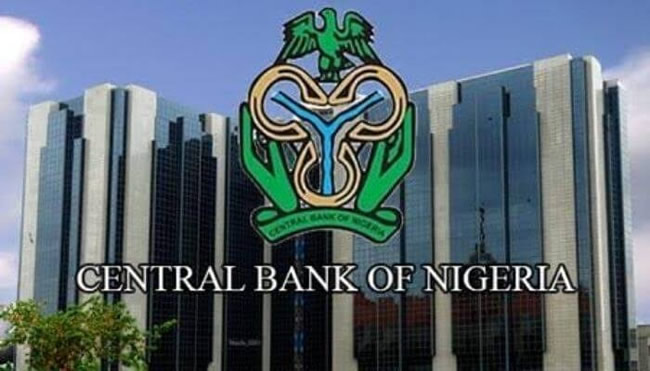
The Central Bank of Nigeria (CBN) has announced plans to penalize commercial banks that fail to provide cash to customers at automated teller machines (ATMs) and bank branches. This move, effective December 1, 2024, is aimed at addressing the ongoing cash scarcity that has impacted Nigerians since 2023.

CBN Governor Olayemi Cardoso disclosed this during the annual bankers’ dinner in Lagos, emphasizing the bank’s commitment to ensuring compliance across the financial sector. He urged Nigerians to report cash withdrawal difficulties to the CBN through official channels, adding that the apex bank would widely circulate reporting guidelines to enhance public awareness.

AlsoRead

Banks’ Maximum Lending Rate Eases to 33.16% in June

Several African Currencies Forecast to Weaken Against Dollar – Analyst

Naira Strengthens as FX Turnover Hits Record $1.5 Billion in a Single Day

“We are conducting spot checks across deposit money banks and will impose penalties on institutions failing to meet cash availability requirements. Financial institutions found engaging in malpractices or deliberate sabotage will face stringent sanctions,” Cardoso stated.

Addressing Cash Shortages and Promoting Digital Transactions

Cardoso also called on stakeholders, including mobile money operators and agents, to comply with regulations to improve service delivery and promote digital payment systems. Despite efforts to transition to a cashless economy, Nigeria’s reliance on physical cash persists.

The country’s cash scarcity intensified in 2023 following the controversial naira redesign policy, which aimed to curb inflation and reduce reliance on cash. While the policy spurred growth in digital payment platforms like Opay and Palmpay, it also exacerbated cash shortages at ATMs and banking halls.

Adding to the issue was a central bank directive capping weekly over-the-counter cash withdrawals at ₦500,000, forcing many businesses and individuals to turn to Point-of-Sale (POS) operators. These agents, often sourcing cash from unconventional outlets like supermarkets and fuel stations, have become critical players in the economy.

The rise of POS agents, however, has sparked calls for regulation. In May 2024, the Nigerian government mandated the country’s 1.9 million POS operators to register with the Corporate Affairs Commission (CAC), a move aimed at formalizing the sector and curbing malpractice.

Ensuring Cash Availability

Despite the push for digital transactions, the CBN acknowledged the need to ensure adequate cash flow, particularly during high-demand periods like the festive season.

“The CBN will continue to maintain a robust cash buffer to meet the country’s needs. Our focus is on ensuring seamless cash flow while fostering trust and stability in the financial system,” Cardoso said.

As the December 1 deadline approaches, the CBN’s enforcement of penalties is expected to put pressure on banks to address cash shortages and restore public confidence in the financial system.

Tags: CBN
Previous Post

Presidency Refutes Claims of Scrapping Key Government Agencies in Tax Reform Bills

Next Post

Digital Giants Contribute ₦2.55 Trillion in Taxes in Nigeria for H1 2024, Says NITDA

Related News

Leading Banks Struggle with Capital Deficits: Zenith Bank and Others Strive to Meet CBN Standards

Banks’ Maximum Lending Rate Eases to 33.16% in June

by Jide Omodele
July 27, 2026
0

Nigeria’s average maximum lending rate declined to 33.16% in June 2026, down from 34.78% in May, offering a slight reduction...

Battered Commodity Currencies Gain Attention Amid Dollar’s Decline.

Several African Currencies Forecast to Weaken Against Dollar – Analyst

by Jide Omodele
July 24, 2026
0

Several major African currencies, including Ghana’s cedi, Uganda’s shilling, and Nigeria’s naira, are expected to depreciate against the US dollar...

NEC Affirms CBN $3 Billion Loan for Naira Stability

Naira Strengthens as FX Turnover Hits Record $1.5 Billion in a Single Day

by Stephen Akudike
July 24, 2026
0

The Nigerian naira posted gains against the US dollar on Tuesday, July 21, 2026, as the foreign exchange market recorded...

Dollar Index Loses Steam as Treasury Yields Drift Back to 4.8%

Naira Strengthens to N1,375/$ in Official Market Amid Improved Trading Conditions

by Jide Omodele
July 22, 2026
0

The naira appreciated against the US dollar on Tuesday, July 21, 2026, closing at N1,375.3083 per dollar in the official...

Next Post
Senate Committee Frowns at N17 Trillion Loss from Tax Waivers, Urges FIRS Reform

Digital Giants Contribute ₦2.55 Trillion in Taxes in Nigeria for H1 2024, Says NITDA

Leave a Reply Cancel reply

Your email address will not be published. Required fields are marked *

Recommended

Leading Banks Struggle with Capital Deficits: Zenith Bank and Others Strive to Meet CBN Standards

Banks’ Maximum Lending Rate Eases to 33.16% in June

July 27, 2026

US Imposes 12.5% Tariff on Nigerian Exports Over Forced Labour Concerns

July 27, 2026

Popular Story

  • Nigeria’s Debt to China Surges by $800 Million in One Year

    31 Nigerian States Grapple with N2.57 Trillion Domestic Debt Amid No Foreign Inflows

    0 shares
    Share 0 Tweet 0
  • Cooking Gas Prices Drop Across Nigeria as Lagos Records Lowest Rate of N1,200 per kg

    0 shares
    Share 0 Tweet 0
  • Petrol Climbs to N1,400 per Litre as Transport Fares Rise Across Nigeria

    0 shares
    Share 0 Tweet 0
  • US Imposes 12.5% Tariff on Nigerian Exports Over Forced Labour Concerns

    0 shares
    Share 0 Tweet 0
  • Banks’ Maximum Lending Rate Eases to 33.16% in June

    0 shares
    Share 0 Tweet 0

RateCaptain

We bring you the most accurate in new and market data. Check our landing page for details.

  • Home
  • About Us
  • Privacy Policy
  • Terms & Conditions
  • Disclaimer
  • Cookie Policy
  • Contact Us

Copyright © 2022 RateCaptain - All rights reserved by RateCaptain.

No Result
View All Result
  • Home
    • About Us
    • Contact Us
  • FX Rates
  • Money Market
  • Cryptocurrency
  • Commodities
  • Corporates

Copyright © 2022 RateCaptain - All rights reserved by RateCaptain.

RateCaptain
Manage Cookie Consent
To provide the best experiences, we use technologies like cookies to store and/or access device information. Consenting to these technologies will allow us to process data such as browsing behavior or unique IDs on this site. Not consenting or withdrawing consent, may adversely affect certain features and functions.
Functional Always active
The technical storage or access is strictly necessary for the legitimate purpose of enabling the use of a specific service explicitly requested by the subscriber or user, or for the sole purpose of carrying out the transmission of a communication over an electronic communications network.
Preferences
The technical storage or access is necessary for the legitimate purpose of storing preferences that are not requested by the subscriber or user.
Statistics
The technical storage or access that is used exclusively for statistical purposes. The technical storage or access that is used exclusively for anonymous statistical purposes. Without a subpoena, voluntary compliance on the part of your Internet Service Provider, or additional records from a third party, information stored or retrieved for this purpose alone cannot usually be used to identify you.
Marketing
The technical storage or access is required to create user profiles to send advertising, or to track the user on a website or across several websites for similar marketing purposes.
  • Manage options
  • Manage services
  • Manage {vendor_count} vendors
  • Read more about these purposes
View preferences
  • {title}
  • {title}
  • {title}
?>