RateCaptain
  • Home
    • About Us
    • Contact Us
  • FX Rates
  • Money Market
  • Cryptocurrency
  • Commodities
  • Corporates
No Result
View All Result
Subscribe
  • Home
    • About Us
    • Contact Us
  • FX Rates
  • Money Market
  • Cryptocurrency
  • Commodities
  • Corporates
No Result
View All Result
RateCaptain
No Result
View All Result
Home Business

Cooking Gas Prices Drop Across Nigeria as Lagos Records Lowest Rate of N1,200 per kg

Akpan Edidong by Akpan Edidong
July 27, 2026
in Business, Economy, Energy
Reading Time: 2 mins read
A A
0
Share on FacebookShare on TwitterShare on WhatsappShare on Telegram

Cooking gas prices have fallen significantly across Nigeria over the past three weeks, offering relief to households after recent highs. Lagos currently records the lowest retail rates at N1,200 per kilogram.

A market survey shows that filling stations and gas outlets in several cities have adjusted prices downward. In Lagos, Gasland depot in the Iju area is selling Liquefied Petroleum Gas (LPG) at N1,200 per kilogram, down from N1,450 just a week earlier.

AlsoRead

US Imposes 12.5% Tariff on Nigerian Exports Over Forced Labour Concerns

Petrol Climbs to N1,400 per Litre as Transport Fares Rise Across Nigeria

Several African Currencies Forecast to Weaken Against Dollar – Analyst

In Abuja, major outlets have also reduced rates. Ranoil is dispensing at N1,350 per kilogram, Shafa at N1,300, and AP Ardova at N1,400. These figures are lower than the previous range of N1,450 to N1,500 recorded earlier in the month. In communities such as Dawaki, Kubwa, Gwarampa, and Lugbe within the Federal Capital Territory, retailers have cut prices to around N1,500 per kilogram from approximately N1,700 in previous weeks.

Depot Prices Remain Stable

Industry data indicates that LPG depot prices have held steady between N997 and N1,030 per kilogram, a clear decline from the N1,100 levels seen earlier. The softer wholesale rates are gradually translating into lower refill costs for consumers.

Improved Supply Behind the Decline

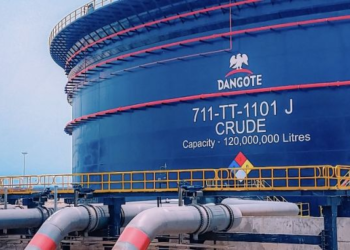
The price drop is linked to stronger availability in the domestic market. Increased supplies from major producers, including Dangote, combined with a sharp rise in imports have eased pressure. According to data from the Nigerian Midstream and Downstream Petroleum Regulatory Authority (NMDPRA) for June 2026, LPG imports surged by 1,400 per cent, reaching 1.5 kilotonnes per day.

The higher volumes have moderated wholesale prices and encouraged retailers to lower their rates.

Relief for Households

With depot prices remaining at these lower levels and supply expected to stay robust, cooking gas could remain relatively affordable in the coming weeks, provided exchange rates and broader market conditions stay favourable. For Nigerian families facing persistent inflationary pressures on household energy costs, the recent reductions provide welcome breathing space.

Tags: DangoteFGLPG
Previous Post

Several African Currencies Forecast to Weaken Against Dollar – Analyst

Next Post

Petrol Climbs to N1,400 per Litre as Transport Fares Rise Across Nigeria

Related News

US Imposes 12.5% Tariff on Nigerian Exports Over Forced Labour Concerns

by Victoria Attah
July 27, 2026
0

The United States has imposed a 12.5% tariff on most Nigerian exports following a Section 301 investigation that concluded Nigeria...

Fuel Subsidy Removal: Should Nigeria Continue With a Regressive Petrol Subsidy?

Petrol Climbs to N1,400 per Litre as Transport Fares Rise Across Nigeria

by Akpan Edidong
July 27, 2026
0

Petrol prices have surged to as high as N1,400 per litre in parts of Nigeria, prompting a fresh wave of...

Battered Commodity Currencies Gain Attention Amid Dollar’s Decline.

Several African Currencies Forecast to Weaken Against Dollar – Analyst

by Jide Omodele
July 24, 2026
0

Several major African currencies, including Ghana’s cedi, Uganda’s shilling, and Nigeria’s naira, are expected to depreciate against the US dollar...

Nigeria Exports Electricity Worth N23bn as Local Consumers Suffer Outages.

FG to Phase Out Electricity Subsidy, Introduce Cost-Reflective Tariffs Within a Year

by Victoria Attah
July 24, 2026
0

The Federal Government has confirmed plans to gradually eliminate electricity subsidies and fully implement cost-reflective tariffs across Nigeria’s power sector....

Next Post
Fuel Subsidy Removal: Should Nigeria Continue With a Regressive Petrol Subsidy?

Petrol Climbs to N1,400 per Litre as Transport Fares Rise Across Nigeria

Leave a Reply Cancel reply

Your email address will not be published. Required fields are marked *

Recommended

Leading Banks Struggle with Capital Deficits: Zenith Bank and Others Strive to Meet CBN Standards

Banks’ Maximum Lending Rate Eases to 33.16% in June

July 27, 2026

US Imposes 12.5% Tariff on Nigerian Exports Over Forced Labour Concerns

July 27, 2026

Popular Story

  • Nigeria’s Debt to China Surges by $800 Million in One Year

    31 Nigerian States Grapple with N2.57 Trillion Domestic Debt Amid No Foreign Inflows

    0 shares
    Share 0 Tweet 0
  • Shocking: “Undress” An AI Tool That Unveils Digital Representations of Individuals Without Clothing

    0 shares
    Share 0 Tweet 0
  • Naira Strengthens as FX Turnover Hits Record $1.5 Billion in a Single Day

    0 shares
    Share 0 Tweet 0
  • Nigerian petroleum regulator revokes six oil block licences

    0 shares
    Share 0 Tweet 0
  • Dogecoin Gains Ground As Bitcoin Rebounds

    0 shares
    Share 0 Tweet 0

RateCaptain

We bring you the most accurate in new and market data. Check our landing page for details.

  • Home
  • About Us
  • Privacy Policy
  • Terms & Conditions
  • Disclaimer
  • Cookie Policy
  • Contact Us

Copyright © 2022 RateCaptain - All rights reserved by RateCaptain.

No Result
View All Result
  • Home
    • About Us
    • Contact Us
  • FX Rates
  • Money Market
  • Cryptocurrency
  • Commodities
  • Corporates

Copyright © 2022 RateCaptain - All rights reserved by RateCaptain.

RateCaptain
Manage Cookie Consent
To provide the best experiences, we use technologies like cookies to store and/or access device information. Consenting to these technologies will allow us to process data such as browsing behavior or unique IDs on this site. Not consenting or withdrawing consent, may adversely affect certain features and functions.
Functional Always active
The technical storage or access is strictly necessary for the legitimate purpose of enabling the use of a specific service explicitly requested by the subscriber or user, or for the sole purpose of carrying out the transmission of a communication over an electronic communications network.
Preferences
The technical storage or access is necessary for the legitimate purpose of storing preferences that are not requested by the subscriber or user.
Statistics
The technical storage or access that is used exclusively for statistical purposes. The technical storage or access that is used exclusively for anonymous statistical purposes. Without a subpoena, voluntary compliance on the part of your Internet Service Provider, or additional records from a third party, information stored or retrieved for this purpose alone cannot usually be used to identify you.
Marketing
The technical storage or access is required to create user profiles to send advertising, or to track the user on a website or across several websites for similar marketing purposes.
  • Manage options
  • Manage services
  • Manage {vendor_count} vendors
  • Read more about these purposes
View preferences
  • {title}
  • {title}
  • {title}
?>