RateCaptain
  • Home
    • About Us
    • Contact Us
  • FX Rates
  • Money Market
  • Cryptocurrency
  • Commodities
  • Corporates
No Result
View All Result
Subscribe
  • Home
    • About Us
    • Contact Us
  • FX Rates
  • Money Market
  • Cryptocurrency
  • Commodities
  • Corporates
No Result
View All Result
RateCaptain
No Result
View All Result
Home Economy

Crude Oil Near $110 Puts Fresh Pressure on Petrol and Diesel Prices in Nigeria

Akpan Edidong by Akpan Edidong
October 20, 2026
in Economy
Reading Time: 2 mins read
A A
0
NMDPRA inaugurates oil and gas industry service permit portal.
Share on FacebookShare on TwitterShare on WhatsappShare on Telegram

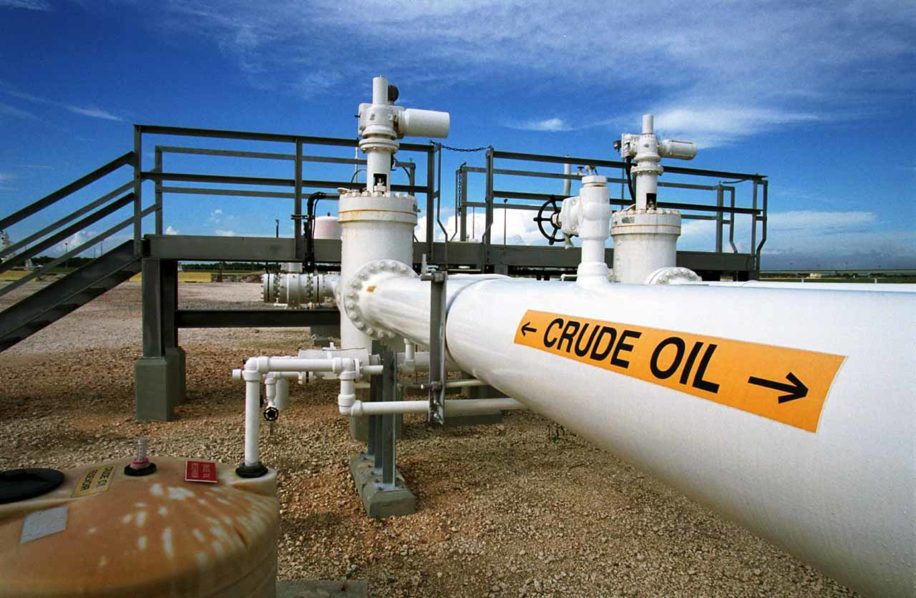
Global crude oil prices have surged close to $110 per barrel, raising fresh concerns that Nigerians could face higher costs for petrol and diesel in the coming weeks.

Brent crude climbed 3.72% to $109.90 a barrel, US West Texas Intermediate rose 3.51% to $101.40, and Murban crude advanced 3.08% to $113.40, according to market data. The gains were driven by escalating geopolitical tensions and attacks on energy infrastructure, which heightened fears of possible supply disruptions.

AlsoRead

NDIC Warns Failed-Bank Debtors Who Hide Assets and Stall Recovery

FG Seeks Fresh $500 Million World Bank Loan for Infrastructure Platform Ahead of 2027

Access Holdings Weighs Foreign Exit as CBN’s 10% Overseas Cap Forces Hard Choices

Refiners Feel the Pinch

Higher crude prices may boost government oil revenue, but they also raise the cost of feedstock for local refineries. Eche Stephen Idoko, Publicity Secretary of the Crude Oil Refiners Association of Nigeria (CORAN), noted that domestic refining alone cannot fully protect consumers from global price movements.

He explained that the naira-for-crude arrangement mainly addresses the currency of payment and does not automatically reduce the underlying cost of crude. Idoko called for more commercially sustainable supply arrangements that cut unnecessary logistics, financing and transaction costs for local refiners. Sustained high crude prices, he said, could still push fuel costs higher depending on exchange rates, international product prices, refining margins and domestic supply conditions.

Distribution Costs Add to the Burden

Clement Isong, Executive Secretary and CEO of the Major Energies Marketers Association of Nigeria (MEMAN), warned that rising international product prices and distribution expenses are already increasing pressure on domestic fuel prices.

Pump prices, he said, reflect a combination of international product costs, exchange rates, freight, financing, regulatory charges and transportation. Diesel is a key input in both road transport and the distribution of petroleum products, so higher diesel prices can also raise the cost of moving petrol to filling stations.

Data presented by Isong showed that between January and October 2026, petrol prices rose 33% to ₦1,378 per litre, while diesel increased 36% to ₦1,853 per litre.

 Impact on Households and Businesses

The crude rally threatens higher energy costs for generators, transport and industrial machinery. That, in turn, could feed into higher prices for food and other essential goods. While increased oil revenues and foreign exchange earnings would benefit the government, industry operators caution that refiners and consumers are unlikely to escape the effects of elevated international energy costs.

Isong advocated a more efficient distribution system to cut avoidable costs between refineries and the pump. He recommended prioritising commercially available domestic refined products, using imports only to cover shortfalls through competitive procurement, and improving coordination among suppliers, depot operators and transporters. He also called for transparent pricing and more predictable bulk supply arrangements.

Longer-term measures he highlighted include greater use of compressed natural gas, electric vehicles and solar power to reduce dependence on petrol and diesel, alongside temporary, targeted relief for essential economic activities where necessary  without abandoning market-based pricing.

Outlook

Whether the latest crude surge translates into further pump-price increases will depend on the path of international product prices, foreign exchange movements and the reliability of local supply. For now, the combination of near-$110 oil and already elevated distribution costs has put Nigerian fuel prices under renewed pressure.


Tags: BrentCrudeoilFG
Previous Post

FX Trading Falls 22% to $2.62 Billion as Forward Deals Plunge

Next Post

World Bank Ties $500 Million Loan to Nigeria’s Reform Progress

Related News

NDIC Begins Verification Exercise for Insured Depositors of Defunct Peak Merchant Bank.

NDIC Warns Failed-Bank Debtors Who Hide Assets and Stall Recovery

by Jide Omodele
November 10, 2026
0

The Nigeria Deposit Insurance Corporation has accused some debtors of failed banks of deliberately blocking loan recovery, through hidden assets,...

Top Story: Tinubu Present N27.5 Trillion As 2024 Budget

FG Seeks Fresh $500 Million World Bank Loan for Infrastructure Platform Ahead of 2027

by Victoria Attah
November 9, 2026
0

The Federal Government is seeking a new $500 million loan from the World Bank to build an infrastructure financing platform,...

Access Holdings Weighs Foreign Exit as CBN’s 10% Overseas Cap Forces Hard Choices

by Jide Omodele
November 9, 2026
0

Access Holdings may sell or close at least one overseas banking unit as Nigeria’s largest lender by assets races to...

Petrol Hits ₦1,370 in Lagos as Depot Price Hikes Feed Through to Pumps

by Akpan Edidong
November 6, 2026
0

Petrol is selling for as much as ₦1,370 per litre in Lagos after a fresh round of depot price increases...

Next Post
World Bank Extends Nigeria’s Digital Identification Project Deadline Amid Missed Targets

World Bank Ties $500 Million Loan to Nigeria’s Reform Progress

Leave a Reply Cancel reply

Your email address will not be published. Required fields are marked *

Recommended

NDIC Begins Verification Exercise for Insured Depositors of Defunct Peak Merchant Bank.

NDIC Warns Failed-Bank Debtors Who Hide Assets and Stall Recovery

November 10, 2026
CBN Allows Oil Companies to Resume Dollar Sales to Banks in Effort to Boost Supply.

CBN Offers ₦1.5 Trillion in OMO Bills as Banking Cash Stays Above ₦5.9 Trillion

November 10, 2026

Popular Story

  • Top Story: Tinubu Present N27.5 Trillion As 2024 Budget

    FG Seeks Fresh $500 Million World Bank Loan for Infrastructure Platform Ahead of 2027

    0 shares
    Share 0 Tweet 0
  • CBN Offers ₦1.5 Trillion in OMO Bills as Banking Cash Stays Above ₦5.9 Trillion

    0 shares
    Share 0 Tweet 0
  • NDIC Warns Failed-Bank Debtors Who Hide Assets and Stall Recovery

    0 shares
    Share 0 Tweet 0
  • Access Holdings Weighs Foreign Exit as CBN’s 10% Overseas Cap Forces Hard Choices

    0 shares
    Share 0 Tweet 0
  • Sterling Bank to face sanctions by APCON over provocative Easter Message “Likening Christ resurrection with Agege Bread”

    0 shares
    Share 0 Tweet 0

RateCaptain

We bring you the most accurate in new and market data. Check our landing page for details.

  • Home
  • About Us
  • Privacy Policy
  • Terms & Conditions
  • Disclaimer
  • Cookie Policy
  • Contact Us

Copyright © 2022 RateCaptain - All rights reserved by RateCaptain.

No Result
View All Result
  • Home
    • About Us
    • Contact Us
  • FX Rates
  • Money Market
  • Cryptocurrency
  • Commodities
  • Corporates

Copyright © 2022 RateCaptain - All rights reserved by RateCaptain.

RateCaptain
Manage Cookie Consent
To provide the best experiences, we use technologies like cookies to store and/or access device information. Consenting to these technologies will allow us to process data such as browsing behavior or unique IDs on this site. Not consenting or withdrawing consent, may adversely affect certain features and functions.
Functional Always active
The technical storage or access is strictly necessary for the legitimate purpose of enabling the use of a specific service explicitly requested by the subscriber or user, or for the sole purpose of carrying out the transmission of a communication over an electronic communications network.
Preferences
The technical storage or access is necessary for the legitimate purpose of storing preferences that are not requested by the subscriber or user.
Statistics
The technical storage or access that is used exclusively for statistical purposes. The technical storage or access that is used exclusively for anonymous statistical purposes. Without a subpoena, voluntary compliance on the part of your Internet Service Provider, or additional records from a third party, information stored or retrieved for this purpose alone cannot usually be used to identify you.
Marketing
The technical storage or access is required to create user profiles to send advertising, or to track the user on a website or across several websites for similar marketing purposes.
  • Manage options
  • Manage services
  • Manage {vendor_count} vendors
  • Read more about these purposes
View preferences
  • {title}
  • {title}
  • {title}
?>