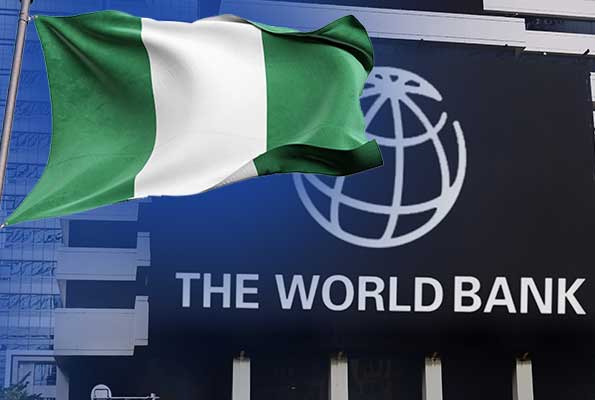
The World Bank has attached clear conditions to a $500 million development loan for Nigeria under the Nigeria Actions for Investment and Jobs Acceleration (NAIJA) Development Policy Financing programme.
The facility, signed on 6 October 2026 by Finance Minister and Coordinating Minister of the Economy Taiwo Oyedele, forms part of a broader $1.25 billion package approved by the World Bank in June 2026. Disbursement will depend on the country demonstrating satisfactory progress on agreed economic reforms aimed at strengthening the business environment, improving public revenue collection and reducing trade barriers.
How the Money Will Be Released
The $500 million loan from the International Bank for Reconstruction and Development (IBRD) is structured in two equal withdrawal tranches of $249.375 million each, with $1.25 million set aside for the front-end fee.
Release of the first tranche requires the World Bank to be satisfied that the overall programme is being implemented and that Nigeria’s macroeconomic policy framework remains adequate.
The second tranche carries additional requirements. The government must provide evidence that specific policy actions linked to the programme’s objectives have been completed. The bank must also remain satisfied with both the progress of the programme and the state of the macroeconomic framework.
If Nigeria fails to take corrective steps that meet the bank’s standards within 90 days of receiving a formal notice, the World Bank reserves the right to cancel all or part of any undisbursed balance.
Accountability and Reporting Rules
The agreement requires Nigeria to maintain a dedicated foreign-currency account for the loan proceeds and to record an equivalent amount in its budget management system.
Within 30 days of each withdrawal, the Federal Ministry of Finance must report to the World Bank the amount received, the account into which the naira equivalent was credited, proof that the funds were recorded in the budget system, and a statement of receipts and disbursements from the dedicated account.
The account must also be audited by Central Bank of Nigeria auditors acceptable to the World Bank within one month of each withdrawal. A certified copy of the audit report is to be submitted within four months and made publicly available in a timely manner.
The loan’s closing date is set at 31 December 2027.
Broader Context and Public Debate
The $500 million facility sits within the larger $1.25 billion Development Policy Financing operation approved in June as part of the World Bank’s Country Partnership Framework for 2026–2032. That approval drew public criticism over Nigeria’s rising debt levels and calls for greater accountability on previous external loans.
The World Bank has said the overall package is designed to support reforms that strengthen the foundations for growth, improve competitiveness and encourage private-sector investment.
Separately, the bank recently highlighted a sharp rise in Nigeria’s interest payments, which reached ₦7.7 trillion in the first half of 2026 equivalent to 124.19% of federal government revenue on the measure it used, or 3.1% of GDP. The Federal Government has disputed the interpretation, arguing that the ratio compares federal interest costs with an incomplete revenue base and mixes obligations across different tiers of government.
What It Means
Access to the $500 million will depend less on the signing of the agreement and more on the government’s ability to deliver measurable progress on the agreed reform agenda. For investors and citizens watching Nigeria’s debt trajectory, the real test will be whether the conditions translate into tangible improvements in the business climate, revenue performance and trade facilitation or whether the money is delayed or partially cancelled if those benchmarks are not met.
—
**Hashtags**:
#WorldBank #Nigeria #NAIJA #DevelopmentLoan #TaiwoOyedele #PublicDebt #EconomicReforms #IBRD