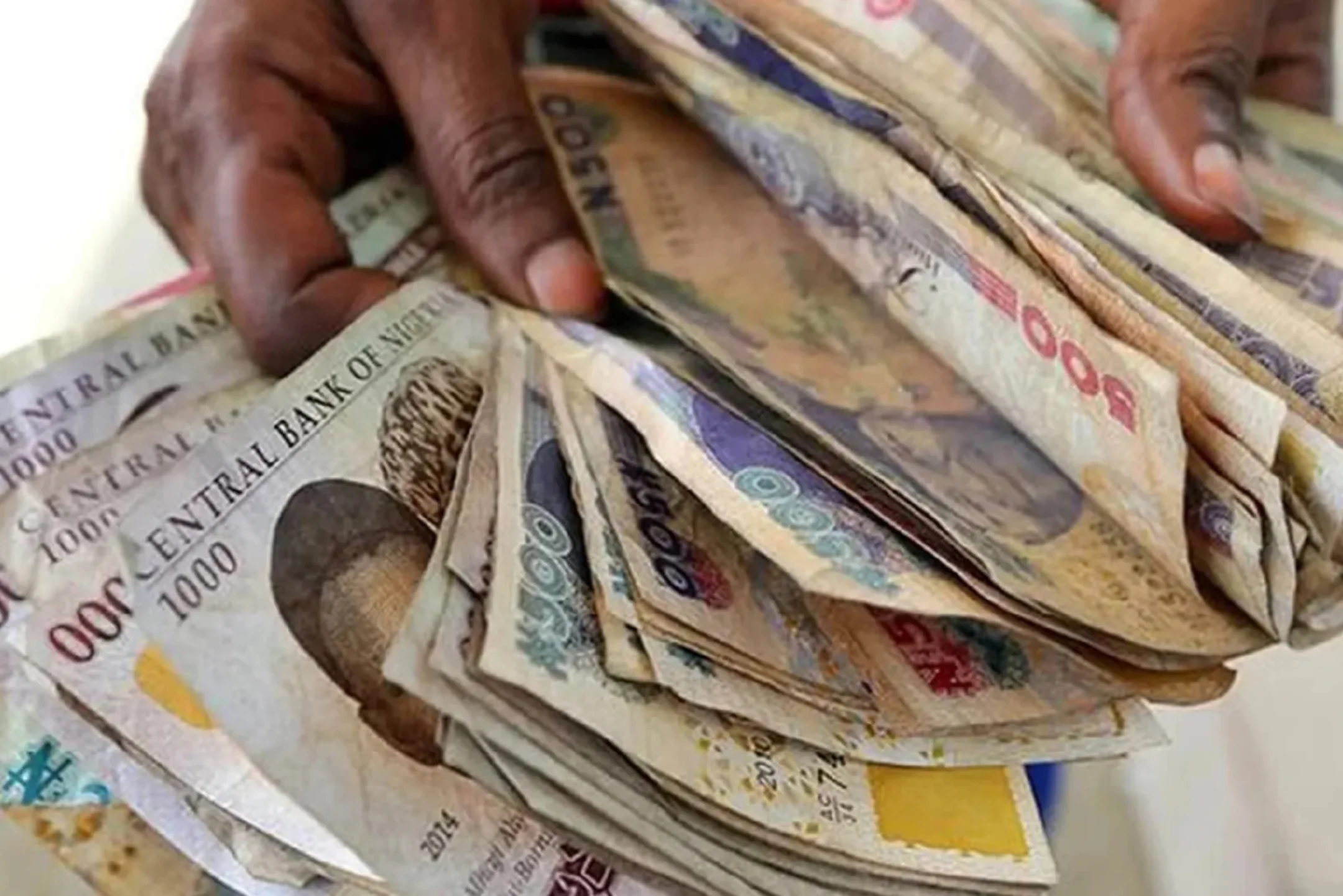
Currency in circulation in Nigeria rose 72.4 per cent over five years to reach N5.73 trillion in 2025, yet the real purchasing power of the naira has fallen sharply under persistent inflation. Analysts argue that while the Central Bank of Nigeria expanded the stock of notes, many Nigerians became poorer in real terms.
Nominal Growth Versus Real Decline
Central Bank of Nigeria data show currency in circulation increased from N3.325 trillion in 2021 to N5.733 trillion in 2025. The figure dipped to N3.011 trillion in 2022, recovered to N3.653 trillion in 2023, jumped 49 per cent to N5.441 trillion in 2024 and settled at N5.733 trillion in 2025.
In its 2025 Annual Report, the apex bank linked the rise to faster economic activity and stronger demand for cash. It approved a currency indent of 5,706.8 million pieces across denominations for 2025, 20.5 per cent higher than the 4,737.5 million pieces approved the previous year.
Economic analysts caution, however, that the increase cannot be read solely as a sign of stronger economic activity. Inflation and the rapid expansion of electronic payments are also influencing demand for physical cash.
Inflation Erodes Purchasing Power
Dele Kelvin Oye, Chairman of Alliance for Economic Research and Ethics Ltd/Gte, examined the CBN series from 2021 to 2025 and concluded that the headline rise masked a decline in the real value of cash held by Nigerians. He estimated that purchasing power fell by about 14.3 per cent in real terms in 2025. Average annual inflation stood at 23.01 per cent, while nominal currency in circulation grew by only 5.37 per cent.
“The CBN printed more paper. Nigerians got poorer,” Oye said, questioning the central bank’s portrayal of the increase as straightforward evidence of rising cash demand. He argued that growth in physical currency should be assessed against price movements and the changing structure of payments.
Oye’s analysis showed that currency in circulation as a share of nominal gross domestic product stood at about 1.30 per cent in 2025, down from 1.46 per cent in 2024 and 1.37 per cent in 2021. Inflation, he said, has compelled Nigerians to use larger quantities of naira notes to buy goods and services whose prices have risen sharply, particularly in segments of the economy where cash remains dominant.
Redesign Shock and the Cashless Shift
Currency in circulation contracted 9.4 per cent in 2022 after the naira redesign policy introduced under former CBN Governor Godwin Emefiele. It then rebounded 21.3 per cent in 2023 and surged 49 per cent in 2024. Oye noted that the unusually large 2024 increase should not be treated as normal underlying demand, given the cash-supply disruptions that accompanied and followed the redesign. The 5.4 per cent growth recorded in 2025 therefore represented a marked moderation.
Muda Yusuf, Chief Executive Officer of the Centre for the Promotion of Private Enterprise, cautioned against attributing the entire rise to inflation. Stronger economic activity was also playing a role, he said. Nigeria’s real GDP growth accelerated to 3.87 per cent in 2025 from 3.38 per cent in 2024. “Certainly the growth in the absolute figures is a reflection of the growth in the economy,” Yusuf stated. “As the economy grows, the demand for cash will also grow, so there’s a correlation between economic growth and demand for cash.”
He added that the slower expansion of currency in circulation between 2024 and 2025 could partly reflect the rapid adoption of electronic payments. “If you look at the numbers in terms of electronic payments, the growth is staggering in the growth of electronic payments over this period,” he said.
Implications for Households and Policy
For the naira and for Nigerian businesses, the key message is that the N5.73 trillion cash stock largely reflects higher prices rather than greater wealth. Inflation means households and firms must hold and spend more naira to purchase the same basket of goods. That reality continues to weigh on living costs and complicates the Central Bank’s efforts to accelerate the shift toward a more cashless economy.