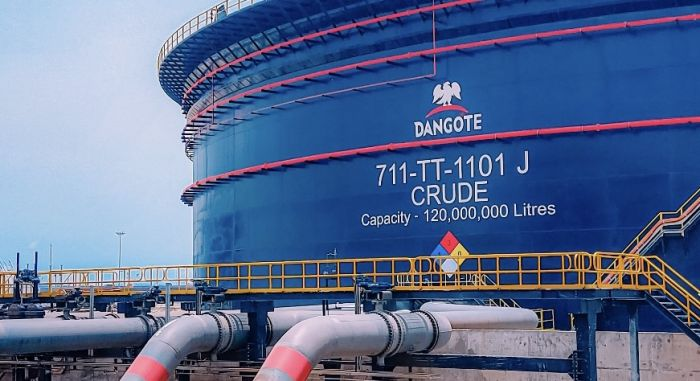
Nigeria’s downstream petroleum market may be on the brink of a dramatic reset as Dangote Petroleum Refinery prepares to begin direct petrol deliveries to marketers at zero transport cost, a move that could fundamentally alter fuel pricing dynamics across the country.
The initiative, confirmed by Independent Petroleum Marketers Association of Nigeria (IPMAN) President, Abubakar Shettima, is scheduled to take off in January 2026 and is already stirring excitement among marketers and consumers alike. By absorbing logistics costs—long considered one of the biggest contributors to high pump prices—the refinery is positioning itself as a disruptive force in a market still adjusting to life after fuel subsidies.
According to Shettima, the plan is simple but powerful: Dangote’s fleet will deliver refined products directly to marketers nationwide, eliminating haulage charges that often inflate retail prices, especially in northern and inland regions. “Transportation has always been a hidden tax on petrol prices,” he said. “Once that burden is removed, price reductions become inevitable.”
The strategy goes beyond cost savings. It is part of a broader effort to stabilise fuel supply, reduce dependence on imports, and strengthen local distribution networks. With domestic refining capacity coming on stream, marketers are increasingly looking inward rather than relying on imported products that expose the market to foreign exchange volatility and global supply shocks.
IPMAN says its members are already preparing for downward price adjustments once the free-delivery scheme begins. Shettima noted that registered IPMAN marketers would be the primary beneficiaries in the first phase, adding that discussions are ongoing with other industry associations to ensure nationwide coverage.
The implications could be far-reaching. For years, logistics costs have disproportionately affected fuel prices outside major coastal hubs. By centralising and subsidising delivery, Dangote’s move could narrow regional price disparities and bring relief to consumers in areas that traditionally pay more at the pump.
Beyond pricing, Shettima used the moment to renew calls for policies that deepen Nigeria’s shift away from imported fuel, warning that continued reliance on imports drains foreign exchange, weakens local investment, and costs jobs. “Local refining is the sustainable path,” he said, “and this initiative shows what is possible when domestic capacity is fully leveraged.”
The refinery is also expanding its support infrastructure for marketers, aiming to ensure seamless loading, dispatch, and delivery nationwide. Industry watchers say this operational push signals Dangote’s intention to play a long-term, system-shaping role in the downstream sector—not just as a supplier, but as a logistics anchor.
The development comes against the backdrop of recently adjusted petrol prices, with NNPC pump prices at about N815 per litre in Abuja and N785 per litre in Lagos, keeping consumers alert to any relief on the horizon.
As January 2026 approaches, all eyes are on how quickly these promised savings will filter through to filling stations. If executed as planned, Dangote’s free-delivery model could mark a turning point proof that homegrown solutions, not imports, may hold the key to cheaper and more stable fuel prices in Nigeria.