RateCaptain
  • Home
    • About Us
    • Contact Us
  • FX Rates
  • Money Market
  • Cryptocurrency
  • Commodities
  • Corporates
No Result
View All Result
Subscribe
  • Home
    • About Us
    • Contact Us
  • FX Rates
  • Money Market
  • Cryptocurrency
  • Commodities
  • Corporates
No Result
View All Result
RateCaptain
No Result
View All Result
Home Economy

Dangote Refinery Ups the Ante: Free Petrol Delivery Set to Rewrite Nigeria’s Fuel Pricing Playbook

Akpan Edidong by Akpan Edidong
January 7, 2026
in Economy
Reading Time: 2 mins read
A A
0
Oil Marketers Dismiss Claims of Dangote Refinery Selling Fuel in Dollars
Share on FacebookShare on TwitterShare on WhatsappShare on Telegram

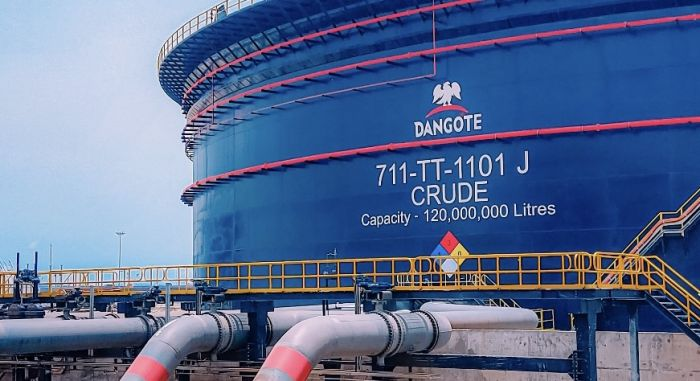
Nigeria’s downstream petroleum market may be on the brink of a dramatic reset as Dangote Petroleum Refinery prepares to begin direct petrol deliveries to marketers at zero transport cost, a move that could fundamentally alter fuel pricing dynamics across the country.

The initiative, confirmed by Independent Petroleum Marketers Association of Nigeria (IPMAN) President, Abubakar Shettima, is scheduled to take off in January 2026 and is already stirring excitement among marketers and consumers alike. By absorbing logistics costs—long considered one of the biggest contributors to high pump prices—the refinery is positioning itself as a disruptive force in a market still adjusting to life after fuel subsidies.

AlsoRead

NGX Market Capitalisation Drops N1.35 Trillion as Profit-Taking Triggers 0.86% Decline

Nigeria’s Passport Rises to 89th on Henley Index but Visa-Free Access Falls to 44 Destinations

Subnational External Debt Surges as 32 States, FCT Borrow Nearly $1 Billion in 2025

According to Shettima, the plan is simple but powerful: Dangote’s fleet will deliver refined products directly to marketers nationwide, eliminating haulage charges that often inflate retail prices, especially in northern and inland regions. “Transportation has always been a hidden tax on petrol prices,” he said. “Once that burden is removed, price reductions become inevitable.”

The strategy goes beyond cost savings. It is part of a broader effort to stabilise fuel supply, reduce dependence on imports, and strengthen local distribution networks. With domestic refining capacity coming on stream, marketers are increasingly looking inward rather than relying on imported products that expose the market to foreign exchange volatility and global supply shocks.

IPMAN says its members are already preparing for downward price adjustments once the free-delivery scheme begins. Shettima noted that registered IPMAN marketers would be the primary beneficiaries in the first phase, adding that discussions are ongoing with other industry associations to ensure nationwide coverage.

The implications could be far-reaching. For years, logistics costs have disproportionately affected fuel prices outside major coastal hubs. By centralising and subsidising delivery, Dangote’s move could narrow regional price disparities and bring relief to consumers in areas that traditionally pay more at the pump.

Beyond pricing, Shettima used the moment to renew calls for policies that deepen Nigeria’s shift away from imported fuel, warning that continued reliance on imports drains foreign exchange, weakens local investment, and costs jobs. “Local refining is the sustainable path,” he said, “and this initiative shows what is possible when domestic capacity is fully leveraged.”

The refinery is also expanding its support infrastructure for marketers, aiming to ensure seamless loading, dispatch, and delivery nationwide. Industry watchers say this operational push signals Dangote’s intention to play a long-term, system-shaping role in the downstream sector—not just as a supplier, but as a logistics anchor.

The development comes against the backdrop of recently adjusted petrol prices, with NNPC pump prices at about N815 per litre in Abuja and N785 per litre in Lagos, keeping consumers alert to any relief on the horizon.

As January 2026 approaches, all eyes are on how quickly these promised savings will filter through to filling stations. If executed as planned, Dangote’s free-delivery model could mark a turning point proof that homegrown solutions, not imports, may hold the key to cheaper and more stable fuel prices in Nigeria.


Tags: Dangote
Previous Post

Race Against the Clock: Nigerian Banks Rush to Lock In Capital Before CBN Deadline

Next Post

Poverty Tightens Its Grip on Nigeria as 141 Million Face Hardship by 2026

Related News

Nigeria’s Stock Market Records N1.81 Trillion Gain in July.

NGX Market Capitalisation Drops N1.35 Trillion as Profit-Taking Triggers 0.86% Decline

by Jide Omodele
May 6, 2026
0

The Nigerian Exchange (NGX) came under significant selling pressure on Tuesday, May 6, 2026, as investors booked profits on major...

Nigerian Students Spend $340.84 Million on Foreign University Applications in the H1 of 2023

Nigeria’s Passport Rises to 89th on Henley Index but Visa-Free Access Falls to 44 Destinations

by Victoria Attah
May 6, 2026
0

Nigeria’s passport has recorded a modest improvement in global ranking, climbing to 89th position in the latest Henley Passport Index...

FG Allocates N5.1 Billion for Presidential Yacht and N5.5 Billion For Student Loans

Subnational External Debt Surges as 32 States, FCT Borrow Nearly $1 Billion in 2025

by Victoria Attah
May 4, 2026
0

Nigerian states and the Federal Capital Territory (FCT) significantly ramped up their foreign borrowing in 2025, with 32 states and...

Nigeria Plans New FX Rules, Targeting 750 Naira Exchange Rate

Naira Posts First April Appreciation as it hits ₦1,374/$ Since NAFEX Era

by Jide Omodele
May 4, 2026
0

The Nigerian naira recorded a month-on-month gain in April 2026, marking its first positive April performance since the introduction of...

Next Post
States and Local Governments Witness a 27.62% Increase in Revenue Amid Economic Hardship.

Poverty Tightens Its Grip on Nigeria as 141 Million Face Hardship by 2026

Leave a Reply Cancel reply

Your email address will not be published. Required fields are marked *

Recommended

Dangote: Cement Industry Contributes 7% to Global Emissions

Dangote Cement Eyes London Stock Exchange Listing Before End of 2026

May 8, 2026
South Africa Poised to Surpass Nigeria as Africa’s Largest Economy

Nigeria’s Fixed Income Market Set for Massive N10.53 Trillion Liquidity Inflow in May

May 8, 2026

Popular Story

  • Battered Commodity Currencies Gain Attention Amid Dollar’s Decline.

    Naira Strengthens Further Against US Dollar, Approaches N1,350 Level

    0 shares
    Share 0 Tweet 0
  • Nigeria’s Fixed Income Market Set for Massive N10.53 Trillion Liquidity Inflow in May

    0 shares
    Share 0 Tweet 0
  • Banks Post Record N26.3 Trillion Revenue in 2025, But Profits Decline on Loan Provisions

    0 shares
    Share 0 Tweet 0
  • Dangote Cement Eyes London Stock Exchange Listing Before End of 2026

    0 shares
    Share 0 Tweet 0
  • NGX Market Capitalisation Drops N1.35 Trillion as Profit-Taking Triggers 0.86% Decline

    0 shares
    Share 0 Tweet 0

RateCaptain

We bring you the most accurate in new and market data. Check our landing page for details.

  • Home
  • About Us
  • Privacy Policy
  • Terms & Conditions
  • Disclaimer
  • Cookie Policy
  • Contact Us

Copyright © 2022 RateCaptain - All rights reserved by RateCaptain.

No Result
View All Result
  • Home
    • About Us
    • Contact Us
  • FX Rates
  • Money Market
  • Cryptocurrency
  • Commodities
  • Corporates

Copyright © 2022 RateCaptain - All rights reserved by RateCaptain.

RateCaptain
Manage Cookie Consent
To provide the best experiences, we use technologies like cookies to store and/or access device information. Consenting to these technologies will allow us to process data such as browsing behavior or unique IDs on this site. Not consenting or withdrawing consent, may adversely affect certain features and functions.
Functional Always active
The technical storage or access is strictly necessary for the legitimate purpose of enabling the use of a specific service explicitly requested by the subscriber or user, or for the sole purpose of carrying out the transmission of a communication over an electronic communications network.
Preferences
The technical storage or access is necessary for the legitimate purpose of storing preferences that are not requested by the subscriber or user.
Statistics
The technical storage or access that is used exclusively for statistical purposes. The technical storage or access that is used exclusively for anonymous statistical purposes. Without a subpoena, voluntary compliance on the part of your Internet Service Provider, or additional records from a third party, information stored or retrieved for this purpose alone cannot usually be used to identify you.
Marketing
The technical storage or access is required to create user profiles to send advertising, or to track the user on a website or across several websites for similar marketing purposes.
  • Manage options
  • Manage services
  • Manage {vendor_count} vendors
  • Read more about these purposes
View preferences
  • {title}
  • {title}
  • {title}
?>