RateCaptain
  • Home
    • About Us
    • Contact Us
  • FX Rates
  • Money Market
  • Cryptocurrency
  • Commodities
  • Corporates
No Result
View All Result
Subscribe
  • Home
    • About Us
    • Contact Us
  • FX Rates
  • Money Market
  • Cryptocurrency
  • Commodities
  • Corporates
No Result
View All Result
RateCaptain
No Result
View All Result
Home Economy

Electricity Tariffs Skyrocket to N10,000 for 100 Units- Expert

Stephen Akudike by Stephen Akudike
September 13, 2023
in Economy
Reading Time: 2 mins read
A A
0
Electricity Tariffs Skyrocket to N10,000 for 100 Units- Expert
Share on FacebookShare on TwitterShare on WhatsappShare on Telegram

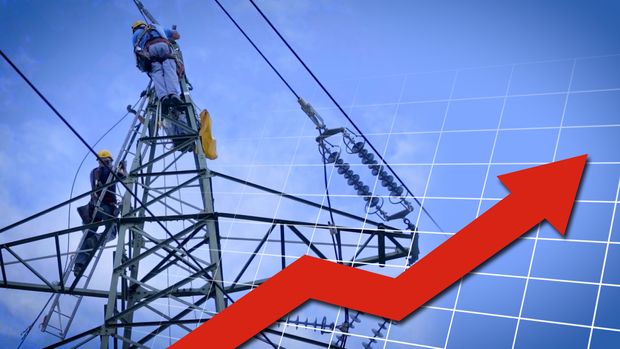
The anticipated 40 percent increase in electricity tariffs in Nigeria has raised concerns among consumers. Mr. Abiodun Ogunleye, CEO of PowerCap Limited, recently projected that consumers may end up paying as much as N10,000 for 100 units of electricity if the tariff hike is implemented. Ogunleye, with his extensive experience in the power industry, highlighted the impact of macroeconomic factors such as inflation and foreign exchange on the inevitable tariff increase. As the nation prepares for the 2023 PowerSolution Conference, it is crucial to examine the implications of these changes and explore potential solutions to bridge the gaps in the power sector.

Understanding the Tariff Increase

AlsoRead

Nigeria’s Foreign Reserves Rise by $551 Million in Three Weeks

Is the World Underestimating Nigeria?

Dangote Refinery Reduces Aviation Fuel Price to N1,650 per Litre

Ogunleye drew a comparison between previous administrations, stating that during President Goodluck Jonathan’s tenure, consumers could purchase 100 units of electricity for around N1,500 to N1,600. However, as President Muhammadu Buhari’s administration concluded, the cost had risen to approximately N6,000 to N7,000 for the same 100 units. Based on these observations, Ogunleye projected that if the trend continues, consumers may face a cost of approximately N10,000 for 100 units.

Factors Driving the Tariff Increase

One of the primary drivers of the tariff increase is the fluctuation in foreign exchange rates. The power sector heavily relies on imported equipment, including gas generators. Ogunleye explained that gas suppliers consider international gas market conditions when deciding whether to supply gas to local generation companies or sell it on the international market. This dependency on foreign exchange rates, coupled with inflationary pressures, has contributed to the inevitable tariff increase.

Challenges Faced by Distribution Companies (Discos)

Ogunleye acknowledged that Distribution Companies (Discos) and their investors may have incurred losses, often unbeknownst to consumers. Many Discos have been reclaimed by the federal government. However, if inflation and tariff increments are removed from the equation and the Discos’ net income is reassessed, it becomes apparent that they are not making as much profit as previously assumed.

The Need for Market Forces and Fair Tariffs

To address the issue of tariffs, Ogunleye emphasized the importance of allowing market forces to determine prices. While consumers may perceive Discos as profiting excessively, factors such as exchange rate fluctuations and inflation must be considered. It is crucial to define a fair tariff that considers the economic realities and encourages market growth. Subsidizing the electricity sector or shifting subsidies from petrol to electricity could have unintended consequences, making market-driven solutions more prudent.

The PowerSolution Conference

The upcoming 2023 PowerSolution Conference aims to address these challenges and offer insights into the recently enacted Electricity Act. Experts will discuss the implications of the Act for sub-national and federal governments, as well as opportunities and challenges within the power sector. Key topics for discussion include creating the right operating environment for state governments, increasing power generation capacity, enhancing transmission and distribution infrastructure, and ensuring a sustainable grid.

Bottom Line

The projected increase in electricity tariffs in Nigeria has raised concerns among consumers. As the power sector faces various challenges, including inflation and foreign exchange fluctuations, it becomes imperative to find sustainable solutions. Market-driven pricing, fair tariffs, and addressing the challenges faced by distribution companies are crucial for the long-term growth and stability of the power sector. The PowerSolution Conference provides an opportunity to engage stakeholders and explore strategies to bridge the gaps in Nigeria’s power sector for a sustainable and reliable electricity supply
Tags: #inflation#NigeriaConsumer ConcernsDistribution CompaniesElectricity ActElectricity tariffsFair TariffsForeign Exchange FluctuationsGrid Stabilitymarket forcesPower Generation Capacitypower sectorPowerSolution ConferenceSustainable SolutionsTariff increaseTransmission and Distribution Infrastructure.
Previous Post

CPPE Urges Tinubu’s Administration to Mitigate Impact of Reforms.

Next Post

Rising Borrowing Costs and Declining Growth in Nigerian Banking Industry.

Related News

Naira depreciates to N755/$ in the parallel market.

Nigeria’s Foreign Reserves Rise by $551 Million in Three Weeks

by Jide Omodele
May 25, 2026
0

Nigeria’s external reserves have recorded a notable recovery in May 2026, climbing by approximately $551 million within the first three...

Exploring the data on multidimensional and monetary poverty in Nigeria.

Is the World Underestimating Nigeria?

by Stephen Akudike
May 21, 2026
0

For years, conversations about the future of global power have sounded familiar. China. The United States. India. Perhaps the European...

Airlines Implement Time-Saving Strategies for More Efficient Operations

Dangote Refinery Reduces Aviation Fuel Price to N1,650 per Litre

by Akpan Edidong
May 21, 2026
0

Dangote Petroleum Refinery & Petrochemicals has announced a significant reduction in the price of Jet A1 (aviation fuel), slashing it...

NEC Affirms CBN $3 Billion Loan for Naira Stability

CBN Denies Heavy Intervention in FX Market, Highlights Minimal Participation

by Jide Omodele
May 21, 2026
0

The Central Bank of Nigeria (CBN) has refuted allegations of aggressive intervention in the foreign exchange market, insisting that its...

Next Post
Rising Borrowing Costs and Declining Growth in Nigerian Banking Industry.

Rising Borrowing Costs and Declining Growth in Nigerian Banking Industry.

Leave a Reply Cancel reply

Your email address will not be published. Required fields are marked *

Recommended

Airlines Implement Time-Saving Strategies for More Efficient Operations

FAAN Engages International Airlines on Improved Airport Operations and Passenger Experience

May 25, 2026
FMDQ Exchange Records N21.70 Trillion Secondary Market Turnover in October

FMDQ Turnover Hits $180.85 Billion as Trading Volume Surge

May 25, 2026

Popular Story

  • Yuga Labs $450M Funding Shoots ApeCoin (APE) Above 10%

    0 shares
    Share 0 Tweet 0
  • Cement Prices Climb to N12,000 per Bag as BUA Points to Forex and Energy Challenges

    0 shares
    Share 0 Tweet 0
  • M-Kopa Raises $255 Million in Funding to Expand Financial Inclusion in Sub-Saharan Africa.

    0 shares
    Share 0 Tweet 0
  • N500bn: NECA, experts demand independent CBN audit

    0 shares
    Share 0 Tweet 0
  • CBN Encourages Nigerian’s To Embrace E-Naira

    0 shares
    Share 0 Tweet 0

RateCaptain

We bring you the most accurate in new and market data. Check our landing page for details.

  • Home
  • About Us
  • Privacy Policy
  • Terms & Conditions
  • Disclaimer
  • Cookie Policy
  • Contact Us

Copyright © 2022 RateCaptain - All rights reserved by RateCaptain.

No Result
View All Result
  • Home
    • About Us
    • Contact Us
  • FX Rates
  • Money Market
  • Cryptocurrency
  • Commodities
  • Corporates

Copyright © 2022 RateCaptain - All rights reserved by RateCaptain.

RateCaptain
Manage Cookie Consent
To provide the best experiences, we use technologies like cookies to store and/or access device information. Consenting to these technologies will allow us to process data such as browsing behavior or unique IDs on this site. Not consenting or withdrawing consent, may adversely affect certain features and functions.
Functional Always active
The technical storage or access is strictly necessary for the legitimate purpose of enabling the use of a specific service explicitly requested by the subscriber or user, or for the sole purpose of carrying out the transmission of a communication over an electronic communications network.
Preferences
The technical storage or access is necessary for the legitimate purpose of storing preferences that are not requested by the subscriber or user.
Statistics
The technical storage or access that is used exclusively for statistical purposes. The technical storage or access that is used exclusively for anonymous statistical purposes. Without a subpoena, voluntary compliance on the part of your Internet Service Provider, or additional records from a third party, information stored or retrieved for this purpose alone cannot usually be used to identify you.
Marketing
The technical storage or access is required to create user profiles to send advertising, or to track the user on a website or across several websites for similar marketing purposes.
  • Manage options
  • Manage services
  • Manage {vendor_count} vendors
  • Read more about these purposes
View preferences
  • {title}
  • {title}
  • {title}
?>