RateCaptain
  • Home
    • About Us
    • Contact Us
  • FX Rates
  • Money Market
  • Cryptocurrency
  • Commodities
  • Corporates
No Result
View All Result
Subscribe
  • Home
    • About Us
    • Contact Us
  • FX Rates
  • Money Market
  • Cryptocurrency
  • Commodities
  • Corporates
No Result
View All Result
RateCaptain
No Result
View All Result
Home Economy

FG Borrowing from Banks Soars by N17.4 Trillion in One Year

Victoria Attah by Victoria Attah
June 25, 2026
in Economy
Reading Time: 2 mins read
A A
0
Nigeria’s Debt to China Surges by $800 Million in One Year
Share on FacebookShare on TwitterShare on WhatsappShare on Telegram

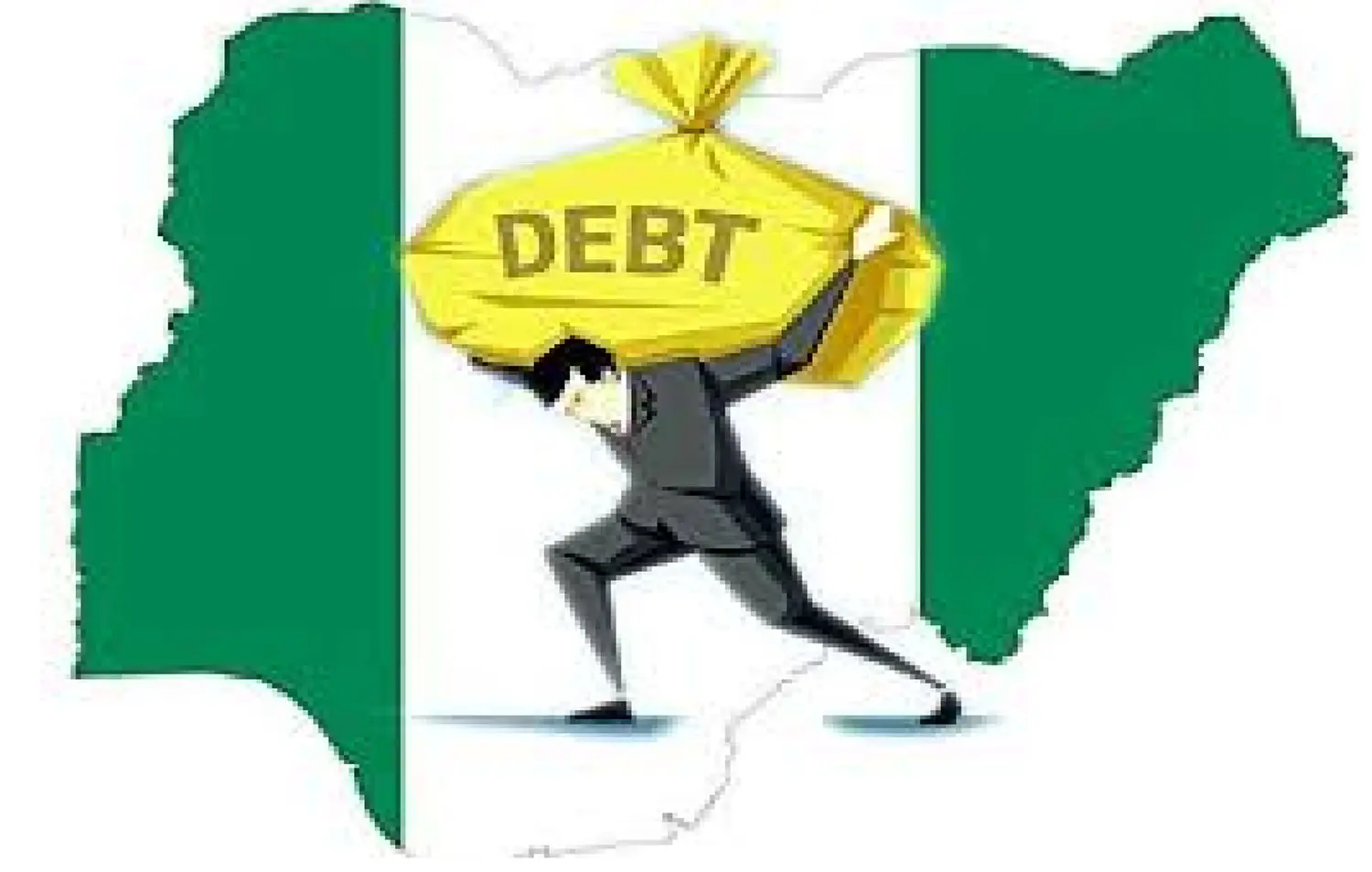
The Federal Government’s borrowing from the banking sector increased dramatically by N17.39 trillion (75.6%) over the 12 months ending in May 2026, reaching a total of N40.38 trillion, according to the latest monetary and credit statistics released by the Central Bank of Nigeria (CBN).

This sharp rise highlights the government’s growing reliance on domestic financing even as the CBN maintains a tight monetary policy to control inflation.

AlsoRead

Petrol Price Climbs to N1,596 per Litre in May, Edo Leads States

Diesel Price Soars to N3,277 per Litre in May 2026 Amid Persistent Cost Pressures

Fitch Raises Concerns Over Nigeria’s $5bn Total Return Swap Deal

On a month-on-month basis, credit to the government expanded further by N779.70 billion from N39.60 trillion in April, showing no signs of slowing down.

Banks Shift Focus to Government Debt

Commercial and merchant banks have increasingly directed liquidity toward low-risk government securities such as Treasury bills and FGN bonds, rather than lending aggressively to the private sector. This preference for sovereign debt reflects a strategic recalibration of risk appetite amid prevailing macroeconomic uncertainties.

In comparison, private sector credit grew more modestly to N81.04 trillion in May, up from N80.59 trillion the previous month. Although private sector lending remains significantly larger in absolute terms (roughly twice the size of public sector credit), its growth has been relatively subdued.

Potential Crowding Out of Private Sector

Economic analysts say the heavy tilt toward public sector borrowing risks creating a persistent “crowding out” effect. With banks favouring high-yield government instruments, access to affordable credit for businesses and manufacturers could become more constrained, potentially limiting investment, job creation, and overall economic expansion.

The data reflects the government’s strategy to finance its fiscal deficit through domestic debt markets while reducing dependence on direct Central Bank financing.

The CBN is yet to release a detailed sectoral breakdown of private sector credit for the period, but the overall trend points to a banking system that is increasingly oriented toward supporting government funding needs.

As fiscal pressures persist, the challenge for policymakers will be to strike a better balance between meeting public sector financing requirements and ensuring sufficient credit flows to the real economy to support sustainable growth.


Tags: DebtFG
Previous Post

Petrol Price Climbs to N1,596 per Litre in May, Edo Leads States

Related News

Petrol Price Climbs to N1,596 per Litre in May, Edo Leads States

by Victoria Attah
June 25, 2026
0

Nigerians paid an average of N1,596.25 per litre for petrol in May 2026, according to the latest report from the...

Diesel Price Soars to N3,277 per Litre in May 2026 Amid Persistent Cost Pressures

by Akpan Edidong
June 25, 2026
0

The average retail price of diesel (Automotive Gas Oil) in Nigeria climbed sharply to N3,277.47 per litre in May 2026,...

Bola Tinubu’s proposed economic plans for Nigeria.

Fitch Raises Concerns Over Nigeria’s $5bn Total Return Swap Deal

by Jide Omodele
June 23, 2026
0

Global credit rating agency Fitch Ratings has cautioned that Nigeria’s planned $5 billion total return swap (TRS) financing arrangement could...

Lagos CITN District Reports Strong 28% Revenue Growth in 2025

by Victoria Attah
June 22, 2026
0

The Lagos & District Society of the Chartered Institute of Taxation of Nigeria (CITN) achieved a notable 28% increase in...

Leave a Reply Cancel reply

Your email address will not be published. Required fields are marked *

Recommended

Nigeria’s Debt to China Surges by $800 Million in One Year

FG Borrowing from Banks Soars by N17.4 Trillion in One Year

June 25, 2026

Petrol Price Climbs to N1,596 per Litre in May, Edo Leads States

June 25, 2026

Popular Story

  • CBN – FG incurred N930.8bn Fiscal Deficit in January and February 2023.

    High Interest Rates Outweigh Insecurity, Power Issues as Top Business Concern – CBN

    0 shares
    Share 0 Tweet 0
  • 31 Nigerian States Grapple with N2.57 Trillion Domestic Debt Amid No Foreign Inflows

    0 shares
    Share 0 Tweet 0
  • Fitch Raises Concerns Over Nigeria’s $5bn Total Return Swap Deal

    0 shares
    Share 0 Tweet 0
  • Fair Money Job Opening: Regional Sales Manager

    0 shares
    Share 0 Tweet 0
  • Gold Price hit $2000 amidst Russia-Ukraine War

    0 shares
    Share 0 Tweet 0

RateCaptain

We bring you the most accurate in new and market data. Check our landing page for details.

  • Home
  • About Us
  • Privacy Policy
  • Terms & Conditions
  • Disclaimer
  • Cookie Policy
  • Contact Us

Copyright © 2022 RateCaptain - All rights reserved by RateCaptain.

No Result
View All Result
  • Home
    • About Us
    • Contact Us
  • FX Rates
  • Money Market
  • Cryptocurrency
  • Commodities
  • Corporates

Copyright © 2022 RateCaptain - All rights reserved by RateCaptain.

RateCaptain
Manage Cookie Consent
To provide the best experiences, we use technologies like cookies to store and/or access device information. Consenting to these technologies will allow us to process data such as browsing behavior or unique IDs on this site. Not consenting or withdrawing consent, may adversely affect certain features and functions.
Functional Always active
The technical storage or access is strictly necessary for the legitimate purpose of enabling the use of a specific service explicitly requested by the subscriber or user, or for the sole purpose of carrying out the transmission of a communication over an electronic communications network.
Preferences
The technical storage or access is necessary for the legitimate purpose of storing preferences that are not requested by the subscriber or user.
Statistics
The technical storage or access that is used exclusively for statistical purposes. The technical storage or access that is used exclusively for anonymous statistical purposes. Without a subpoena, voluntary compliance on the part of your Internet Service Provider, or additional records from a third party, information stored or retrieved for this purpose alone cannot usually be used to identify you.
Marketing
The technical storage or access is required to create user profiles to send advertising, or to track the user on a website or across several websites for similar marketing purposes.
  • Manage options
  • Manage services
  • Manage {vendor_count} vendors
  • Read more about these purposes
View preferences
  • {title}
  • {title}
  • {title}
?>