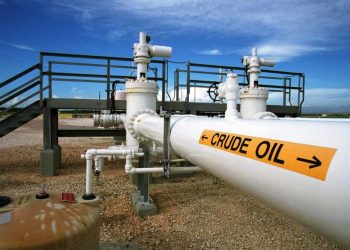
Brent crude has dropped more than $16 per barrel over eight trading sessions, wiping out most of the gains sparked by the recent Middle East conflict as the United States and Iran move toward renewed negotiations.
On Monday, West Texas Intermediate opened 5.24% lower at $80.23 per barrel, while Brent declined to $83.86, extending a sell-off that has reversed the late-July surge.
Rally Reversed by Diplomatic Signals
Brent had climbed to $100.30 per barrel on July 23 and WTI reached $91.70, their highest levels since May, after fresh US-Iran military exchanges raised fears of disruptions to oil shipments through the Strait of Hormuz. The waterway handles roughly one-fifth of global oil trade. Markets are now pricing a reduced risk of prolonged interruption as talks approach.
US President Donald Trump told reporters aboard Air Force One on Sunday that new discussions with Iran would begin Monday afternoon. He said he had called off a planned military strike that he described as potentially the largest US attack since the Second World War. “We’re just going to see whether or not we can make a deal,” Trump said, adding that he was not seeking further bloodshed and that diplomacy offered a better path.
Trump noted that Saudi Crown Prince Mohammed bin Salman had urged him over the weekend to continue negotiations rather than proceed with strikes. Regional allies expressed concern that a broader conflict could destabilise the Middle East, produce humanitarian fallout and trigger wider economic disruptions.
Iranian Foreign Minister Abbas Araghchi said on Sunday that negotiations involving Iran and Oman were in the final stages. Officials indicated the talks focused on maritime arrangements but stopped short of confirming whether they would directly determine the reopening of the Strait of Hormuz.
Earlier Market Correction
The latest decline follows a sharp drop on July 27, when Brent fell as much as 5% after the United States and Iran paused attacks the previous weekend. That day, Brent futures declined $4.89, or 5.05%, to $91.89 per barrel, while WTI dropped $4.67, or 5.23%, to $84.64. Brent briefly slipped below the key $90 support level.
The correction came only days after prices had surged toward $100 per barrel on concerns that any sustained restriction of traffic through the Strait of Hormuz could remove substantial crude volumes from global markets and tighten supply.
Implications for Nigeria
Despite the pullback, crude prices remain well above Nigeria’s 2026 budget benchmark of $64.85 per barrel. Holding at current levels could still support government revenues. However, the earlier conflict-driven spike has already affected Nigerian consumers. Before the hostilities, petrol sold for roughly N770 to N800 per litre at many filling stations. Prices have since risen to as high as N1,300 per litre in some locations, driving up transport costs and adding to inflationary pressure.
Oil prices could decline further if OPEC+ proceeds with its approved 188,000 barrels-per-day output increase for September — the fourth consecutive monthly hike and if US-Iran diplomacy gains traction. For Nigeria, softer crude prices would ease domestic fuel costs but also reduce dollar earnings from oil exports.