RateCaptain
  • Home
    • About Us
    • Contact Us
  • FX Rates
  • Money Market
  • Cryptocurrency
  • Commodities
  • Corporates
No Result
View All Result
Subscribe
  • Home
    • About Us
    • Contact Us
  • FX Rates
  • Money Market
  • Cryptocurrency
  • Commodities
  • Corporates
No Result
View All Result
RateCaptain
No Result
View All Result
Home Economy

FG Clears N185bn Gas Debt in Major Push to End Nigeria’s Electricity Woes

Victoria Attah by Victoria Attah
December 5, 2025
in Economy
Reading Time: 2 mins read
A A
0
FEC Approves Restructuring and Rationalization of Federal Government Agencies
Share on FacebookShare on TwitterShare on WhatsappShare on Telegram

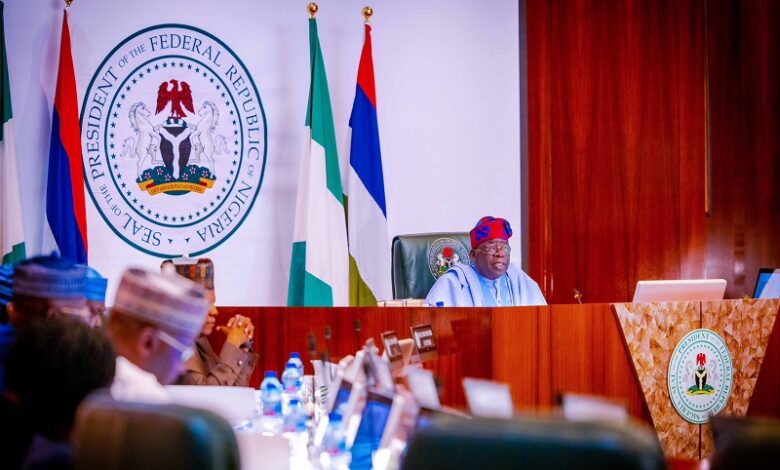
President Bola Tinubu has given the green light for the Federal Government to wipe out N185 billion in overdue payments to natural gas suppliers, a move officials say could finally break the cycle of blackouts that has frustrated homes and factories for years.

The decision was sealed on Wednesday during a meeting of the National Economic Council (NEC), chaired by Vice-President Kashim Shettima, and announced on Thursday by the Minister of State for Petroleum Resources (Gas), Ekperikpe Ekpo.

AlsoRead

Nigeria’s Fuel Import Bill Plunges 54% in Two Years as Domestic Refining Gains Ground

Nigeria’s Statistics Bureau to Brief Stakeholders Ahead of Key December Inflation Data

Nigeria’s Debt Service Projected to Exceed N91 Trillion by 2028, Crowding Out Development Spending

For years, gas producers have been short-changed on invoices for the fuel they pump to electricity plants. Cash-strapped and distrustful, many simply throttled supply or refused to drill new wells. The result? Power plants sitting idle while Nigerians roast in darkness and businesses bleed billions on diesel.

“This N185 billion settlement is a game-changer,” Ekpo told journalists. “We are clearing the air literally and figuratively. Once producers see the money isale-owo (money at the bottom), they will open the taps again.”

The payment will not come as cash on the barrelhead. Instead, the government will offset the debt against future royalty obligations – a clever bookkeeping move that keeps the treasury from bleeding dry while still giving suppliers the certainty they have begged for.

Ekpo described the intervention as the biggest confidence booster the gas-to-power chain has received in recent memory and a direct fulfilment of the president’s Decade of Gas agenda, which targets over 12 billion cubic feet of daily gas production by 2030.

Ed Ubong, Coordinating Director of the Decade of Gas Secretariat, said the approval sends a loud message: “The era of owing gas suppliers and expecting them to keep supplying is over. This single action can unlock billions of dollars in stalled upstream projects.”

Industry sources say the backlog had grown so toxic that some international oil companies were already diverting new gas volumes to the more lucrative LNG export market instead of feeding local power plants.

With the debt hurdle removed, officials are optimistic that generation companies (GenCos) will soon receive steadier, cheaper gas, fire up turbines that have been cold for months, and push Nigeria’s chronically low power output – currently hovering around 4,000–4,500 MW – significantly higher in 2026.

The move comes barely weeks after the government finalised a separate N4 trillion bond framework to settle verified legacy debts to GenCos and their own gas suppliers, showing a clear pattern of clearing the books to restart the power sector engine.

For the average Nigerian who has spent another Christmas seasoning food with generator fumes, the promise is simple: more gas in the pipes should mean more megawatts on the grid, lower diesel bills, and factories that can finally run night shifts again.

Whether the lights actually stay on will depend on how fast the money flows and whether the old habit of piling up fresh debts returns. For now, though, gas producers are smiling, DisCos are hopeful, and millions of households are daring to believe that 2026 might be the year the bulb stops blinking.

One thing is clear: after years of promises, the government has finally put serious money where the darkness is.

Previous Post

DMO Raises N709.62 Billion in December T-Bills Auction as 364-Day Yield Jumps to 17.5%

Next Post

Why Nigeria’s Banks and Insurers Are Growing – But Adding Less to the Economy Than Before

Related News

Fuel Subsidy Removal Negatively Impacts 90% of Nigerian Businesses

Nigeria’s Fuel Import Bill Plunges 54% in Two Years as Domestic Refining Gains Ground

by Akpan Edidong
January 13, 2026
0

Nigeria has achieved a major milestone in its long battle against fuel import dependence, with spending on imported refined petroleum...

Nigeria’s Public Debt Hits N46.25trn In Q4 2022 – NBS

Nigeria’s Statistics Bureau to Brief Stakeholders Ahead of Key December Inflation Data

by Jide Omodele
January 12, 2026
0

The National Bureau of Statistics (NBS) will hold a stakeholder engagement meeting on Monday ahead of the release of Nigeria’s...

Key Takeaways From President Tinubu Speech.

Nigeria’s Debt Service Projected to Exceed N91 Trillion by 2028, Crowding Out Development Spending

by Stephen Akudike
January 12, 2026
0

An analysis of federal budget documents reveals that debt servicing costs under President Bola Tinubu’s administration are projected to surpass...

Oil Prices Reach $90 Following Supply Reduction by Saudi Arabia and Russia.

Nigeria’s Oil Production Rises 7% in 2025 but Falls Short of Budget Target

by Akpan Edidong
January 8, 2026
0

Nigeria’s average daily oil production, including condensates, rose to 1.652 million barrels per day (bpd) in the first eleven months...

Next Post
Leading Banks Struggle with Capital Deficits: Zenith Bank and Others Strive to Meet CBN Standards

Why Nigeria’s Banks and Insurers Are Growing – But Adding Less to the Economy Than Before

Leave a Reply Cancel reply

Your email address will not be published. Required fields are marked *

Recommended

Nigeria’s Stock Market Records N1.81 Trillion Gain in July.

NGX Kicks Off 2026 Trading Week with N745 Billion Surge as Bulls Charge Back

January 13, 2026
Fuel Subsidy Removal Negatively Impacts 90% of Nigerian Businesses

Nigeria’s Fuel Import Bill Plunges 54% in Two Years as Domestic Refining Gains Ground

January 13, 2026

Popular Story

  • Dollar Index Loses Steam as Treasury Yields Drift Back to 4.8%

    Naira Kicks Off 2026 with First Weekly Gain as CBN Boosts Liquidity

    0 shares
    Share 0 Tweet 0
  • Nigeria’s Fuel Import Bill Plunges 54% in Two Years as Domestic Refining Gains Ground

    0 shares
    Share 0 Tweet 0
  • NGX Kicks Off 2026 Trading Week with N745 Billion Surge as Bulls Charge Back

    0 shares
    Share 0 Tweet 0
  • Naira Appreciates by 7% at Official Window as Reserves Grow in First Week of 2026

    0 shares
    Share 0 Tweet 0
  • Nigeria’s Statistics Bureau to Brief Stakeholders Ahead of Key December Inflation Data

    0 shares
    Share 0 Tweet 0
RateCaptain

RateCaptain

We bring you the most accurate in new and market data. Check our landing page for details.

  • Home
  • About Us
  • Privacy Policy
  • Terms & Conditions
  • Disclaimer
  • Cookie Policy
  • Contact Us

Copyright © 2022 RateCaptain - All rights reserved by RateCaptain.

No Result
View All Result
  • Home
    • About Us
    • Contact Us
  • FX Rates
  • Money Market
  • Cryptocurrency
  • Commodities
  • Corporates

Copyright © 2022 RateCaptain - All rights reserved by RateCaptain.

RateCaptain
Manage Cookie Consent
To provide the best experiences, we use technologies like cookies to store and/or access device information. Consenting to these technologies will allow us to process data such as browsing behavior or unique IDs on this site. Not consenting or withdrawing consent, may adversely affect certain features and functions.
Functional Always active
The technical storage or access is strictly necessary for the legitimate purpose of enabling the use of a specific service explicitly requested by the subscriber or user, or for the sole purpose of carrying out the transmission of a communication over an electronic communications network.
Preferences
The technical storage or access is necessary for the legitimate purpose of storing preferences that are not requested by the subscriber or user.
Statistics
The technical storage or access that is used exclusively for statistical purposes. The technical storage or access that is used exclusively for anonymous statistical purposes. Without a subpoena, voluntary compliance on the part of your Internet Service Provider, or additional records from a third party, information stored or retrieved for this purpose alone cannot usually be used to identify you.
Marketing
The technical storage or access is required to create user profiles to send advertising, or to track the user on a website or across several websites for similar marketing purposes.
  • Manage options
  • Manage services
  • Manage {vendor_count} vendors
  • Read more about these purposes
View preferences
  • {title}
  • {title}
  • {title}
?>