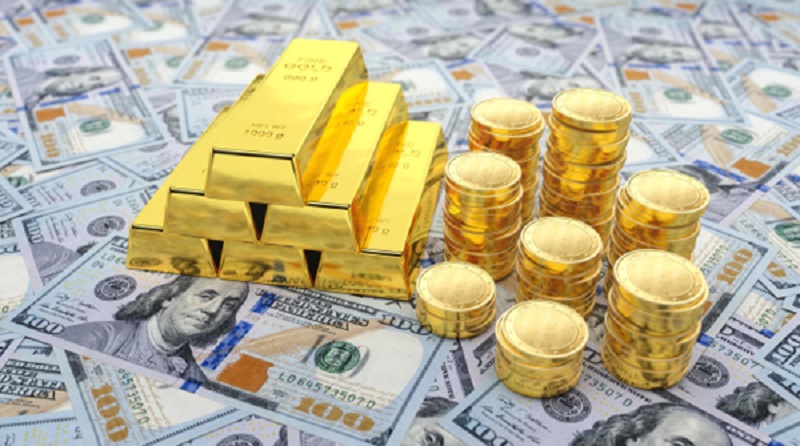
Gold prices have roared back to fresh highs, trading around $4,830 per ounce after a volatile week, as investors continued to seek refuge amid lingering global uncertainties despite a brief diplomatic de-escalation between the United States and Europe.
The precious metal recovered strongly following early-week dips, posting gains of nearly 5% over the past seven days. The rebound was supported by a combination of factors: a temporary cooling of U.S.-Europe trade frictions, persistent doubts about Federal Reserve independence, and renewed central bank and private-sector buying.
A key trigger for the latest rally came from U.S. President Donald Trump’s meeting with NATO Secretary-General Mark Rutte on the sidelines of the World Economic Forum in Davos, Switzerland. The two leaders reached what officials described as a “framework for a future deal,” averting immediate tariff threats against European nations over the contentious Greenland issue. The development eased fears of a transatlantic trade war, but analysts say it only partially offset broader market anxieties.
“While the Rutte meeting took some of the temperature out of U.S.-EU tension, the underlying uncertainties remain,” said Nicholas Frappell, global head of institutional markets at ABC Refinery in Sydney. “Investors are still positioning defensively, and gold benefits every time diplomatic risks flare — or even when they merely simmer.”
Nicky Shiels, head of research at MKS Pamp SA, highlighted a larger structural shift: “We’re seeing the weaponization of commodities, energy, and supply chains by major powers. That environment makes gold’s role as a non-sovereign, politically neutral asset even more compelling.”
Adding to the bullish momentum is the ongoing friction between the Trump administration and the Federal Reserve. Recent attempts to remove Fed Governor Lisa Cook over unverified claims have intensified concerns about political interference in monetary policy, weakening confidence in the U.S. dollar and driving capital toward traditional safe havens like gold.
The market received further validation from Wall Street. Goldman Sachs raised its year-end 2026 gold price forecast to $5,400 per ounce from the previous $4,900 target. Analysts Daan Struyven and Lina Thomas cited “significantly upside-skewed risks” stemming from elevated policy uncertainty, combined with robust demand from both central banks and private investors.
Central bank purchases have remained a steady tailwind throughout 2025 and into the new year, while retail and institutional buying has accelerated during periods of market volatility. The combination has helped gold maintain its upward trajectory despite occasional pullbacks.
With geopolitical flashpoints from trade disputes to central bank autonomy continuing to dominate headlines, gold’s appeal as a hedge shows no signs of fading. Traders will now watch whether the metal can sustain momentum toward the $5,000 psychological level — or if renewed diplomatic calm triggers short-term profit-taking.