The International Monetary Fund (IMF) has revised its economic growth forecast for Nigeria, projecting a 3.4% expansion in 2025, up 0.4 percentage points from its April estimate of 3.0%. The IMF’s July 2025 World Economic Outlook (WEO) also upgraded Nigeria’s 2026 growth forecast to 3.2%, a 0.5 percentage point increase from the earlier 2.7% projection.
The upward revision aligns with a broader optimistic outlook for global and regional economies. The IMF now expects global economic growth to reach 3.0% in 2025, a 0.2 percentage point rise from April, and 3.1% in 2026, up 0.1 percentage points. For Sub-Saharan Africa, the IMF forecasts 4.0% growth in 2025 and 4.3% in 2026, reflecting 0.2 and 0.1 percentage point increases from previous estimates, respectively. The report notes that Sub-Saharan Africa’s growth is expected to remain stable in 2025 before accelerating in 2026.
Tunde Abidoye, Head of Equity Research at FBNQuest Merchant Bank, attributed Nigeria’s improved forecast to enhanced oil production and robust performance in the services sector, as supported by data from the National Bureau of Statistics (NBS). “The IMF’s 3.4% projection matches our internal estimates,” Abidoye said. “However, while the upward revision signals progress, the modest single-digit growth rate suggests cautious optimism, as it remains insufficient to address Nigeria’s persistent poverty challenges.”
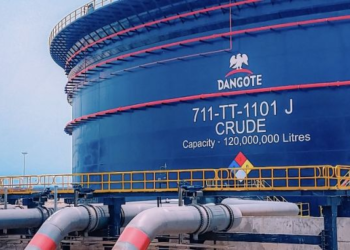
The IMF’s revised projections come amid Nigeria’s efforts to stabilize its economy through Central Bank interventions and fiscal reforms. Recent increases in oil output, reaching 1.51 million barrels per day in June 2025, and a rebound in services have contributed to the positive outlook. However, challenges such as high interest rates and infrastructure deficits continue to constrain broader economic progress. The IMF’s forecast underscores Nigeria’s potential for steady growth, but analysts emphasize the need for sustained reforms to translate this into meaningful poverty reduction and economic transformation.