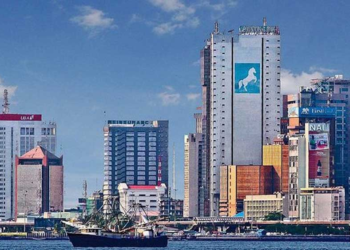
JP Morgan intends to launch merchant banking operations in Nigeria before the end of 2026, pending regulatory approval, while South Africa’s Absa Group is considering upgrading its local representative office into a fully licensed merchant bank.
The separate disclosures point to renewed interest from international lenders in Nigeria’s corporate and investment banking market.
JP Morgan Prepares Entry
JP Morgan, the world’s largest bank by market capitalisation with more than $4.1 trillion in assets, outlined its plan through Dapo Olagunji, managing director for West Africa. He made the announcement last week at the Nigeria-Asia Financial Connectivity Dialogue in Singapore.
The proposed licence would expand on the bank’s existing client relationships in the country and remains subject to approval by Nigerian regulators.
Absa Still Weighing Options
Absa chief executive Kenny Fihla confirmed in August that the group continues to assess its position. “Evaluating whether we should stay with a representative office or whether we should be exploring other alternatives, including a merchant banking licence,” he said, adding that a decision would be communicated when appropriate.
South Africa, Kenya and Ghana together generated more than 80 per cent of Absa’s profit in the first half of 2026. Fihla acknowledged the concentration risk and said diversification across additional markets, business lines and customer segments is a priority. Nigeria’s size makes it a logical candidate for expansion.
Data Supporting Renewed Interest
Several indicators are strengthening Nigeria’s appeal to global lenders. The Central Bank of Nigeria reported that foreign-exchange reserves climbed to $55 billion on 8 October 2026, their highest level in 18 years.
The Nigerian stock market delivered a 74.7 per cent year-to-date return in US-dollar terms as of 6 October, according to African Markets data, making it the best-performing exchange on the continent.
Credit-rating agencies have also improved their stance. Moody’s revised Nigeria’s outlook to positive from stable in August 2026 while affirming the B3 rating. Fitch followed on 9 October with a similar positive revision, keeping its B rating unchanged. S&P Global Ratings had earlier upgraded the sovereign rating to B from B- in May, although it maintained a stable outlook.
Implications for Local Banking
A licensed merchant-banking presence from JP Morgan and Absa would introduce two well-capitalised competitors into the segment serving large corporates, government entities and institutional investors. That could intensify competition for deal mandates, trade finance and foreign-currency liquidity—areas where domestic banks have traditionally held an advantage.
For the naira, the arrival of global banks often signals increased cross-border flows and a broader set of counterparties willing to hold naira assets. The near-term impact will depend on how quickly licences are granted and the scale of capital the two institutions deploy.