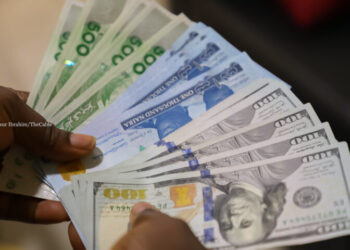
The Nigerian naira maintained stability against the US dollar in the official foreign exchange market on Thursday, closing at N1,380.11 per dollar, virtually unchanged from the previous session.
According to data from the Central Bank of Nigeria (CBN), the local currency showed resilience amid stronger foreign exchange inflows and improved market liquidity. Interbank turnover surged by 55.56% to $195.37 million, reflecting heightened trading activity, even as the number of deals dipped slightly to 121.
In the broader Nigerian Foreign Exchange Market (NFEM), total turnover rose by 21.02% to $779.02 million. In the parallel market, the naira traded steady at N1,395 per dollar, narrowing the gap with the official rate to just N15.
Reserves and Inflows Strengthen
Nigeria’s external reserves continued their upward trajectory, reaching $51.20 billion as of June 24, 2026 a significant 36.86% increase from the same period in 2025. The healthy reserve level has enhanced the CBN’s capacity to support the currency and maintain market stability.
The CBN’s latest monthly economic report revealed that total foreign exchange inflows into the economy hit a one-year high of $12.2 billion in January 2026, up from $8.4 billion in December 2025. Autonomous inflows (non-CBN sources) rose sharply by 60% to $7.6 billion, while CBN-sourced inflows also increased to $4.7 billion.
This robust inflow performance resulted in a record net foreign exchange surplus of $9.2 billion for January, far above the $3.1 billion recorded in December.
The combination of steady reserves, improved liquidity, and strong inflows has helped anchor the naira in recent weeks, even as global and domestic factors continue to influence currency movements. Market participants expect this positive momentum to support further stability if sustained oil revenues and investor confidence remain strong.