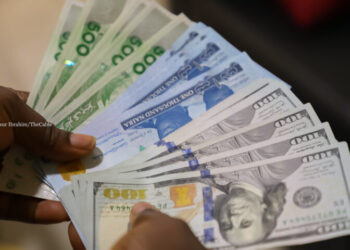
The Nigerian naira continued its recent decline against the US dollar at the official foreign exchange market on Monday, April 27, 2026.
According to data from the Central Bank of Nigeria (CBN), the local currency closed at ₦1,364.24 per dollar, representing a depreciation of ₦5.80 from the ₦1,358.44 recorded on Friday, April 24.
This marks the weakest level at the official window since early April, when the naira traded as high as ₦1,371.82 on April 8.
In the parallel market, the naira also faced mild pressure, weakening to around ₦1,429 per dollar from ₦1,427 the previous trading day. The gap between the official and black market rates remained relatively narrow but reflects ongoing demand-supply imbalances.
The latest depreciation comes as Nigeria’s external reserves face sustained drawdown. Reserves fell by approximately $731 million in the first three weeks of April, dropping from $49.18 billion at the start of the month to about $48.45 billion by April 23. This continued erosion of forex buffers has heightened concerns over liquidity in the foreign exchange market.
Market analysts attribute the persistent weakness to strong dollar demand from importers and businesses, coupled with limited supply inflows despite efforts by the apex bank to stabilise the currency through the Nigerian Foreign Exchange Market (NFEM) window.
The development adds to the challenges facing businesses that rely on foreign currency for raw materials, equipment, and other imports. While the CBN has maintained interventions in recent weeks, analysts say deeper structural reforms and improved non-oil export earnings will be critical to achieving lasting stability for the naira.
As of April 27, trading volumes at the official window remained moderate, with participants closely monitoring upcoming policy signals and reserve trends for clearer direction in the days ahead.