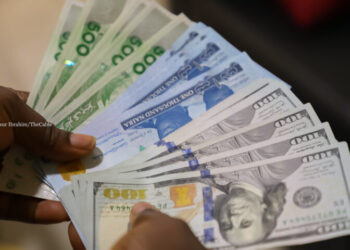
The Nigerian naira came under mild pressure at the official foreign exchange market on Tuesday, closing at N1,366.56 per US dollar, down from N1,365.25 the previous trading day.
According to data from the Central Bank of Nigeria (CBN), the depreciation was driven by increased demand for foreign currency amid tighter liquidity support from the apex bank.
Sharp Drop in CBN Intervention
The CBN significantly scaled back its direct intervention in the foreign exchange market in April, injecting only $150 million an 83% decline compared to the previous month. This cautious approach is aimed at preserving the country’s external reserves, which have fallen by approximately $1 billion recently to $48.34 billion.
Despite reduced intervention, market activity picked up, with interbank foreign exchange turnover rising sharply to $71.59 million across 99 deals, compared to $59.93 million in the previous session.
Positive Long-term Outlook
Analysts at Broadstreet have maintained a generally optimistic outlook for the naira for the remainder of 2026, citing improved liquidity in the market and growing investor confidence, even as short-term volatility persists.
CBN Governor Olayemi Cardoso emphasised the shift in the foreign exchange regime, stating that the market is now more market-driven with greater participation from investors.
“Then, you had the CBN that was primarily the only one determining that market. That is different now. It is market-driven. There is more liquidity in the market. There is confidence. Investors come in and go out as they like,” he said.
Global Oil Market Influence
The naira’s movement also coincided with a retreat in global oil prices. Brent crude fell by $1.38 (1.2%) to $113.06 per barrel, while US West Texas Intermediate (WTI) crude dropped by $2.21 (2.1%) to $104.26 per barrel. The price correction followed developments around the Strait of Hormuz, where US operations aimed at restoring shipping traffic helped ease some supply concerns.
Market Context
The latest figures reflect the CBN’s strategy of allowing more market forces to determine exchange rates while stepping in only when necessary to prevent disorderly movements. This approach has helped stabilise the naira in recent months but also exposes the currency to short-term demand and supply fluctuations.
Although the naira has shown periods of relative stability in 2026, sustained improvement will likely depend on consistent foreign exchange inflows from oil exports, diaspora remittances, and foreign investment.
The development comes as Nigeria continues to navigate a more liberalised foreign exchange regime introduced under the current administration.