RateCaptain
  • Home
    • About Us
    • Contact Us
  • FX Rates
  • Money Market
  • Cryptocurrency
  • Commodities
  • Corporates
No Result
View All Result
Subscribe
  • Home
    • About Us
    • Contact Us
  • FX Rates
  • Money Market
  • Cryptocurrency
  • Commodities
  • Corporates
No Result
View All Result
RateCaptain
No Result
View All Result
Home Economy

Nigeria Pursues $1.75bn World Bank Loan Amid Revenue Surge

Victoria Attah by Victoria Attah
September 5, 2025
in Economy
Reading Time: 3 mins read
A A
0
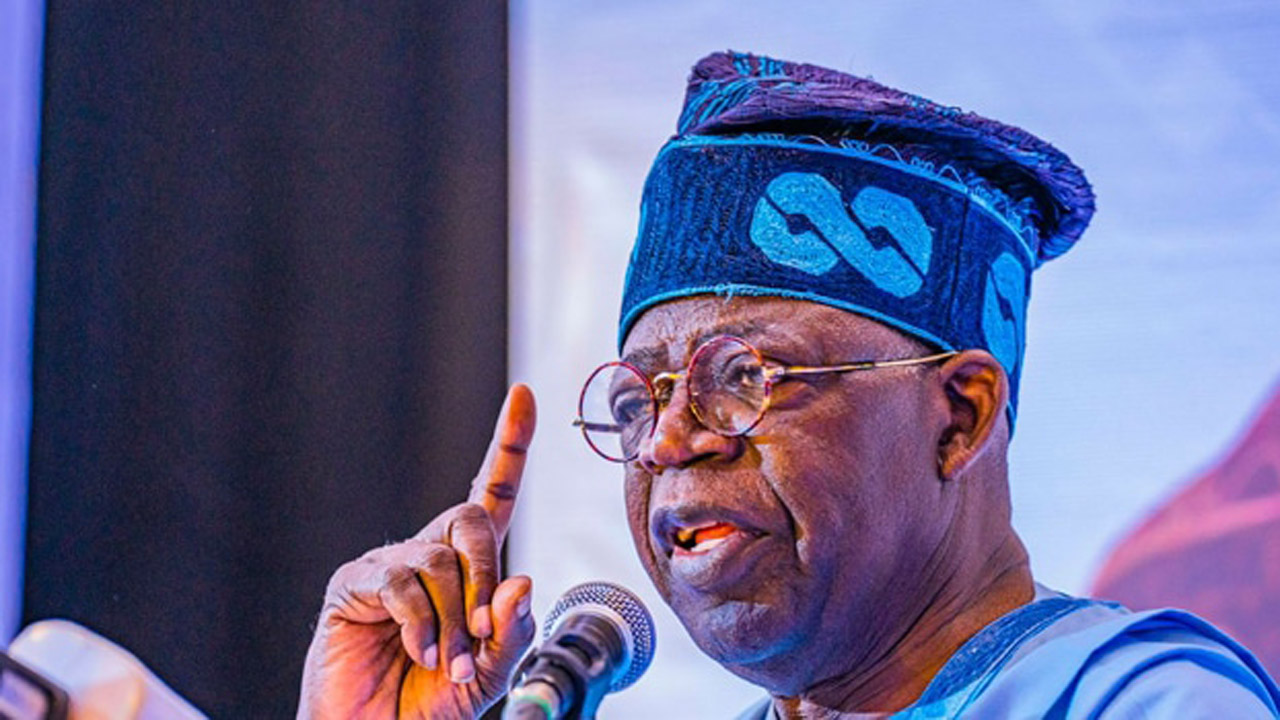
Top Story: Tinubu Present N27.5 Trillion As 2024 Budget
Share on FacebookShare on TwitterShare on WhatsappShare on Telegram

The Nigerian government is set to secure $1.75 billion in new loans from the World Bank by the end of 2025, despite a reported 40.5% increase in revenue for the first eight months of the year. The revenue, which reached N20.59 trillion from January to August 2025, marks a significant rise from the N14.6 trillion recorded in the same period of 2024, driven largely by a boost in non-oil revenue, according to a statement from the Presidency.

Non-oil revenues now constitute 75% of total collections, aligning with the government’s projections to meet its annual revenue targets. However, despite this financial uptick, Nigeria continues to grapple with funding shortages in critical areas such as infrastructure, prompting plans to borrow both domestically and internationally.

AlsoRead

NRS Chairman: Fuel Subsidy Could Have Cost N53 Trillion

Tinubu Approves Deep Offshore Reform Aimed at Attracting $50 Billion Investment

Oil Sector FX Demand Surges 115% in 2025 Despite Expanded Local Refining

The World Bank loans will support key development initiatives across multiple sectors. A $500 million allocation is earmarked for the Nigeria Sustainable Agricultural Value-Chains for Growth project, aimed at enhancing agricultural productivity and rural development. This project is in the concept review stage, with approval expected by December 2025.

Another $500 million will fund the Building Resilient Digital Infrastructure for Growth initiative, designed to bolster Nigeria’s technology sector and digital economy. This project is in the negotiation phase, with approval slated for October 2025. Additionally, $250 million is allocated for the Health Security Programme in Western and Central Africa (Phase II), which focuses on strengthening Nigeria’s health systems and emergency preparedness, with approval anticipated by September 2025. Lastly, $500 million will support the Fostering Inclusive Finance for MSMEs project, aimed at improving access to finance for small and medium enterprises, with approval expected in December 2025.

This latest borrowing comes despite President Bola Tinubu’s earlier announcement that Nigeria had surpassed its 2025 revenue goals, suggesting reduced reliance on loans. However, unpaid debts for capital projects, estimated at N4 trillion, have sparked protests by local contractors, highlighting ongoing fiscal challenges.

Economic analysts have expressed mixed views on the new loans. Adewale Abimbola, a Lagos-based economist, noted that World Bank loans are often concessional, with favorable interest rates and repayment terms. He emphasized that the effectiveness of borrowing depends on its deployment into projects with strong revenue-generating potential. “Borrowing for viable, growth-oriented initiatives is not problematic if managed well,” Abimbola stated.

Conversely, Dr. Aliyu Ilias, a development economist, raised concerns about Nigeria’s escalating debt, which has risen from N87 trillion in 2023 to approximately N149 trillion today. He argued that with reported revenue surpluses from agencies like the Federal Inland Revenue Service and Nigeria Customs Service, the need for additional borrowing is questionable. Ilias warned that heavy debt servicing is straining public service delivery, limiting job creation, and exacerbating inflation and foreign exchange challenges.

Dr. Muda Yusuf, CEO of the Centre for the Promotion of Private Enterprise, stressed the importance of debt sustainability, noting that borrowing is a standard practice globally but must be tied to clear economic priorities. He cautioned that without robust revenue streams to service loans, Nigeria risks a cycle of borrowing to repay existing debts, which could undermine fiscal stability.

The World Bank has approved $8.4 billion in loans for Nigeria between June 2023 and August 2025, supporting 15 projects in sectors like energy, education, and governance. These include $1.95 billion from the International Bank for Reconstruction and Development and $6.5 billion from the International Development Association, which offers concessional financing to low-income countries.

As Nigeria navigates its fiscal strategy, experts urge the government to balance borrowing with stronger domestic revenue mobilization and efficient expenditure to ensure sustainable economic growth

Tags: Bola Tinubu
Previous Post

Nigeria’s Marketing Industry Witnesses Investment Surge in 2025

Next Post

CBN Establishes New Compliance Department to Tackle Financial Risks

Related News

Petrol Prices Surge in West Africa as Nigeria Removes Subsidies.

NRS Chairman: Fuel Subsidy Could Have Cost N53 Trillion

by Akpan Edidong
August 12, 2026
0

The Chairman of the Nigeria Revenue Service, Zacch Adedeji, has said that Nigeria’s fuel subsidy bill could have ballooned to...

2024 Budget Outline: Oil Price Set at $77.96, Naira Stands at 750 Against the Dollar

Tinubu Approves Deep Offshore Reform Aimed at Attracting $50 Billion Investment

by Victoria Attah
August 12, 2026
0

President Bola Tinubu has approved a major reform of Nigeria’s deep offshore oil and gas investment framework, designed to unlock...

Oil Sector FX Demand Surges 115% in 2025 Despite Expanded Local Refining

by Akpan Edidong
August 10, 2026
0

Nigeria’s foreign exchange demand for oil-sector imports rose sharply by 114.91 per cent in 2025, underscoring the country’s continued reliance...

Senate Committee Frowns at N17 Trillion Loss from Tax Waivers, Urges FIRS Reform

Tax Revenue More Than Doubles to N27.1 Trillion After 113% Surge

by Victoria Attah
August 10, 2026
0

Nigeria’s tax collections have risen by 113 per cent in less than three years, climbing from N12.3 trillion in 2023...

Next Post
NEC Affirms CBN $3 Billion Loan for Naira Stability

CBN Establishes New Compliance Department to Tackle Financial Risks

Leave a Reply Cancel reply

Your email address will not be published. Required fields are marked *

Recommended

Airlines Implement Time-Saving Strategies for More Efficient Operations

Air Peace and United Nigeria Claim Over N2 Billion Losses After Union Disruptions

August 13, 2026
CBN Allows Oil Companies to Resume Dollar Sales to Banks in Effort to Boost Supply.

CBN Raises 364-Day T-Bill Rate to 17.59% Despite N4.4 Trillion in Bids

August 13, 2026

Popular Story

  • Guaranty Trust records N214.2b pre-tax profit.

    GTBank Raises Naira Card International Spending Limit to $40,000

    0 shares
    Share 0 Tweet 0
  • 31 Nigerian States Grapple with N2.57 Trillion Domestic Debt Amid No Foreign Inflows

    0 shares
    Share 0 Tweet 0
  • CBN Raises 364-Day T-Bill Rate to 17.59% Despite N4.4 Trillion in Bids

    0 shares
    Share 0 Tweet 0
  • PenCom approves monthly pension increase for retirees under CPS

    0 shares
    Share 0 Tweet 0
  • Air Peace and United Nigeria Claim Over N2 Billion Losses After Union Disruptions

    0 shares
    Share 0 Tweet 0

RateCaptain

We bring you the most accurate in new and market data. Check our landing page for details.

  • Home
  • About Us
  • Privacy Policy
  • Terms & Conditions
  • Disclaimer
  • Cookie Policy
  • Contact Us

Copyright © 2022 RateCaptain - All rights reserved by RateCaptain.

No Result
View All Result
  • Home
    • About Us
    • Contact Us
  • FX Rates
  • Money Market
  • Cryptocurrency
  • Commodities
  • Corporates

Copyright © 2022 RateCaptain - All rights reserved by RateCaptain.

RateCaptain
Manage Cookie Consent
To provide the best experiences, we use technologies like cookies to store and/or access device information. Consenting to these technologies will allow us to process data such as browsing behavior or unique IDs on this site. Not consenting or withdrawing consent, may adversely affect certain features and functions.
Functional Always active
The technical storage or access is strictly necessary for the legitimate purpose of enabling the use of a specific service explicitly requested by the subscriber or user, or for the sole purpose of carrying out the transmission of a communication over an electronic communications network.
Preferences
The technical storage or access is necessary for the legitimate purpose of storing preferences that are not requested by the subscriber or user.
Statistics
The technical storage or access that is used exclusively for statistical purposes. The technical storage or access that is used exclusively for anonymous statistical purposes. Without a subpoena, voluntary compliance on the part of your Internet Service Provider, or additional records from a third party, information stored or retrieved for this purpose alone cannot usually be used to identify you.
Marketing
The technical storage or access is required to create user profiles to send advertising, or to track the user on a website or across several websites for similar marketing purposes.
  • Manage options
  • Manage services
  • Manage {vendor_count} vendors
  • Read more about these purposes
View preferences
  • {title}
  • {title}
  • {title}
?>