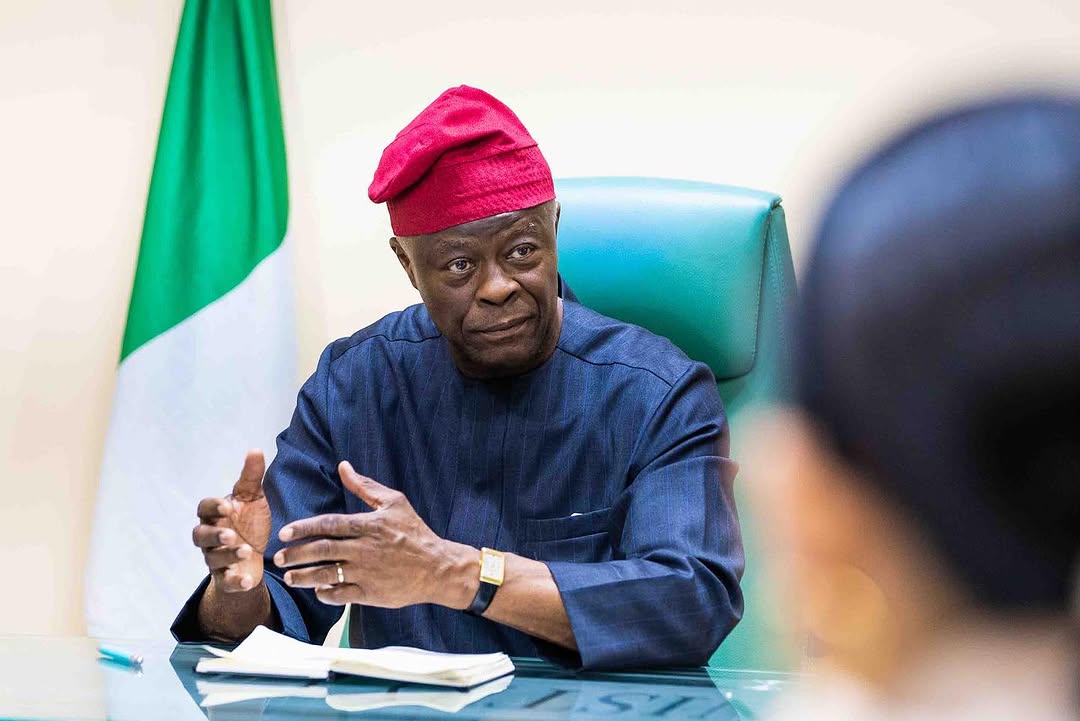
The Minister of Finance and Coordinating Minister of the Economy, Wale Edun, has firmly stated that Nigeria has no plans to seek financial assistance from the International Monetary Fund (IMF), even as concerns mount over the country’s growing public debt burden.
Edun made the declaration on Thursday during a ministerial press briefing at the ongoing IMF-World Bank Spring Meetings in Washington DC. His comments come amid increasing fiscal pressures across Africa and recent calls by the IMF for vulnerable countries to consider additional support where necessary.
“Nigeria has no plans at the moment to approach the IMF or any other source,” Edun said, adding that many African nations are currently either close to or already experiencing debt distress.
He pointed out that high borrowing costs on commercial debt remain a major challenge for the continent. “The premium that they pay for commercial debt is part of the reason why there is this distress, discomfort in the first place, in terms of the percentage of revenue that has to be given over to debt service, as opposed to health and so forth,” he explained.
Edun stressed that addressing these structural issues is essential for improving fiscal sustainability across Africa. He noted that President Bola Ahmed Tinubu has consistently advocated for lower risk premiums to make financing more affordable for developing countries.
The minister’s position follows the Debt Management Office’s (DMO) recent disclosure that Nigeria’s total public debt for federal and state governments rose by N14 trillion to N159.27 trillion at the end of the fourth quarter of 2025. The National Assembly has also approved a $6 billion external borrowing request, raising questions about the cost and long-term sustainability of new debt amid global uncertainties.
While ruling out IMF loans, Edun highlighted broader concerns about debt servicing eating into government revenues that could otherwise be directed toward critical sectors such as health and education. He called for increased private sector participation, adoption of technology including artificial intelligence to improve efficiency, and diversification of funding sources to ease fiscal pressure.
The IMF has projected that nearly half of African countries are either in or close to debt distress, with high interest rates on commercial borrowing exacerbating the situation.
Edun’s statement underscores the Tinubu administration’s preference for domestic revenue mobilisation, structural reforms, and strategic engagement with multilateral partners on more favourable terms rather than traditional bailout programmes.