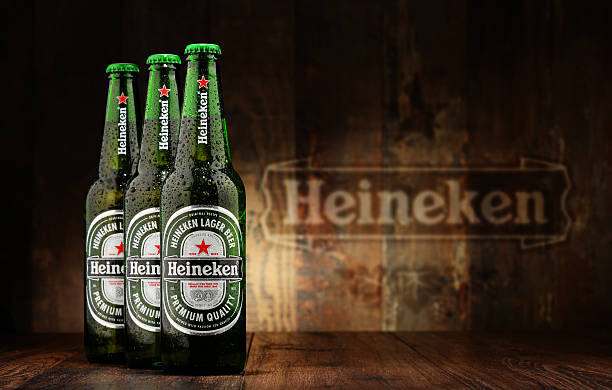
Nigeria’s major listed breweries collectively generated more than N1.54 trillion in revenue from beer and other beverages during the first nine months of 2025, reflecting a substantial portion of consumer spending on alcoholic and non-alcoholic drinks, according to an analysis of their unaudited financial statements.
The three key players — Nigerian Breweries Plc, International Breweries Plc, and Champion Breweries Plc — posted strong top-line growth, driven primarily by beer sales despite ongoing economic pressures on household budgets.
Nigerian Breweries Plc, the market leader, recorded net revenue of N1.05 trillion for the period ended September 30, 2025 — a significant jump from N710.87 billion in the same nine months of 2024. After accounting for cost of sales of N631.23 billion, the company achieved a gross profit of N415.15 billion. Selling and distribution expenses stood at N193.85 billion, administrative costs at N59.58 billion, and finance charges at N39.15 billion. The brewer returned a profit after tax of N85.51 billion, reversing a N149.50 billion loss in the prior year. Basic earnings per share improved to 275 kobo from a loss of 1,455 kobo.
The turnaround was evident early in the year: in March 2025, Nigerian Breweries reported a 186% increase in net profit for the first quarter compared with Q1 2024, with revenue rising 68.9% to N383.6 billion from N227.1 billion.
International Breweries Plc also showed robust performance, posting revenue of N472.57 billion for the nine-month period — up from N343.45 billion in 2024. Cost of sales rose to N311.64 billion, while administrative, marketing, and distribution expenses increased to N92.09 billion. The company recorded a profit after tax of N57.83 billion, reversing a N112.81 billion loss the previous year.
In its second-quarter results released earlier, International Breweries turned around from a N47.3 billion loss in Q2 2024 to a N11.9 billion profit in Q2 2025, with revenue climbing to N167.4 billion from N120 billion and gross profit more than doubling to N61.9 billion from N33.8 billion.
Champion Breweries Plc contributed to the aggregate figure, though its individual results were not detailed in the analysis. The combined revenue of N1.54 trillion from the three brewers serves as a proxy for consumer spending on their products during the period, highlighting the resilience of the alcoholic and non-alcoholic beverages segment even amid high inflation and reduced purchasing power.
The strong performance underscores several factors: sustained demand for beer as a social and recreational product, pricing adjustments by brewers to offset rising input costs (particularly barley, malt, and packaging materials), and a gradual recovery in consumer sentiment following earlier economic headwinds.
For context, the sector has faced challenges in recent years, including foreign exchange constraints on imported raw materials and competition from informal producers. Yet the N1.54 trillion revenue haul in just nine months illustrates the category’s enduring appeal and significant role in Nigeria’s consumer spending landscape.
Analysts expect the momentum to continue into 2026, supported by ongoing marketing campaigns, product innovation (including low- and no-alcohol variants), and potential easing of macroeconomic pressures. For ordinary Nigerians, however, the figure also serves as a reminder of how much household income flows into beverages — a category that remains one of the few consistent areas of discretionary spending despite broader cost-of-living strains.
As brewers report full-year results in the coming weeks, attention will turn to whether profit margins can expand further or if rising costs continue to squeeze profitability. For now, the N1.54 trillion topline underscores one clear reality: Nigerians’ thirst for beer and related drinks remains robust, even in tough economic times.