RateCaptain
  • Home
    • About Us
    • Contact Us
  • FX Rates
  • Money Market
  • Cryptocurrency
  • Commodities
  • Corporates
No Result
View All Result
Subscribe
  • Home
    • About Us
    • Contact Us
  • FX Rates
  • Money Market
  • Cryptocurrency
  • Commodities
  • Corporates
No Result
View All Result
RateCaptain
No Result
View All Result
Home Economy

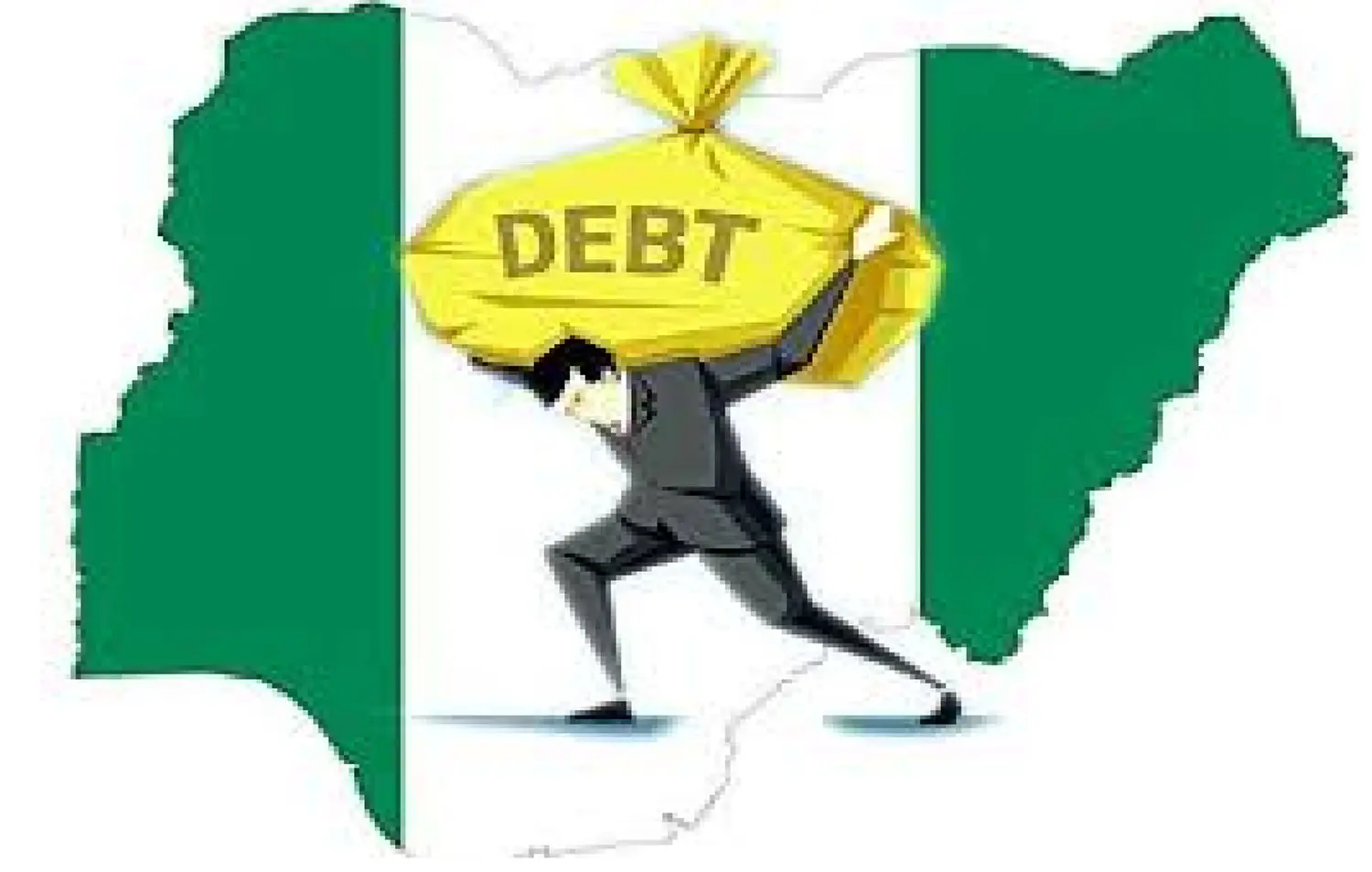
Nigeria’s Debt to China Surges by $800 Million in One Year

Victoria Attah by Victoria Attah
October 30, 2023
in Economy
Reading Time: 2 mins read
A A
0
Nigeria’s Debt to China Surges by $800 Million in One Year
Share on FacebookShare on TwitterShare on WhatsappShare on Telegram

As of June 30, 2022, Nigeria’s debt to China stood at $3.93 billion. Just one year later, on June 30, 2023, this debt had surged to $4.73 billion, marking a substantial increase of $800 million, which represents a 20.36 percent rise in a year. This revelation is based on an analysis of external debt stock data from the Debt Management Office (DMO).

Nigeria’s engagement with Chinese loans has been a subject of discussion and concern, with limited transparency regarding the terms and implications of these agreements. The DMO has previously shed some light on these arrangements.

AlsoRead

US Imposes 12.5% Tariff on Nigerian Exports Over Forced Labour Concerns

Petrol Climbs to N1,400 per Litre as Transport Fares Rise Across Nigeria

Cooking Gas Prices Drop Across Nigeria as Lagos Records Lowest Rate of N1,200 per kg

In June 2020, the DMO disclosed, “The total borrowings from China of $3.121 billion as of March 31, 2020, are concessional loans with interest rates of 2.5 percent per annum, a tenor of 20 years, and a grace period (moratorium) of seven years.” According to the DMO, these terms align with the provisions of Section 41 (1a) of the Fiscal Responsibility Act, 2007. The low interest rates on these loans aim to reduce the interest cost to the government, while the extended tenor facilitates the repayment of the principal amount over many years.

An overview of Chinese loans reveals that they have been allocated to fund 15 projects across various sectors, including water supply, power generation, railways, airport terminals, and communication, as well as agricultural processing.

These projects have been diverse in nature, encompassing the Nigerian Communications Satellite project, the Nigerian national public security communication system project, the Nigerian railway modernization project, the Abuja light rail project, the Nigerian Information and Communication Technology infrastructure backbone project, and several airport terminals’ expansion projects.

Furthermore, the Nigerian Zungeru hydroelectric power project and the Nigerian 40-parboiled rice processing plants project were included in the list. These projects illustrate Nigeria’s ambition to improve infrastructure, energy generation, transportation, and agricultural production, often with Chinese financial support.

However, it’s notable that while the agreements for many of these projects were signed, significant portions of the funds have not been disbursed, implying that these initiatives may not have progressed as planned.

Nigeria’s growing debt to China underscores the need for more transparency and prudence in managing foreign loans, given their long-term implications on the nation’s financial health. As the country continues to invest in critical infrastructure and development projects, careful scrutiny of the terms and execution of these loans becomes imperative to ensure that they serve the nation’s best interests.

The surge in debt also highlights the importance of effective utilization of borrowed funds to drive sustainable economic growth and development, which should remain at the forefront of Nigeria’s economic agenda.


Tags: #NigeriaChinese loans.Debt Management Officedebt to Chinadebt transparencyexternal debt.foreign loansinfrastructure projects
Previous Post

Nigerian Students Spend $340.84 Million on Foreign University Applications in the H1 of 2023

Next Post

Access Holdings Reports 71% Surge in Foreign Exchange Gain in 9 Month of 2023

Related News

US Imposes 12.5% Tariff on Nigerian Exports Over Forced Labour Concerns

by Victoria Attah
July 27, 2026
0

The United States has imposed a 12.5% tariff on most Nigerian exports following a Section 301 investigation that concluded Nigeria...

Fuel Subsidy Removal: Should Nigeria Continue With a Regressive Petrol Subsidy?

Petrol Climbs to N1,400 per Litre as Transport Fares Rise Across Nigeria

by Akpan Edidong
July 27, 2026
0

Petrol prices have surged to as high as N1,400 per litre in parts of Nigeria, prompting a fresh wave of...

Cooking Gas Prices Drop Across Nigeria as Lagos Records Lowest Rate of N1,200 per kg

by Akpan Edidong
July 27, 2026
0

Cooking gas prices have fallen significantly across Nigeria over the past three weeks, offering relief to households after recent highs....

Battered Commodity Currencies Gain Attention Amid Dollar’s Decline.

Several African Currencies Forecast to Weaken Against Dollar – Analyst

by Jide Omodele
July 24, 2026
0

Several major African currencies, including Ghana’s cedi, Uganda’s shilling, and Nigeria’s naira, are expected to depreciate against the US dollar...

Next Post
Access Holdings Reports 71% Surge in Foreign Exchange Gain in 9 Month of 2023

Access Holdings Reports 71% Surge in Foreign Exchange Gain in 9 Month of 2023

Leave a Reply Cancel reply

Your email address will not be published. Required fields are marked *

Recommended

Leading Banks Struggle with Capital Deficits: Zenith Bank and Others Strive to Meet CBN Standards

Banks’ Maximum Lending Rate Eases to 33.16% in June

July 27, 2026

US Imposes 12.5% Tariff on Nigerian Exports Over Forced Labour Concerns

July 27, 2026

Popular Story

  • Cooking Gas Prices Drop Across Nigeria as Lagos Records Lowest Rate of N1,200 per kg

    0 shares
    Share 0 Tweet 0
  • Petrol Climbs to N1,400 per Litre as Transport Fares Rise Across Nigeria

    0 shares
    Share 0 Tweet 0
  • 31 Nigerian States Grapple with N2.57 Trillion Domestic Debt Amid No Foreign Inflows

    0 shares
    Share 0 Tweet 0
  • Banks’ Maximum Lending Rate Eases to 33.16% in June

    0 shares
    Share 0 Tweet 0
  • US Imposes 12.5% Tariff on Nigerian Exports Over Forced Labour Concerns

    0 shares
    Share 0 Tweet 0

RateCaptain

We bring you the most accurate in new and market data. Check our landing page for details.

  • Home
  • About Us
  • Privacy Policy
  • Terms & Conditions
  • Disclaimer
  • Cookie Policy
  • Contact Us

Copyright © 2022 RateCaptain - All rights reserved by RateCaptain.

No Result
View All Result
  • Home
    • About Us
    • Contact Us
  • FX Rates
  • Money Market
  • Cryptocurrency
  • Commodities
  • Corporates

Copyright © 2022 RateCaptain - All rights reserved by RateCaptain.

RateCaptain
Manage Cookie Consent
To provide the best experiences, we use technologies like cookies to store and/or access device information. Consenting to these technologies will allow us to process data such as browsing behavior or unique IDs on this site. Not consenting or withdrawing consent, may adversely affect certain features and functions.
Functional Always active
The technical storage or access is strictly necessary for the legitimate purpose of enabling the use of a specific service explicitly requested by the subscriber or user, or for the sole purpose of carrying out the transmission of a communication over an electronic communications network.
Preferences
The technical storage or access is necessary for the legitimate purpose of storing preferences that are not requested by the subscriber or user.
Statistics
The technical storage or access that is used exclusively for statistical purposes. The technical storage or access that is used exclusively for anonymous statistical purposes. Without a subpoena, voluntary compliance on the part of your Internet Service Provider, or additional records from a third party, information stored or retrieved for this purpose alone cannot usually be used to identify you.
Marketing
The technical storage or access is required to create user profiles to send advertising, or to track the user on a website or across several websites for similar marketing purposes.
  • Manage options
  • Manage services
  • Manage {vendor_count} vendors
  • Read more about these purposes
View preferences
  • {title}
  • {title}
  • {title}
?>