RateCaptain
  • Home
    • About Us
    • Contact Us
  • FX Rates
  • Money Market
  • Cryptocurrency
  • Commodities
  • Corporates
No Result
View All Result
Subscribe
  • Home
    • About Us
    • Contact Us
  • FX Rates
  • Money Market
  • Cryptocurrency
  • Commodities
  • Corporates
No Result
View All Result
RateCaptain
No Result
View All Result
Home Currencies

Nigeria’s Money Supply Surges 18% to N110.97 Trillion as Savings Increase

Jide Omodele by Jide Omodele
February 21, 2025
in Currencies, Wealth
Reading Time: 2 mins read
A A
0
Naira Strengthens as Anticipation Mounts for $10 Billion Forex Inflows
Share on FacebookShare on TwitterShare on WhatsappShare on Telegram

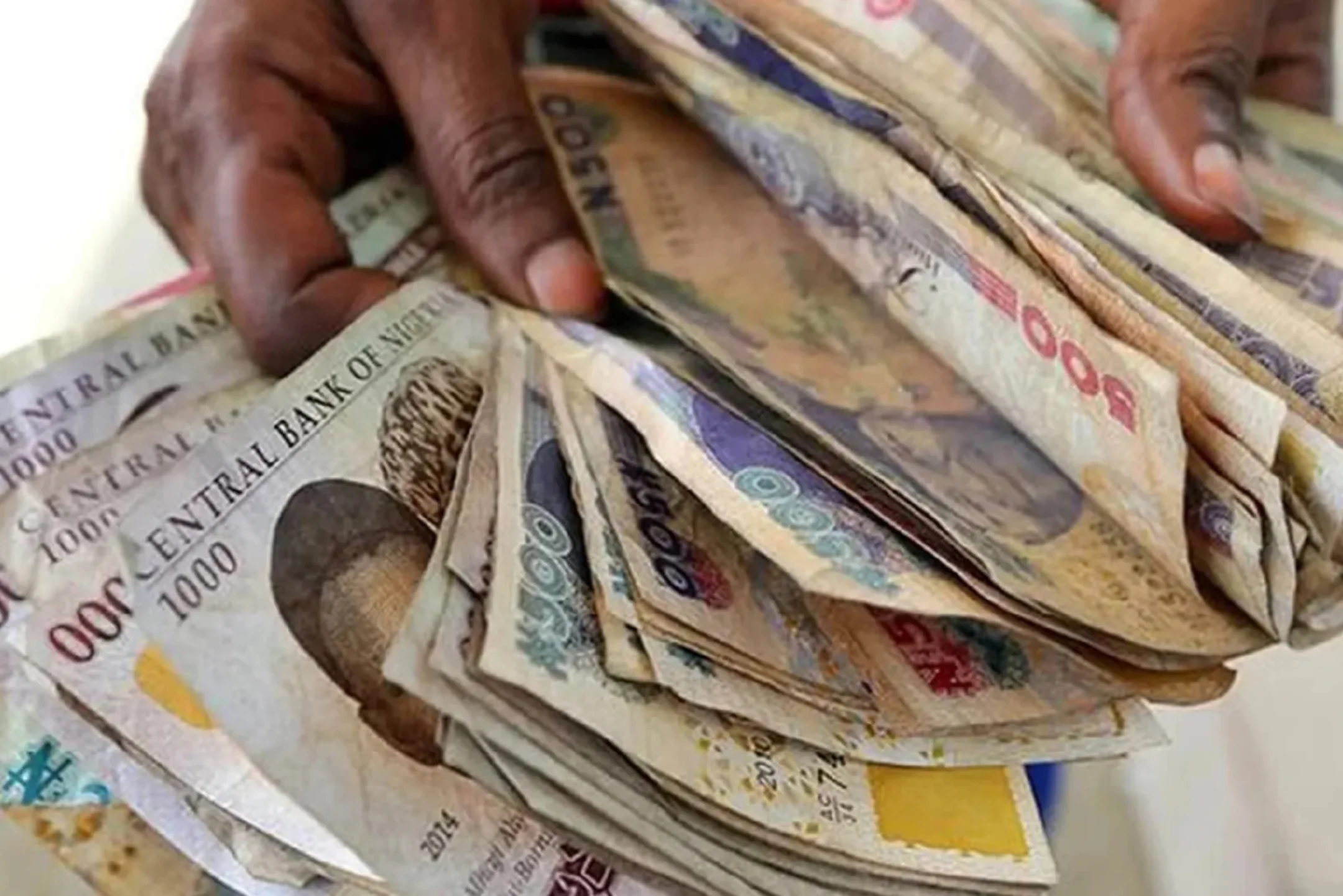
Nigeria’s Money Supply (M2) rose by 18.3% year-on-year (YoY) to N110.97 trillion in January 2025, up from N93.77 trillion in the same period of 2024, according to the Central Bank of Nigeria (CBN). The increase is attributed to a significant rise in savings and investments by Nigerians, as revealed in the CBN’s latest Money and Credit Statistics report.

The growth in money supply was primarily driven by a 21% surge in Quasi Money, which includes savings accounts, treasury bills, money market instruments, and foreign currency deposits. Quasi Money climbed to N74.07 trillion in January 2025, up from N61.2 trillion in January 2024. Similarly, Demand Deposits increased by 13.6% YoY to N32.15 trillion, while Currency Outside Banks saw a substantial 44.5% rise to N4.74 trillion.

AlsoRead

Naira Depreciates 0.7% in Official Market Amid Persistent Forex Pressure

Highest Yields of 2026 Delivered in Q1 as 364-Day T-Bill Hits 18.47%

FG Announces N600 Billion Bond Auction for May 2026

Narrow Money (M1), which includes physical currency and demand deposits, also grew by 16.7% YoY to N36.9 trillion. The increase in money supply reflects heightened savings activity among Nigerians, as well as a rise in government borrowing, which contributed to a 6% quarter-on-quarter (QoQ) increase in the country’s total public debt. According to the Debt Management Office (DMO), Nigeria’s public debt stood at N142.3 trillion in the third quarter of 2024 (Q3’24).

Government Borrowing and Private Sector Credit Trends
The CBN data revealed that Credit to the Government surged by 54% YoY to N24.51 trillion in January 2025, up from N23.51 trillion in January 2024. This rise in government borrowing is linked to efforts to address fiscal deficits and fund budgetary shortfalls. However, Credit to the Private Sector declined by 2.09% YoY to N74.9 trillion, resulting in a 0.5% drop in Net Domestic Credit to N99.4 trillion.

Analysts at Cowry Asset Management Limited attributed the increase in public debt to a widening fiscal deficit, the depreciation of the naira, and domestic debt issuance by the DMO to finance government spending. They noted that Nigeria’s fiscal position remains precarious, with economic stability at risk unless structural reforms and revenue diversification efforts yield significant results.

Implications for the Economy
The rise in money supply and savings reflects growing financial activity among Nigerians, driven by increased investment in secure instruments such as treasury bills and savings accounts. However, the decline in private sector credit raises concerns about limited access to financing for businesses, which could hinder economic growth and expansion.

The CBN’s data underscores the need for balanced fiscal and monetary policies to address Nigeria’s economic challenges. While government borrowing has helped bridge fiscal gaps, analysts emphasize the importance of implementing structural reforms to reduce reliance on debt and stimulate private sector growth.

As Nigeria navigates its economic landscape, the interplay between rising money supply, public debt, and private sector credit will remain critical factors shaping the country’s financial stability and growth prospects. Stakeholders are calling for sustained efforts to diversify revenue sources and strengthen economic resilience in the face of ongoing challenges.


Tags: Money
Previous Post

Binance Acknowledges $81.5 Billion Nigerian Lawsuit, Vows to Provide Updates

Next Post

Naira Strengthens Against Euro as Euro Hits One-Month High Against Dollar

Related News

EIU Predicts Naira’s Decline to N1,018 per Dollar Amidst Soaring Inflation.

Naira Depreciates 0.7% in Official Market Amid Persistent Forex Pressure

by Stephen Akudike
May 19, 2026
0

The Nigerian naira came under renewed pressure last week, weakening by 0.7% in the official foreign exchange market to close...

DMO offers two FGN savings bonds at N1000 per unit.

Highest Yields of 2026 Delivered in Q1 as 364-Day T-Bill Hits 18.47%

by Victoria Attah
May 18, 2026
0

Nigeria’s fixed-income market offered some of the most attractive returns in recent years during the first quarter of 2026, before...

DMO Announces Subscription Offering for Federal Government Savings Bonds.

FG Announces N600 Billion Bond Auction for May 2026

by Jide Omodele
May 14, 2026
0

The Debt Management Office (DMO) has unveiled plans for a fresh N600 billion Federal Government of Nigeria (FGN) bond issuance...

Nigerian Stock Market Witnesses N35 Billion Dip in Market Cap as Key Stocks Decline

Equities Market Surges Past 250,000 Points, Investors Pocket N3.17 Trillion

by Jide Omodele
May 12, 2026
0

The Nigerian equities market maintained its impressive bullish momentum on Monday, May 12, 2026, as the All-Share Index (ASI) broke...

Next Post
Pounds plunge against the US dollar, reaches a two-year low

Naira Strengthens Against Euro as Euro Hits One-Month High Against Dollar

Leave a Reply Cancel reply

Your email address will not be published. Required fields are marked *

Recommended

World Bank Emphasizes Cash Transfers to Break Poverty Cycle in Nigeria

Global Carbon Pricing Revenue Surpasses $107 Billion in 2025 – World Bank

May 20, 2026
Access Bank cuts PTA and BTA to $2,000 per application.

Access Bank Has Strong FX Liquidity to Service $1bn Debt Maturity – Fitch Ratings

May 20, 2026

Popular Story

  • Oil Prices Reach $90 Following Supply Reduction by Saudi Arabia and Russia.

    Nigerian Crude Oil Approaches $120 per Barrel as Middle East Tensions Escalate

    0 shares
    Share 0 Tweet 0
  • Naira Depreciates 0.7% in Official Market Amid Persistent Forex Pressure

    0 shares
    Share 0 Tweet 0
  • Highest Yields of 2026 Delivered in Q1 as 364-Day T-Bill Hits 18.47%

    0 shares
    Share 0 Tweet 0
  • Access Bank Has Strong FX Liquidity to Service $1bn Debt Maturity – Fitch Ratings

    0 shares
    Share 0 Tweet 0
  • 31 Nigerian States Grapple with N2.57 Trillion Domestic Debt Amid No Foreign Inflows

    0 shares
    Share 0 Tweet 0

RateCaptain

We bring you the most accurate in new and market data. Check our landing page for details.

  • Home
  • About Us
  • Privacy Policy
  • Terms & Conditions
  • Disclaimer
  • Cookie Policy
  • Contact Us

Copyright © 2022 RateCaptain - All rights reserved by RateCaptain.

No Result
View All Result
  • Home
    • About Us
    • Contact Us
  • FX Rates
  • Money Market
  • Cryptocurrency
  • Commodities
  • Corporates

Copyright © 2022 RateCaptain - All rights reserved by RateCaptain.

RateCaptain
Manage Cookie Consent
To provide the best experiences, we use technologies like cookies to store and/or access device information. Consenting to these technologies will allow us to process data such as browsing behavior or unique IDs on this site. Not consenting or withdrawing consent, may adversely affect certain features and functions.
Functional Always active
The technical storage or access is strictly necessary for the legitimate purpose of enabling the use of a specific service explicitly requested by the subscriber or user, or for the sole purpose of carrying out the transmission of a communication over an electronic communications network.
Preferences
The technical storage or access is necessary for the legitimate purpose of storing preferences that are not requested by the subscriber or user.
Statistics
The technical storage or access that is used exclusively for statistical purposes. The technical storage or access that is used exclusively for anonymous statistical purposes. Without a subpoena, voluntary compliance on the part of your Internet Service Provider, or additional records from a third party, information stored or retrieved for this purpose alone cannot usually be used to identify you.
Marketing
The technical storage or access is required to create user profiles to send advertising, or to track the user on a website or across several websites for similar marketing purposes.
  • Manage options
  • Manage services
  • Manage {vendor_count} vendors
  • Read more about these purposes
View preferences
  • {title}
  • {title}
  • {title}
?>