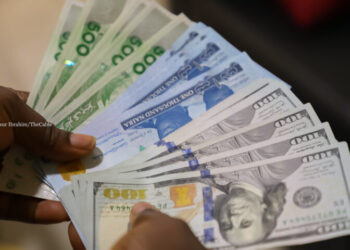
Foreign exchange turnover at Nigeria’s official market fell sharply by 48.7 per cent week-on-week to $2.71 billion in the week ended 28 August 2026, from about $5.28 billion recorded in the preceding trading week.
Central Bank of Nigeria data showed that activity was concentrated on 26 and 27 August, when transactions totalled $913.76 million and $1.06 billion respectively. Turnover on 24 August stood at $731.18 million, while the market was closed on 25 August for a public holiday.
Moderation After Strong Prior Week
The decline follows a period in which the Nigerian Foreign Exchange Market recorded more than $5 billion in transactions in the previous week, pointing to a significant moderation in trading volumes.
The latest figures come as the Central Bank continues efforts to deepen the efficiency and transparency of the foreign exchange market. Governor Olayemi Cardoso has stated that the apex bank’s interventions now account for only about 1.2 per cent to 1.3 per cent of total FX market turnover, rejecting suggestions that the bank is aggressively intervening to influence market pricing.
Cardoso attributed the improved functioning of the market to reforms that include the FX Code, the electronic trading platform and the revised foreign exchange manual. The Central Bank has also maintained that stronger external buffers have enhanced Nigeria’s capacity to withstand external shocks.
Reserves and Market Watch
Nigeria’s foreign exchange reserves rose above $53 billion during the week, reaching $53.11 billion as of 24 August, according to Central Bank data.
The sharp week-on-week drop in turnover will be closely monitored by market participants as they assess liquidity conditions and trading depth in the official foreign exchange market.