RateCaptain
  • Home
    • About Us
    • Contact Us
  • FX Rates
  • Money Market
  • Cryptocurrency
  • Commodities
  • Corporates
No Result
View All Result
Subscribe
  • Home
    • About Us
    • Contact Us
  • FX Rates
  • Money Market
  • Cryptocurrency
  • Commodities
  • Corporates
No Result
View All Result
RateCaptain
No Result
View All Result
Home Business

Oil Prices Steady Above Nigeria’s $64.85 Budget Benchmark as Middle East Tensions Persist

Akpan Edidong by Akpan Edidong
January 26, 2026
in Business
Reading Time: 2 mins read
A A
0
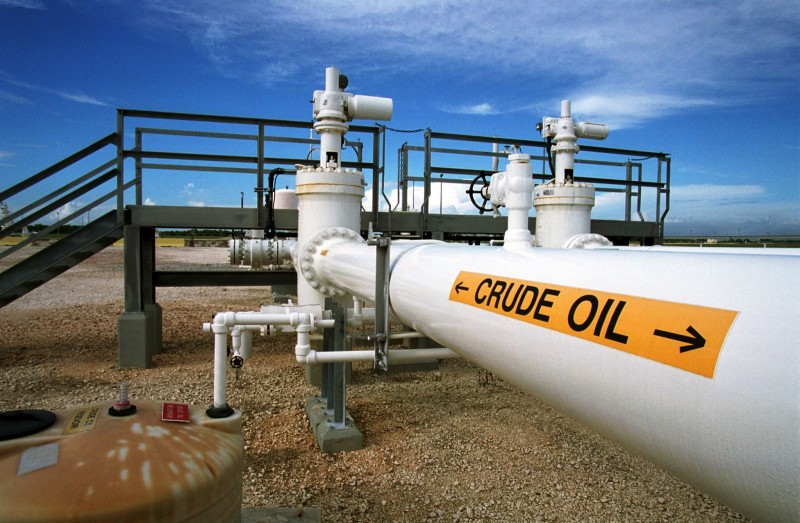
OPEC – Nigeria’s oil production decreases to 972 tb/d
Share on FacebookShare on TwitterShare on WhatsappShare on Telegram

Global oil prices held firm on Monday, trading comfortably above Nigeria’s 2026 budget benchmark of $64.85 per barrel, supported by ongoing supply constraints and heightened geopolitical risks in the Middle East.

Brent crude futures eased marginally by 7 cents (0.1%) to $65.81 per barrel by 02:21 GMT, while U.S. West Texas Intermediate (WTI) slipped 6 cents (0.1%) to $61.01 per barrel. The small pullback came after both benchmarks posted a strong rally the previous session, gaining over 2%, and closed the week up approximately 2.7% — their highest weekly finish since mid-January.

AlsoRead

Manufacturers and Employers Warn N400 Billion Investments at Risk from Sachet Alcohol Ban

NGX Gains N232 Billion in Market Capitalisation Despite Slower Trading Activity

Nigerian Companies Secure Over $2.5 Billion in World Bank Contracts, Rank Fifth Globally

The resilience in crude prices offers Nigeria a welcome fiscal cushion at a time when the country’s budget relies heavily on stable oil revenues. The 2026 Appropriation Bill was built on an oil price assumption of $64.85 per barrel and a production target of 2.6 million barrels per day (mbpd). Prices dipping below this level last week had sparked concerns about potential revenue shortfalls, but the current levels provide breathing room for fiscal planning.

Market support stems from a combination of supply-side tightness and geopolitical developments:

– Harsh weather in the United States has reduced crude output by an estimated 250,000 barrels per day, affecting key producing regions including the Bakken shale, Oklahoma, and Texas (JPMorgan data).
– Escalating tensions in the Middle East, including the deployment of a U.S. aircraft carrier strike group to the region, have raised fears of possible disruptions to critical shipping lanes.
– An Iranian official’s statement warning that any attack on Iranian territory would trigger “an all-out war” added to the risk premium embedded in prices.

These factors have kept upward pressure on oil despite occasional minor corrections, helping Brent and WTI maintain levels well above Nigeria’s conservative budget benchmark.

For Nigeria where oil remains the backbone of government revenue and foreign exchange earnings — the price stability is a positive development. However, analysts caution that favourable global prices alone do not guarantee fiscal comfort. Domestic production challenges, including pipeline vandalism, crude oil theft, and operational inefficiencies, continue to prevent the country from consistently hitting its output targets.

The recent price environment stands in contrast to 2024, when Nigeria’s fiscal deficit ballooned to N13.51 trillion exceeding targets and breaching the Fiscal Responsibility Act 2007 deficit-to-GDP limit. Sustained prices above $64.85 would help ease some of the strain on budget execution, but long-term revenue stability hinges on both external market conditions and internal reforms to boost domestic crude production.

As Middle East tensions remain elevated and U.S. weather-related output losses persist, oil markets are likely to stay sensitive to any escalation or resolution in geopolitical risks. For Nigerian policymakers, the current levels offer cautious optimism — but the margin for error remains narrow given the country’s heavy dependence on crude exports.


Tags: Crudeoil
Previous Post

CBN Auctions N1.15 Trillion in Treasury Bills as Investors Eye Higher Yields

Next Post

Naira Ends Week Weaker at N1,421.63/$ as Supply Shortages Fuel Volatility

Related News

Manufacturers and Employers Warn N400 Billion Investments at Risk from Sachet Alcohol Ban

Manufacturers and Employers Warn N400 Billion Investments at Risk from Sachet Alcohol Ban

by Victoria Attah
February 3, 2026
0

A renewed push by the National Agency for Food and Drug Administration and Control (NAFDAC) to ban the production and...

Nigerian Stock Market Witnesses N35 Billion Dip in Market Cap as Key Stocks Decline

NGX Gains N232 Billion in Market Capitalisation Despite Slower Trading Activity

by Stephen Akudike
January 30, 2026
0

The Nigerian Exchange Limited (NGX) ended Thursday’s session on a positive note, with total market capitalisation increasing by N232 billion...

World Bank Emphasizes Cash Transfers to Break Poverty Cycle in Nigeria

Nigerian Companies Secure Over $2.5 Billion in World Bank Contracts, Rank Fifth Globally

by Victoria Attah
January 28, 2026
0

Nigerian firms have emerged as one of the top global beneficiaries of World Bank-financed projects, securing more than $2.5 billion...

PayPal Shares Dip by 7% as Quarterly Operating Margin Disappoints Investors

PayPal Launches in Nigeria Through Paga Partnership, Enabling International Payment

by Victoria Attah
January 28, 2026
0

After more than two decades of limited access, PayPal has officially entered the Nigerian market through a strategic partnership with...

Next Post
Battered Commodity Currencies Gain Attention Amid Dollar’s Decline.

Naira Ends Week Weaker at N1,421.63/$ as Supply Shortages Fuel Volatility

Leave a Reply Cancel reply

Your email address will not be published. Required fields are marked *

Recommended

Angola Surpasses Nigeria, Becomes Africa’s Largest Oil Producer in August

Naira Breaks Below N1,400 as Oil Rally and CBN Reforms Fuel Fresh Stability

February 5, 2026
Naira Surges Against US Dollar, Falls Below N1,000 Mark

Larger Disparities Boom Between Black Market and Official Rates

February 5, 2026

Popular Story

  • Nigeria’s Opportunity: Navigating Global Oil Surge Amid Libya’s Top Oilfield Disruption

    Oil Prices Surge Above Nigeria’s Budget Benchmark, Lifting Naira and Reserves

    0 shares
    Share 0 Tweet 0
  • Emefiele’s Naira Redesign Memo Takes Centre Stage in EFCC Trial

    0 shares
    Share 0 Tweet 0
  • MoMo PSB and fintech experts advocate collaboration for financial inclusion.

    0 shares
    Share 0 Tweet 0
  • Manufacturers and Employers Warn N400 Billion Investments at Risk from Sachet Alcohol Ban

    0 shares
    Share 0 Tweet 0
  • Naira Closes January at N1,386.55/$ in Official Market, Strongest Level in Nearly Two Years

    0 shares
    Share 0 Tweet 0
RateCaptain

RateCaptain

We bring you the most accurate in new and market data. Check our landing page for details.

  • Home
  • About Us
  • Privacy Policy
  • Terms & Conditions
  • Disclaimer
  • Cookie Policy
  • Contact Us

Copyright © 2022 RateCaptain - All rights reserved by RateCaptain.

No Result
View All Result
  • Home
    • About Us
    • Contact Us
  • FX Rates
  • Money Market
  • Cryptocurrency
  • Commodities
  • Corporates

Copyright © 2022 RateCaptain - All rights reserved by RateCaptain.

RateCaptain
Manage Cookie Consent
To provide the best experiences, we use technologies like cookies to store and/or access device information. Consenting to these technologies will allow us to process data such as browsing behavior or unique IDs on this site. Not consenting or withdrawing consent, may adversely affect certain features and functions.
Functional Always active
The technical storage or access is strictly necessary for the legitimate purpose of enabling the use of a specific service explicitly requested by the subscriber or user, or for the sole purpose of carrying out the transmission of a communication over an electronic communications network.
Preferences
The technical storage or access is necessary for the legitimate purpose of storing preferences that are not requested by the subscriber or user.
Statistics
The technical storage or access that is used exclusively for statistical purposes. The technical storage or access that is used exclusively for anonymous statistical purposes. Without a subpoena, voluntary compliance on the part of your Internet Service Provider, or additional records from a third party, information stored or retrieved for this purpose alone cannot usually be used to identify you.
Marketing
The technical storage or access is required to create user profiles to send advertising, or to track the user on a website or across several websites for similar marketing purposes.
  • Manage options
  • Manage services
  • Manage {vendor_count} vendors
  • Read more about these purposes
View preferences
  • {title}
  • {title}
  • {title}
?>