RateCaptain
  • Home
    • About Us
    • Contact Us
  • FX Rates
  • Money Market
  • Cryptocurrency
  • Commodities
  • Corporates
No Result
View All Result
Subscribe
  • Home
    • About Us
    • Contact Us
  • FX Rates
  • Money Market
  • Cryptocurrency
  • Commodities
  • Corporates
No Result
View All Result
RateCaptain
No Result
View All Result
Home Economics

South Africa Adopts Measures to Exit Global Watchdog’s Grey List

Victoria Attah by Victoria Attah
December 1, 2023
in Economics
Reading Time: 2 mins read
A A
0
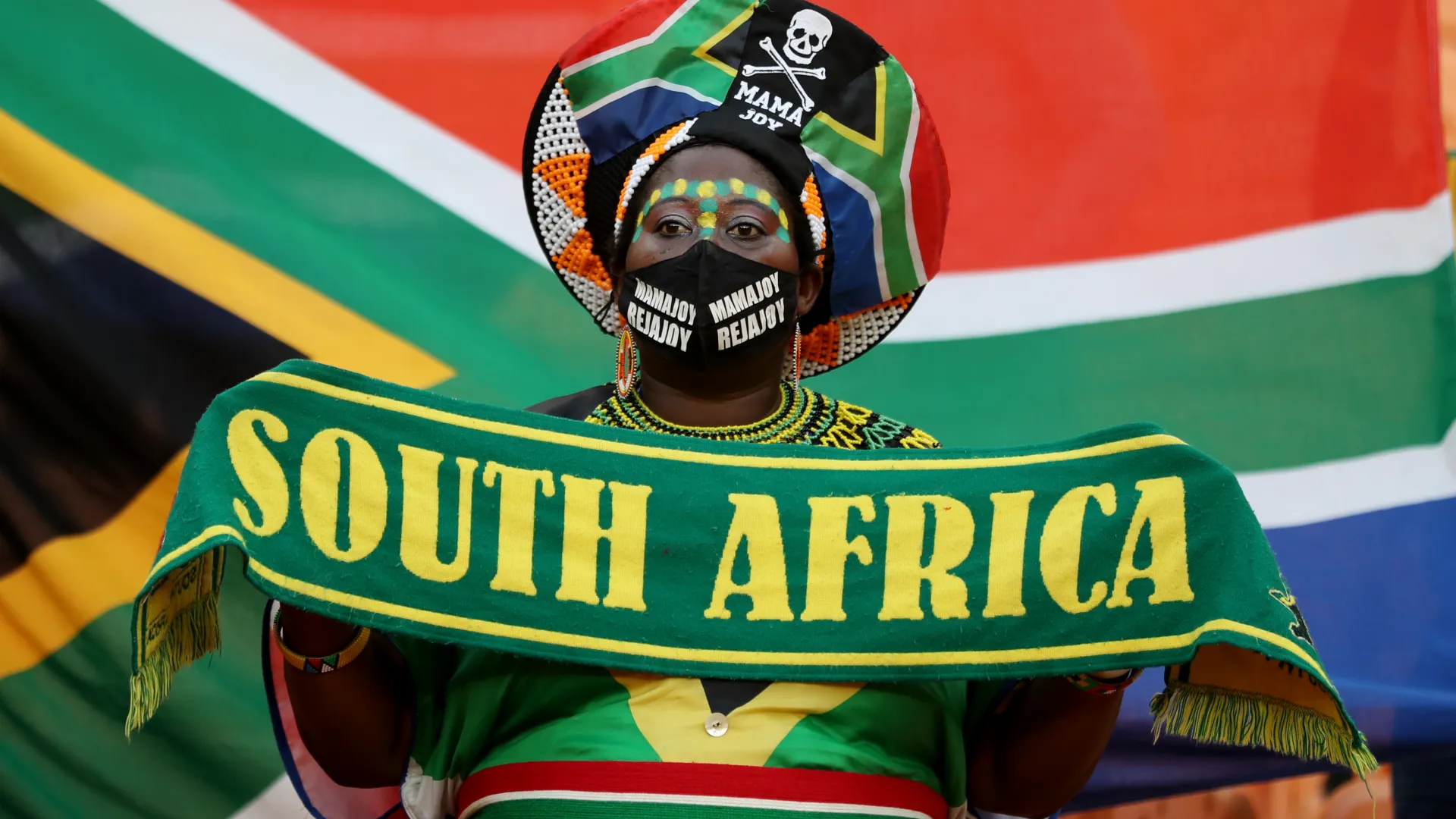
South Africa Adopts Measures to Exit Global Watchdog’s Grey List
Share on FacebookShare on TwitterShare on WhatsappShare on Telegram

Recent reports indicate that South Africa is intensifying its efforts to exit the Financial Action Task Force (FATF) grey list by implementing robust anti-money laundering (AML) measures. In February 2023, FATF placed South Africa, along with Nigeria and 20 other nations, on its grey list due to deficiencies in their legislations aimed at combating money laundering, terrorism financing, and proliferation financing.

Being on the grey list has various consequences, including enhanced due diligence for citizens with offshore bank accounts, increased difficulties in opening overseas bank accounts, and potential economic challenges as international organizations undertake thorough audits before investing in the country.

AlsoRead

IMF Refuses to Endorse External or Domestic Borrowing for Nigeria.

Nigeria’s Inflation Eases to 20.12% in August, Prompting Calls for CBN Rate Cuts

African Nations Grapple with Soaring Borrowing Costs in 2025 Amid Inflation Surge

While Nigeria faced challenges and failed to scale a recent review by the global financial intelligence agency, South Africa has showcased substantial progress. The latest FATF follow-up report on South Africa’s AML regime reveals significant improvements in various aspects, though some areas remain in partial compliance, subjecting the nation to increased monitoring until the next FATF report in October 2024.

During the FATF plenary held in Paris between October 25 and 27, 2023, Nigeria’s money laundering and terrorism financing risk were reviewed, highlighting the challenges the country faces. In contrast, South Africa’s efforts to address technical compliance deficiencies identified in the mutual evaluation of June 2021 have been acknowledged.

South Africa’s latest report saw FATF upgrading the country on 20 recommendations. Key upgrades include Recommendations 5 and 23 moving from partially compliant to fully compliant, addressing the existence of an offence of terrorist financing and the regulation of designated non-financial businesses and professions (DNFBPs).

Other recommendations, including 1, 7, 10, 14, 18, 22, 24, 25, 26, 27, and 28, have been upgraded from partially compliant to largely compliant. These cover areas such as customer due diligence, money transfer services, foreign branches, beneficial ownership transparency, and supervision powers.

FATF also recognized South Africa’s success in upgrading Recommendation 12 on politically exposed persons from non-compliant to largely compliant. Recommendation 17, concerning firms’ reliance on third parties, was changed from non-compliant to ‘not applicable.’

However, South Africa still faces work on five recommendations: 2, 6, 8, 15, and 32. These relate to national coordination of AML efforts, targeted financial sanctions related to terrorism, non-profit organizations, and new technologies such as virtual currencies and cash couriers.

Despite the progress made in 2023, South Africa will remain in enhanced follow-up until the next FATF report in October 2024. The country has notably implemented laws requiring compulsory registration of trust and company beneficial ownership, demonstrating its commitment to meeting FATF recommendations.

The FATF recommendations provide a comprehensive framework for countries to combat money laundering, terrorist financing, and the financing of weapons of mass destruction, emphasizing the importance of timely access to accurate and up-to-date beneficial ownership information. South Africa’s continued efforts reflect a commitment to global AML standards.


Tags: AML Measuresanti-money launderingFATFFinancial Action Task Forcefinancial regulationsGlobal ComplianceGrey ListSouth Africa.
Previous Post

Ecobank Group Reports Impressive 59% Growth in Gross Earnings to N1.21tn

Next Post

Bitcoin Surpasses $38,000 Mark: Here’s Why

Related News

IMF Applauds Tinubu Policy Reforms While Lowering Growth Projections

IMF Refuses to Endorse External or Domestic Borrowing for Nigeria.

by Victoria Attah
April 17, 2026
0

The International Monetary Fund (IMF) has declined to recommend whether Nigeria should prioritise external or domestic borrowing, insisting instead that...

Nigeria’s Inflation Eases to 20.12% in August, Prompting Calls for CBN Rate Cuts

by Stephen Akudike
September 16, 2025
0

Nigeria’s headline inflation rate dropped to 20.12% in August 2025, marking its fifth consecutive month of decline from 21.88% in...

IMF Lists Top 10 African Nations with Highest Debt Burdens

African Nations Grapple with Soaring Borrowing Costs in 2025 Amid Inflation Surge

by Akpan Edidong
August 6, 2025
0

Across Africa, central banks are wielding high Monetary Policy Rates (MPRs) as a weapon against persistent inflation, currency volatility, and...

NEC Affirms CBN $3 Billion Loan for Naira Stability

CBN Holds Policy Rates Steady Amid Global Economic Challenges

by Stephen Akudike
July 31, 2025
0

The Central Bank of Nigeria (CBN) maintained its key monetary policy instruments at the July 2025 Monetary Policy Committee (MPC)...

Next Post
Bitcoin’s 10% Weekly Surge Backed by ETF Speculation

Bitcoin Surpasses $38,000 Mark: Here's Why

Leave a Reply Cancel reply

Your email address will not be published. Required fields are marked *

Recommended

IMF Cautions Central African Republic against Adopting Bitcoin

Bitcoin Tests $80,000 Resistance as It Remains Range-Bound Ahead of FOMC Decision

April 29, 2026
Naira appreciated to N738/$ in the Parallel Market

Naira Weakness Pushes Foreign Currency Taxes to N6.33 Trillion in 2025

April 29, 2026

Popular Story

  • Transcorp Nigeria Wins Afam Power Sale With $293 Million Bid

    0 shares
    Share 0 Tweet 0
  • Apple CEO Poised to Get $750 Million Final Payout From Award

    0 shares
    Share 0 Tweet 0
  • Naira Appreciates to N705/$1 at the Parallel Market Despite 11% Shrink in Forex Supply

    0 shares
    Share 0 Tweet 0
  • CITN Urged to Conduct Holistic Review of International Tax Policies for Increased Revenue.

    0 shares
    Share 0 Tweet 0
  • Liquidity Crunch: Banking Sector’s Borrowing from CBN Surges to N12 Trillion.

    0 shares
    Share 0 Tweet 0

RateCaptain

We bring you the most accurate in new and market data. Check our landing page for details.

  • Home
  • About Us
  • Privacy Policy
  • Terms & Conditions
  • Disclaimer
  • Cookie Policy
  • Contact Us

Copyright © 2022 RateCaptain - All rights reserved by RateCaptain.

No Result
View All Result
  • Home
    • About Us
    • Contact Us
  • FX Rates
  • Money Market
  • Cryptocurrency
  • Commodities
  • Corporates

Copyright © 2022 RateCaptain - All rights reserved by RateCaptain.

RateCaptain
Manage Cookie Consent
To provide the best experiences, we use technologies like cookies to store and/or access device information. Consenting to these technologies will allow us to process data such as browsing behavior or unique IDs on this site. Not consenting or withdrawing consent, may adversely affect certain features and functions.
Functional Always active
The technical storage or access is strictly necessary for the legitimate purpose of enabling the use of a specific service explicitly requested by the subscriber or user, or for the sole purpose of carrying out the transmission of a communication over an electronic communications network.
Preferences
The technical storage or access is necessary for the legitimate purpose of storing preferences that are not requested by the subscriber or user.
Statistics
The technical storage or access that is used exclusively for statistical purposes. The technical storage or access that is used exclusively for anonymous statistical purposes. Without a subpoena, voluntary compliance on the part of your Internet Service Provider, or additional records from a third party, information stored or retrieved for this purpose alone cannot usually be used to identify you.
Marketing
The technical storage or access is required to create user profiles to send advertising, or to track the user on a website or across several websites for similar marketing purposes.
  • Manage options
  • Manage services
  • Manage {vendor_count} vendors
  • Read more about these purposes
View preferences
  • {title}
  • {title}
  • {title}
?>