RateCaptain
  • Home
    • About Us
    • Contact Us
  • FX Rates
  • Money Market
  • Cryptocurrency
  • Commodities
  • Corporates
No Result
View All Result
Subscribe
  • Home
    • About Us
    • Contact Us
  • FX Rates
  • Money Market
  • Cryptocurrency
  • Commodities
  • Corporates
No Result
View All Result
RateCaptain
No Result
View All Result
Home Economics

Abuja, Delta and Bayelsa State Have The Highest Food Prices

Rate Captain by Rate Captain
October 26, 2021
in Economics, Markets, Research
Reading Time: 3 mins read
A A
0
Share on FacebookShare on TwitterShare on WhatsappShare on Telegram

The percentage of cost of food in Nigeria declined in September to an actual percentage of 19.57%, compared to the previous value of 20.3% for august.

Currently Nigeria’s consumer price index (CPI) is quoted at 16.63%. Inflation measured by consumer price index (CPI) is defined as the change in the prices of a basket of goods and services that are typically purchased by specific groups of households.
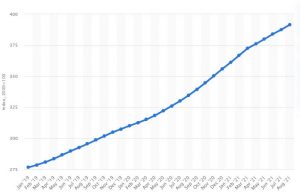
 

CPI statistics in Nigeria has been on an upward slopping trend since January 2019, Despite the governments attempt to stabilize the inflationary tendencies in the economy, it has proved inefficient.

World bank development update stated that “the Nigerian economy experienced a shallower contraction of -1.8% than had been projected at the beginning of the pandemic (-3.2%). Although the economy started to grow again, prices are increasing rapidly, severely impacting Nigerian households. As of April 2021, the inflation rate was the highest in four years. Food prices accounted for over 60% of the total increase in inflation. Rising prices have pushed an estimated 7 million Nigerians below the poverty line in 2020 alone.”

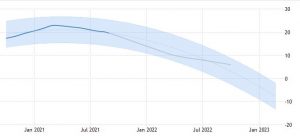
Trading economics predicted that Nigeria’s food inflation trend will most likely decline over the long term economic cycle.

“Food Inflation in Nigeria is expected to be 14.00 percent by the end of this quarter, according to Trading Economics global macro models and analysts expectations. In the long-term, the Nigeria Food Inflation is projected to trend around 6.00 percent in 2022 and 8.00 percent in 2023, according to our econometric models.”
According to the national bureau of statistics, selected food items were examined and results postulate that majority of food consumed by Nigerians have increased.

This statistics which was released in the early hours of Tuesday morning analyzed food price on year on year increase on a state differential basis.
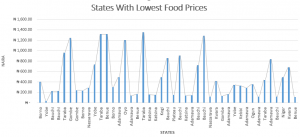
Bauchi, Adamawa and Gombe state had the lowest food price value across all 36 states with recurring economical figures attained with various food prices segment. A factor attributed to the lesser cost of food items compared to other states is the colassal level of agricultural activities in subject region.

Another factor resulting to the low cost of food items is due to the low purchasing power parity of consumers in this states. In northern Nigeria.

An economic analyst Zuhumnan Dapel said

“It’s true that much of the rise in poverty emerged from the northern part of the country. For the period that data is available, the gap in poverty between the regions opened after 1980”
“The equivalent number of poor people rose from 39.2 million to 112.47 million”
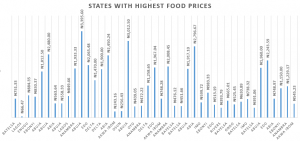
On the other hand states in Nigeria with highest food price within specific food items that are regularly consumed includes Bayelsa, Abuja and Akwa Ibom state. Food items such as medium sized eggs, sweet potatoes and rice experienced a 25.8%, 34.33% and 16.19% year on year increase.

Some factors instigating this price hike includes higher standard of living in urban settlements as well an increased level of demand for specific food items.

NOTE: All food items indicated includes
Agric eggs medium size
Agric eggs(medium size price of one)
Beans brown, sold loose
Beans :white black eye. sold loose
Beef Bone in
Beef ,boneless
Bread sliced 500g
Bread unsliced 500g
Broken Rice (Ofada)
Catfish (obokun) fresh
Catfish :dried
Catfish Smoked
Chicken Feet
Chicken Wings
Dried Fish Sardine
Evaporated tinned milk carnation 170g
Evaporated tinned milk(peak), 170g
Frozen chicken
Gari white,sold loose
Gari yellow,sold loose
Groundnut oil: 1 bottle, specify bottle
Iced Sardine
Irish potato
Mackerel : frozen
Maize grain white sold loose
Maize grain yellow sold loose
Mudfish (aro) fresh
Mudfish : dried
Onion bulb
Palm oil: 1 bottle,specify bottle
Plantain(ripe)
Plantain(unripe)
Rice agric sold loose
Rice local sold loose
Rice Medium Grained
Rice,imported high quality sold loose
Sweet potato
Tilapia fish (epiya) fresh
Titus:frozen
Tomato
Vegetable oil:1 bottle,specify bottle
Wheat flour: prepacked (golden penny 2kg)
Yam tuber


AlsoRead

Brent Falls to About $101.71 and WTI Drops Below $100 as US-Iran Diplomacy Hopes Rise

Naira Weakens at Official Market After Two-Day Advance

N4.66 Trillion Liquidity Surplus Eases Funding Pressure on Banks


News Source: Rate Captain

Previous Post

Privatized Businesses Bought From Government Are Declining – Fashola

Next Post

Amount Of Money Earned Per Person In Nigeria Hasn’t Changed In 40 Years – World Bank

Related News

Oil Prices Reach $90 Following Supply Reduction by Saudi Arabia and Russia.

Brent Falls to About $101.71 and WTI Drops Below $100 as US-Iran Diplomacy Hopes Rise

by Akpan Edidong
September 21, 2026
0

Brent crude eased to about $101.71 a barrel while US West Texas Intermediate slipped below $100 as investors assessed renewed...

Naira Strengthens as Anticipation Mounts for $10 Billion Forex Inflows

Naira Weakens at Official Market After Two-Day Advance

by Jide Omodele
September 10, 2026
0

The naira recorded its first depreciation of the week in the official foreign exchange market, falling to N1,329.21 per dollar...

CBN Allows Oil Companies to Resume Dollar Sales to Banks in Effort to Boost Supply.

N4.66 Trillion Liquidity Surplus Eases Funding Pressure on Banks

by Jide Omodele
September 8, 2026
0

Nigeria’s money market faced less funding pressure last week after excess liquidity in the banking system rose to N4.66 trillion,...

Nigeria’s Inflation Climbs to 19.6% in July 2022

Cost of Healthy Diet Rises to N1,541 Per Day as Food Expenses Climb

by Akpan Edidong
June 1, 2026
0

The average cost of consuming a healthy diet for an adult in Nigeria increased to N1,541 per day in March...

Next Post

Amount Of Money Earned Per Person In Nigeria Hasn't Changed In 40 Years - World Bank

Leave a Reply Cancel reply

Your email address will not be published. Required fields are marked *

Recommended

DMO’s campaign boosting investment in securities – stockbroker

Federal Government Allots N6.69 Billion in September Savings Bonds

September 28, 2026
World Bank Emphasizes Cash Transfers to Break Poverty Cycle in Nigeria

Federal Government Seeks Fresh $1.5 Billion in World Bank Financing

September 28, 2026

Popular Story

  • DMO Announces Subscription Offering for Federal Government Savings Bonds.

    CBN Prepares for N8.57 Trillion Liquidity Influx as OMO and Bond Maturities Hit Banks

    0 shares
    Share 0 Tweet 0
  • NFEM Turnover Drops 17.7% to $2.25 Billion as CBN Lowers Benchmark Rate to 23%

    0 shares
    Share 0 Tweet 0
  • Federal Government Allots N6.69 Billion in September Savings Bonds

    0 shares
    Share 0 Tweet 0
  • Federal Government Seeks Fresh $1.5 Billion in World Bank Financing

    0 shares
    Share 0 Tweet 0
  • Nigeria Loses $16 Trillion to Natural Gas Flaring in a Decade – FG

    0 shares
    Share 0 Tweet 0

RateCaptain

We bring you the most accurate in new and market data. Check our landing page for details.

  • Home
  • About Us
  • Privacy Policy
  • Terms & Conditions
  • Disclaimer
  • Cookie Policy
  • Contact Us

Copyright © 2022 RateCaptain - All rights reserved by RateCaptain.

No Result
View All Result
  • Home
    • About Us
    • Contact Us
  • FX Rates
  • Money Market
  • Cryptocurrency
  • Commodities
  • Corporates

Copyright © 2022 RateCaptain - All rights reserved by RateCaptain.

RateCaptain
Manage Cookie Consent
To provide the best experiences, we use technologies like cookies to store and/or access device information. Consenting to these technologies will allow us to process data such as browsing behavior or unique IDs on this site. Not consenting or withdrawing consent, may adversely affect certain features and functions.
Functional Always active
The technical storage or access is strictly necessary for the legitimate purpose of enabling the use of a specific service explicitly requested by the subscriber or user, or for the sole purpose of carrying out the transmission of a communication over an electronic communications network.
Preferences
The technical storage or access is necessary for the legitimate purpose of storing preferences that are not requested by the subscriber or user.
Statistics
The technical storage or access that is used exclusively for statistical purposes. The technical storage or access that is used exclusively for anonymous statistical purposes. Without a subpoena, voluntary compliance on the part of your Internet Service Provider, or additional records from a third party, information stored or retrieved for this purpose alone cannot usually be used to identify you.
Marketing
The technical storage or access is required to create user profiles to send advertising, or to track the user on a website or across several websites for similar marketing purposes.
  • Manage options
  • Manage services
  • Manage {vendor_count} vendors
  • Read more about these purposes
View preferences
  • {title}
  • {title}
  • {title}
?>