
RateCaptain
  • Home
    • About Us
    • Contact Us
  • FX Rates
  • Money Market
  • Cryptocurrency
  • Commodities
  • Corporates
No Result
View All Result
Subscribe
  • Home
    • About Us
    • Contact Us
  • FX Rates
  • Money Market
  • Cryptocurrency
  • Commodities
  • Corporates
No Result
View All Result
RateCaptain
No Result
View All Result
Home Banking

America Biggest Banks Take Legal Action Against Federal Reserve Over Stress Test Process

Stephen Akudike by Stephen Akudike
January 6, 2025
in Banking, Economics
Reading Time: 2 mins read
A A
0
Global Banking Landscape 2023: A Roller Coaster Ride of Challenges and Triumphs
Share on FacebookShare on TwitterShare on WhatsappShare on Telegram

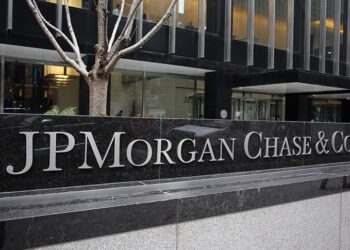
A coalition of major financial institutions and business organizations has filed a lawsuit against the Federal Reserve, challenging the annual bank stress tests. This group, led by the Bank Policy Institute (BPI), represents banking giants such as JPMorgan Chase, Citigroup, and Goldman Sachs. The American Bankers Association, the Ohio Bankers League, the Ohio Chamber of Commerce, and the U.S. Chamber of Commerce have also joined the legal effort.

Concerns Over Transparency and Stability

The lawsuit alleges that the current stress test process lacks transparency and fails to meet its intended objectives. According to the plaintiffs, the procedure imposes inconsistent and unexplained capital requirements, which could hinder banks’ ability to lend and support economic growth. While these groups do not oppose stress testing, they argue that the Federal Reserve has not adhered to federal laws requiring public input on the process.

AlsoRead

Nigeria’s Average Petrol Price Rises to N1,288.54 in March 2026, Anambra Pays Highest

CBN Warns Public of Fraudulent Links Targeting Bank Accounts.

IMF Refuses to Endorse External or Domestic Borrowing for Nigeria.

The Federal Reserve’s annual stress tests evaluate whether banks can endure economic downturns by maintaining adequate capital buffers. These tests influence critical business decisions, such as dividend payouts and share buybacks.

Fed’s Planned Reforms

The legal action comes shortly after the Federal Reserve announced plans to revise the stress test framework. In a statement released late Monday, the central bank acknowledged “significant changes” are needed to enhance the transparency of the process and reduce the volatility in capital buffer requirements. However, the Fed emphasized that these changes would not significantly impact overall capital requirements, potentially leaving the banking sector’s concerns unresolved.

The Fed attributed its decision to recent shifts in administrative law, which necessitate a review of its current procedures. Specific details of the proposed reforms have not yet been disclosed, but the central bank has invited public feedback as part of its effort to improve the process.

Industry Reactions

Greg Baer, CEO of the Bank Policy Institute, cautiously welcomed the Federal Reserve’s announcement, calling it “a first step towards transparency and accountability.” However, he suggested that further action may be necessary, stating, “We are reviewing [the Fed’s announcement] closely and considering additional options to ensure timely reforms that are both good law and good policy.”

The BPI and other groups have long criticized the stress test process for its lack of clarity and alleged overreach in setting capital requirements. In July, these organizations accused the Fed of violating the Administrative Procedure Act by not soliciting public input on its stress scenarios and for keeping key supervisory models confidential.

Implications for the Financial Sector

The outcome of this lawsuit could have significant ramifications for the banking industry. If successful, it may lead to a more transparent and predictable stress test process, potentially easing capital requirements and fostering greater economic activity. Conversely, the legal battle could also delay much-needed reforms, perpetuating uncertainty for banks and their stakeholders.

As the case unfolds, all eyes will be on the Federal Reserve to see how it balances its regulatory responsibilities with the concerns raised by the banking sector.

Tags: Bank Policy InstituteFederal Reservestress tests
Previous Post

IMTO Inflows Skyrocket by 63.7% in Nine Months Following CBN Reforms

Next Post

Forex Stability Sparks Optimism for Nigeria’s Telecom Sector in 2025

Related News

Debunking the Fuel Scarcity Myth and Its Impact on Financial Wellness

Nigeria’s Average Petrol Price Rises to N1,288.54 in March 2026, Anambra Pays Highest

by Akpan Edidong
May 6, 2026
0

The average retail price of Premium Motor Spirit (PMS) across Nigeria increased to N1,288.54 per litre in March 2026, according...

Leading Banks Struggle with Capital Deficits: Zenith Bank and Others Strive to Meet CBN Standards

CBN Warns Public of Fraudulent Links Targeting Bank Accounts.

by Victoria Attah
April 22, 2026
0

The Central Bank of Nigeria (CBN) has issued a public alert regarding fraudulent messages and malicious links circulating online, designed...

IMF Applauds Tinubu Policy Reforms While Lowering Growth Projections

IMF Refuses to Endorse External or Domestic Borrowing for Nigeria.

by Victoria Attah
April 17, 2026
0

The International Monetary Fund (IMF) has declined to recommend whether Nigeria should prioritise external or domestic borrowing, insisting instead that...

Leading Banks Struggle with Capital Deficits: Zenith Bank and Others Strive to Meet CBN Standards

NDIC Moves to Wind Up 89 Failed Microfinance and Mortgage Banks After Successful Rescue

by Jide Omodele
April 16, 2026
0

The Nigeria Deposit Insurance Corporation (NDIC) has begun the final stage of liquidating 89 defunct Microfinance Banks (MFBs) and Primary...

Next Post
Key Pitfalls to Avoid in Forex Trading: Tips for Success

Forex Stability Sparks Optimism for Nigeria's Telecom Sector in 2025

Leave a Reply Cancel reply

Your email address will not be published. Required fields are marked *

Recommended

Nigeria’s Stock Market Records N1.81 Trillion Gain in July.

NGX Market Capitalisation Drops N1.35 Trillion as Profit-Taking Triggers 0.86% Decline

May 6, 2026
Nigeria Plans New FX Rules, Targeting 750 Naira Exchange Rate

Naira Weakens as CBN Slashes FX Intervention by 83% in April

May 6, 2026

Popular Story

  • Nigeria’s Stock Market Records N1.81 Trillion Gain in July.

    NGX Market Capitalisation Drops N1.35 Trillion as Profit-Taking Triggers 0.86% Decline

    0 shares
    Share 0 Tweet 0
  • Nigeria’s External Reserves Drop by $731 Million in Early April

    0 shares
    Share 0 Tweet 0
  • Nigeria Inflation Drops to 15.15% in December 2025

    0 shares
    Share 0 Tweet 0
  • Shocking: “Undress” An AI Tool That Unveils Digital Representations of Individuals Without Clothing

    0 shares
    Share 0 Tweet 0
  • Adebisi to become Wema Bank CEO as Oloketuyi retires

    0 shares
    Share 0 Tweet 0

RateCaptain

We bring you the most accurate in new and market data. Check our landing page for details.

  • Home
  • About Us
  • Privacy Policy
  • Terms & Conditions
  • Disclaimer
  • Cookie Policy
  • Contact Us

Copyright © 2022 RateCaptain - All rights reserved by RateCaptain.

No Result
View All Result
  • Home
    • About Us
    • Contact Us
  • FX Rates
  • Money Market
  • Cryptocurrency
  • Commodities
  • Corporates

Copyright © 2022 RateCaptain - All rights reserved by RateCaptain.

RateCaptain
Manage Cookie Consent
To provide the best experiences, we use technologies like cookies to store and/or access device information. Consenting to these technologies will allow us to process data such as browsing behavior or unique IDs on this site. Not consenting or withdrawing consent, may adversely affect certain features and functions.
Functional Always active
The technical storage or access is strictly necessary for the legitimate purpose of enabling the use of a specific service explicitly requested by the subscriber or user, or for the sole purpose of carrying out the transmission of a communication over an electronic communications network.
Preferences
The technical storage or access is necessary for the legitimate purpose of storing preferences that are not requested by the subscriber or user.
Statistics
The technical storage or access that is used exclusively for statistical purposes. The technical storage or access that is used exclusively for anonymous statistical purposes. Without a subpoena, voluntary compliance on the part of your Internet Service Provider, or additional records from a third party, information stored or retrieved for this purpose alone cannot usually be used to identify you.
Marketing
The technical storage or access is required to create user profiles to send advertising, or to track the user on a website or across several websites for similar marketing purposes.
  • Manage options
  • Manage services
  • Manage {vendor_count} vendors
  • Read more about these purposes
View preferences
  • {title}
  • {title}
  • {title}
?>