RateCaptain
  • Home
    • About Us
    • Contact Us
  • FX Rates
  • Money Market
  • Cryptocurrency
  • Commodities
  • Corporates
No Result
View All Result
Subscribe
  • Home
    • About Us
    • Contact Us
  • FX Rates
  • Money Market
  • Cryptocurrency
  • Commodities
  • Corporates
No Result
View All Result
RateCaptain
No Result
View All Result
Home Business

Dangote Refinery: Weep Not Child By Duke of Shomolu

Rate Captain by Rate Captain
June 25, 2024
in Business, Economy
Reading Time: 2 mins read
A A
0
Dangote Refinery: Weep Not Child By Duke of Shomolu
Share on FacebookShare on TwitterShare on WhatsappShare on Telegram

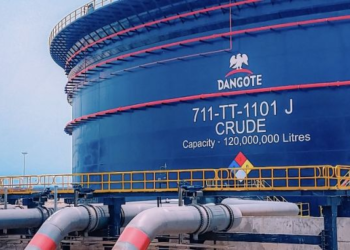
We have been inundated with very worrisome news emanating from the recently inaugurated giant, the Dangote Refinery. In summary, their challenges can be encapsulated into two major categories of concern.

The first category is self-inflicted, while the other is due to external factors, albeit with local origins.

AlsoRead

Nigeria’s Fuel Import Bill Plunges 54% in Two Years as Domestic Refining Gains Ground

Nigeria’s Statistics Bureau to Brief Stakeholders Ahead of Key December Inflation Data

Nigeria’s Debt Service Projected to Exceed N91 Trillion by 2028, Crowding Out Development Spending

Let me briefly explain, in case some of us have been hibernating under a rock. The Dangote Group has reported that International Oil Companies (IOCs) are doing everything within their power to frustrate their operations by either creating artificial scarcity of crude or inflating prices, each of which disrupts the planning and operations of the huge refinery.

This situation has forced them to source crude as far afield as the US, with grave consequences for their operations and plans.

The second issue involves the issuance of dubious licenses to various entities, leading to a market flooded with cheap and low-quality diesel, causing further disruptions in market penetration and pricing, among other issues.

Now, my thoughts. The Dangote Refinery is an economic game-changer, especially if you consider the many ways it impacts the economy. From infrastructure to job creation, technology transfer, forex earnings, revenue mobilization to different tiers of government, and the economic impact on allied SMEs, to mention a few.

These impacts are not trivial; they come with massive benefits to the government and the people of Nigeria. Therefore, their concerns must not only be heard but also addressed by the authorities with urgency.

The government must realize that the Dangote Refinery is no longer just one man’s project but now a national cause. As such, it must attract and receive sovereign backing in whatever struggles it faces.

This takes me back to the days of the Ibrahim Babangida regime, which promoted the notion of economic diplomacy, where the government acted as the chief marketing officer of Nigerian economic opportunities.

The Dangote Refinery must be the government’s major client. The government must urgently partner with it in this struggle.

I do not know the specifics of the agreements guiding operations between the IOCs, who are allegedly manipulating supply and pricing, but the relevant government bodies must urgently step in to ensure order in this sector.

As for the licensing issue caused by an errant government agency, addressing it should not be too difficult if corruption does not impede the process.

I really do not want to dwell on the woes of corruption as it is now very tiring, but when it begins to take on an incestuous dimension, a clear line has to be drawn.

Why allow carcinogenic products to enter the market for profit, undermining genuine, high-quality products being produced locally? It just defies common sense.

Everything must be done to protect this refinery until it stabilizes in its operations and is strong enough to stand on its own.

This is imperative, especially considering that out of the many entities given licenses to operate, Dangote Refinery is the only one not only operating but also producing in an iconic manner.

Weep not, my child, joy comes in the morning.

Tags: #NigeriaDangote Refineryeconomic impact
Previous Post

CBN Reports Progress in Inflation Control Amid Rising Food Prices

Next Post

World Bank Disburses $45.5 Million for Nigeria’s ID4D Project Amid Data Security Concerns

Related News

Fuel Subsidy Removal Negatively Impacts 90% of Nigerian Businesses

Nigeria’s Fuel Import Bill Plunges 54% in Two Years as Domestic Refining Gains Ground

by Akpan Edidong
January 13, 2026
0

Nigeria has achieved a major milestone in its long battle against fuel import dependence, with spending on imported refined petroleum...

Nigeria’s Public Debt Hits N46.25trn In Q4 2022 – NBS

Nigeria’s Statistics Bureau to Brief Stakeholders Ahead of Key December Inflation Data

by Jide Omodele
January 12, 2026
0

The National Bureau of Statistics (NBS) will hold a stakeholder engagement meeting on Monday ahead of the release of Nigeria’s...

Key Takeaways From President Tinubu Speech.

Nigeria’s Debt Service Projected to Exceed N91 Trillion by 2028, Crowding Out Development Spending

by Stephen Akudike
January 12, 2026
0

An analysis of federal budget documents reveals that debt servicing costs under President Bola Tinubu’s administration are projected to surpass...

Oil Prices Reach $90 Following Supply Reduction by Saudi Arabia and Russia.

Nigeria’s Oil Production Rises 7% in 2025 but Falls Short of Budget Target

by Akpan Edidong
January 8, 2026
0

Nigeria’s average daily oil production, including condensates, rose to 1.652 million barrels per day (bpd) in the first eleven months...

Next Post
World Bank Emphasizes Cash Transfers to Break Poverty Cycle in Nigeria

World Bank Disburses $45.5 Million for Nigeria's ID4D Project Amid Data Security Concerns

Leave a Reply Cancel reply

Your email address will not be published. Required fields are marked *

Recommended

Nigeria’s Stock Market Records N1.81 Trillion Gain in July.

NGX Kicks Off 2026 Trading Week with N745 Billion Surge as Bulls Charge Back

January 13, 2026
Fuel Subsidy Removal Negatively Impacts 90% of Nigerian Businesses

Nigeria’s Fuel Import Bill Plunges 54% in Two Years as Domestic Refining Gains Ground

January 13, 2026

Popular Story

  • Dollar Index Loses Steam as Treasury Yields Drift Back to 4.8%

    Naira Kicks Off 2026 with First Weekly Gain as CBN Boosts Liquidity

    0 shares
    Share 0 Tweet 0
  • Nigeria’s Fuel Import Bill Plunges 54% in Two Years as Domestic Refining Gains Ground

    0 shares
    Share 0 Tweet 0
  • NGX Kicks Off 2026 Trading Week with N745 Billion Surge as Bulls Charge Back

    0 shares
    Share 0 Tweet 0
  • Nigeria’s Statistics Bureau to Brief Stakeholders Ahead of Key December Inflation Data

    0 shares
    Share 0 Tweet 0
  • Naira Appreciates by 7% at Official Window as Reserves Grow in First Week of 2026

    0 shares
    Share 0 Tweet 0
RateCaptain

RateCaptain

We bring you the most accurate in new and market data. Check our landing page for details.

  • Home
  • About Us
  • Privacy Policy
  • Terms & Conditions
  • Disclaimer
  • Cookie Policy
  • Contact Us

Copyright © 2022 RateCaptain - All rights reserved by RateCaptain.

No Result
View All Result
  • Home
    • About Us
    • Contact Us
  • FX Rates
  • Money Market
  • Cryptocurrency
  • Commodities
  • Corporates

Copyright © 2022 RateCaptain - All rights reserved by RateCaptain.

RateCaptain
Manage Cookie Consent
To provide the best experiences, we use technologies like cookies to store and/or access device information. Consenting to these technologies will allow us to process data such as browsing behavior or unique IDs on this site. Not consenting or withdrawing consent, may adversely affect certain features and functions.
Functional Always active
The technical storage or access is strictly necessary for the legitimate purpose of enabling the use of a specific service explicitly requested by the subscriber or user, or for the sole purpose of carrying out the transmission of a communication over an electronic communications network.
Preferences
The technical storage or access is necessary for the legitimate purpose of storing preferences that are not requested by the subscriber or user.
Statistics
The technical storage or access that is used exclusively for statistical purposes. The technical storage or access that is used exclusively for anonymous statistical purposes. Without a subpoena, voluntary compliance on the part of your Internet Service Provider, or additional records from a third party, information stored or retrieved for this purpose alone cannot usually be used to identify you.
Marketing
The technical storage or access is required to create user profiles to send advertising, or to track the user on a website or across several websites for similar marketing purposes.
  • Manage options
  • Manage services
  • Manage {vendor_count} vendors
  • Read more about these purposes
View preferences
  • {title}
  • {title}
  • {title}
?>