RateCaptain
  • Home
    • About Us
    • Contact Us
  • FX Rates
  • Money Market
  • Cryptocurrency
  • Commodities
  • Corporates
No Result
View All Result
Subscribe
  • Home
    • About Us
    • Contact Us
  • FX Rates
  • Money Market
  • Cryptocurrency
  • Commodities
  • Corporates
No Result
View All Result
RateCaptain
No Result
View All Result
Home Economics

Electricity Sector Experience Highest Growth Value

Rate Captain by Rate Captain
August 31, 2021
in Economics, News
Reading Time: 1 min read
A A
0
Share on FacebookShare on TwitterShare on WhatsappShare on Telegram

AlsoRead

Nigeria’s Average Petrol Price Rises to N1,288.54 in March 2026, Anambra Pays Highest

IMF Refuses to Endorse External or Domestic Borrowing for Nigeria.

Nigeria’s Inflation Eases to 20.12% in August, Prompting Calls for CBN Rate Cuts

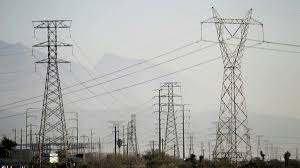
The Nigerian electricity sector classified with gas, steam and air conditioning supply recorded the highest growth by any sector in the country, posting a 78.16 percent year-on-year real GDP growth, according to the recently released Gross Domestic Product (GDP) report, by the National Bureau of Statistics (NBS).

According to the report, Nigeria’s non-oil sector of the economy was largely driven by growth recorded in trade, telecommunication, road transport, electricity, crop production, and food production.

Also, on a half-year basis, the sector grew by 56.58 percent year-on-year compared to a contraction of 2.78 percent recorded in the corresponding period of 2020.

Meanwhile, when compared to the previous quarter, the sector recorded a growth of 264.23 percent to a real aggregate of N134.19 billion in the second quarter of 2021, as opposed to N36.84 billion recorded in the first quarter of 2021.

The significant increase in the sector’s GDP value is largely attributed to the increase in electricity tariff in the country.

The sector’s growth is largely due to increases in the tariff of electricity in the country, and yet another upward review is due for September, under the Service-Based Tariff (SBT) programme of NERC. The electricity sector recorded the highest sectoral growth in the Nigerian economy in the review period.

Previous Post

NNPC Induce Petrol Subsidy Of N756.99bn in Less Than A Year

Next Post

Airlines Experience Depreciation, Suffer 28.5% Drop in Domestic Aircraft Movement

Related News

Debunking the Fuel Scarcity Myth and Its Impact on Financial Wellness

Nigeria’s Average Petrol Price Rises to N1,288.54 in March 2026, Anambra Pays Highest

by Akpan Edidong
May 6, 2026
0

The average retail price of Premium Motor Spirit (PMS) across Nigeria increased to N1,288.54 per litre in March 2026, according...

IMF Applauds Tinubu Policy Reforms While Lowering Growth Projections

IMF Refuses to Endorse External or Domestic Borrowing for Nigeria.

by Victoria Attah
April 17, 2026
0

The International Monetary Fund (IMF) has declined to recommend whether Nigeria should prioritise external or domestic borrowing, insisting instead that...

Nigeria’s Inflation Eases to 20.12% in August, Prompting Calls for CBN Rate Cuts

by Stephen Akudike
September 16, 2025
0

Nigeria’s headline inflation rate dropped to 20.12% in August 2025, marking its fifth consecutive month of decline from 21.88% in...

Otedola acquires 5.52% of Transcorp Plc.

How I Lost N200 Billion”: Femi Otedola Reflects on His Biggest Financial Setback

by Rate Captain
August 22, 2025
0

In a rare moment of vulnerability, billionaire businessman Femi Otedola has shared the story of how he lost nearly N200...

Next Post

Airlines Experience Depreciation, Suffer 28.5% Drop in Domestic Aircraft Movement

Leave a Reply Cancel reply

Your email address will not be published. Required fields are marked *

Recommended

DMO offers two FGN savings bonds at N1000 per unit.

Highest Yields of 2026 Delivered in Q1 as 364-Day T-Bill Hits 18.47%

May 18, 2026
Liquidity Crunch: Banking Sector’s Borrowing from CBN Surges to N12 Trillion.

CBN’s 50% CRR Policy Costs Nigerian Banks N2.5 Trillion in Annual Earnings – Report

May 18, 2026

Popular Story

  • Liquidity Crunch: Banking Sector’s Borrowing from CBN Surges to N12 Trillion.

    CBN’s 50% CRR Policy Costs Nigerian Banks N2.5 Trillion in Annual Earnings – Report

    0 shares
    Share 0 Tweet 0
  • Highest Yields of 2026 Delivered in Q1 as 364-Day T-Bill Hits 18.47%

    0 shares
    Share 0 Tweet 0
  • CBN Unveils Revised Foreign Exchange Manual, Set to Take Effect June 1

    0 shares
    Share 0 Tweet 0
  • Nigeria’s Inflation Edges Higher to 15.69% in April 2026

    0 shares
    Share 0 Tweet 0
  • Nigeria’s Banking Sector Attracts $7 Billion in Foreign Capital in 2024, a Five-Year High

    0 shares
    Share 0 Tweet 0

RateCaptain

We bring you the most accurate in new and market data. Check our landing page for details.

  • Home
  • About Us
  • Privacy Policy
  • Terms & Conditions
  • Disclaimer
  • Cookie Policy
  • Contact Us

Copyright © 2022 RateCaptain - All rights reserved by RateCaptain.

No Result
View All Result
  • Home
    • About Us
    • Contact Us
  • FX Rates
  • Money Market
  • Cryptocurrency
  • Commodities
  • Corporates

Copyright © 2022 RateCaptain - All rights reserved by RateCaptain.

RateCaptain
Manage Cookie Consent
To provide the best experiences, we use technologies like cookies to store and/or access device information. Consenting to these technologies will allow us to process data such as browsing behavior or unique IDs on this site. Not consenting or withdrawing consent, may adversely affect certain features and functions.
Functional Always active
The technical storage or access is strictly necessary for the legitimate purpose of enabling the use of a specific service explicitly requested by the subscriber or user, or for the sole purpose of carrying out the transmission of a communication over an electronic communications network.
Preferences
The technical storage or access is necessary for the legitimate purpose of storing preferences that are not requested by the subscriber or user.
Statistics
The technical storage or access that is used exclusively for statistical purposes. The technical storage or access that is used exclusively for anonymous statistical purposes. Without a subpoena, voluntary compliance on the part of your Internet Service Provider, or additional records from a third party, information stored or retrieved for this purpose alone cannot usually be used to identify you.
Marketing
The technical storage or access is required to create user profiles to send advertising, or to track the user on a website or across several websites for similar marketing purposes.
  • Manage options
  • Manage services
  • Manage {vendor_count} vendors
  • Read more about these purposes
View preferences
  • {title}
  • {title}
  • {title}
?>