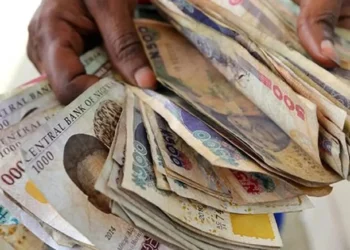
Nigeria’s money market faced less funding pressure last week after excess liquidity in the banking system rose to N4.66 trillion, helping to push the overnight lending rate lower.
System liquidity increased from N3.6 trillion in the previous week, supported mainly by banks’ placements at the Central Bank of Nigeria’s Standing Deposit Facility and inflows from maturing securities. According to Cowry Asset Limited, about N4.4 trillion of the surplus was lodged at the SDF, while N2.3 trillion in primary-market repayments further expanded the cash available to financial institutions.
Lower Overnight Costs
The build-up in liquidity eased short-term funding costs. The overnight rate fell 13 basis points to 22.13 per cent, while the funding rate remained unchanged at 22 per cent.
Softer money-market conditions prevailed even though the Central Bank continued to manage liquidity through Open Market Operations, with OMO settlements removing some excess cash from the system. There was no reported activity at the Standing Lending Facility during the period, indicating that banks had little need to borrow emergency short-term funds from the apex bank.
September Inflow Outlook
Market liquidity could remain relatively strong this month. The Financial Market Dealers Association projects total system inflows of N15.72 trillion in September, a 16.1 per cent increase from the N13.54 trillion recorded in August.
OMO maturities are expected to account for about 74 per cent of the projected September inflows. The eventual liquidity position will depend heavily on how aggressively the Central Bank sterilises excess funds through OMO sales and other monetary operations.
August Absorption and Recovery
The Central Bank intensified liquidity absorption in August, withdrawing N4.72 trillion from the banking system through consecutive OMO auctions, compared with N2.19 trillion sterilised in July. It also settled N1.456 trillion in treasury bills on 12 August, adding to the month’s liquidity movements.
Despite the large withdrawals, system liquidity recovered towards the end of August following inflows from bond coupon payments and maturing securities.
Earlier Tightening
The recent easing in overnight funding costs follows tighter conditions at the close of August. The overnight rate rose to 23.80 per cent on 31 August, a 170-basis-point increase from 22.10 per cent at the end of July. The Open Repo rate similarly climbed to 23.25 per cent from 22 per cent. Cowry Asset analysts noted that Nigerian Interbank Offered Rates moved higher across the curve, reflecting expectations that liquidity could tighten as the Central Bank continues its monetary operations.
The interplay between large system inflows and aggressive liquidity sterilisation is therefore expected to remain a key driver of money-market pricing.
Implications for Investors
For investors in money-market funds and other short-term fixed-income instruments, movements in interbank rates could affect the returns available on treasury bills, commercial papers, fixed deposits and other short-duration assets. With substantial OMO maturities due in September, the direction of liquidity will largely hinge on whether the Central Bank allows the resulting cash to remain in the banking system or recycles a significant portion through fresh sterilisation operations.