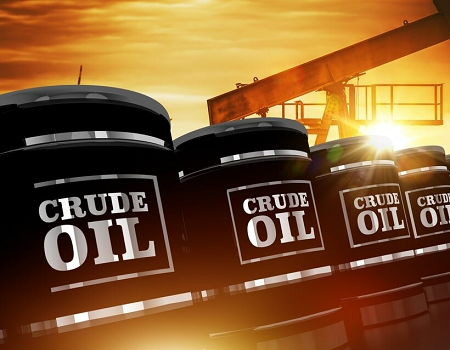
Brent crude eased to about $101.71 a barrel while US West Texas Intermediate slipped below $100 as investors assessed renewed prospects of diplomatic engagement between the United States and Iran this week.
At the open of markets on Monday, 21 September, WTI had fallen by about $2.10 to trade at $98.20 a barrel, while Brent declined 2.04 per cent, or $2.12, to $101.75 a barrel. The move took both benchmarks back toward levels last seen more than a week earlier, with Brent and WTI touching their lowest points since 10 September earlier in the session.
Investors were weighing the chance of renewed US-Iran contacts around the United Nations General Assembly in New York, while also tracking the recovery in Saudi crude shipments despite ongoing attacks in the region.
Iran Sets Conditions for Talks
The latest price movement followed signals that Iran has given mediators conditions under which it would consider returning to negotiations with the United States. Mohsen Rezaei, secretary of Iran’s Supreme National Security Council, told Al Jazeera that Tehran had formally conveyed its terms to Washington through Qatari mediators and was awaiting a response from President Donald Trump.
Rezaei said the conditions include an end to the conflict on all fronts, the release of frozen Iranian funds and an end to the US naval blockade. He added that Qatar and Pakistan were continuing efforts to revive talks between the two sides. The possibility of a diplomatic route has reduced some of the supply-risk premium that had lifted crude prices in recent weeks.
Trump has continued to issue strong warnings to Tehran. In a call with a Fox News reporter, he said Iran’s leaders should reach a deal or face severe economic consequences, while also saying he would be open to meeting Iranian President Masoud Pezeshkian, who is expected in New York for the UN gathering this week.
Prolonged Standoff and Recent Escalation
The US-Iran conflict has remained largely deadlocked for months, with neither side clearly accepting the concessions needed for a lasting settlement. The prolonged standoff has disrupted energy markets, weakened Iran’s economy and added to wider military tensions across the Middle East.
Diplomatic efforts involving Gulf countries have also faced setbacks. On 14 September, Iran postponed a planned meeting with Gulf states over shipping through the Strait of Hormuz, citing developments in Yemen. At the same time, Iran’s Persian Gulf Strait Authority sanctioned 77 vessels for allegedly violating its protocols.
Those moves came after attacks involving Iran, Yemen’s Houthi rebels and Saudi Arabia raised fresh concerns about crude supplies through key Middle Eastern shipping routes. Oil prices then rose by more than 2.5 per cent, with Brent moving toward $107 a barrel and WTI above $102.
Implications for Nigeria
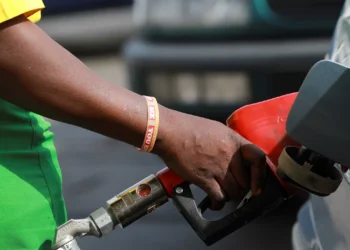
It remains uncertain whether the latest decline in crude prices will last long enough to ease petrol prices in Nigeria, which rose to new levels last week. On 13 September, most filling stations in Lagos were selling petrol between N1,400 and N1,430 a litre, while MRS stations charged N1,395. In Abuja, pump prices ranged between N1,400 and N1,450 a litre.
Broader energy costs have also reflected the pressure. Nigeria’s energy inflation rate rose to 4.69 per cent in August 2026 from 4.40 per cent in July, reversing the previous month’s decline, according to the National Bureau of Statistics. The August figures predate the latest surge in petrol prices in September, so the full effect of the recent fuel-price increases has not yet appeared in the official energy inflation data.