RateCaptain
  • Home
    • About Us
    • Contact Us
  • FX Rates
  • Money Market
  • Cryptocurrency
  • Commodities
  • Corporates
No Result
View All Result
Subscribe
  • Home
    • About Us
    • Contact Us
  • FX Rates
  • Money Market
  • Cryptocurrency
  • Commodities
  • Corporates
No Result
View All Result
RateCaptain
No Result
View All Result
Home Economy

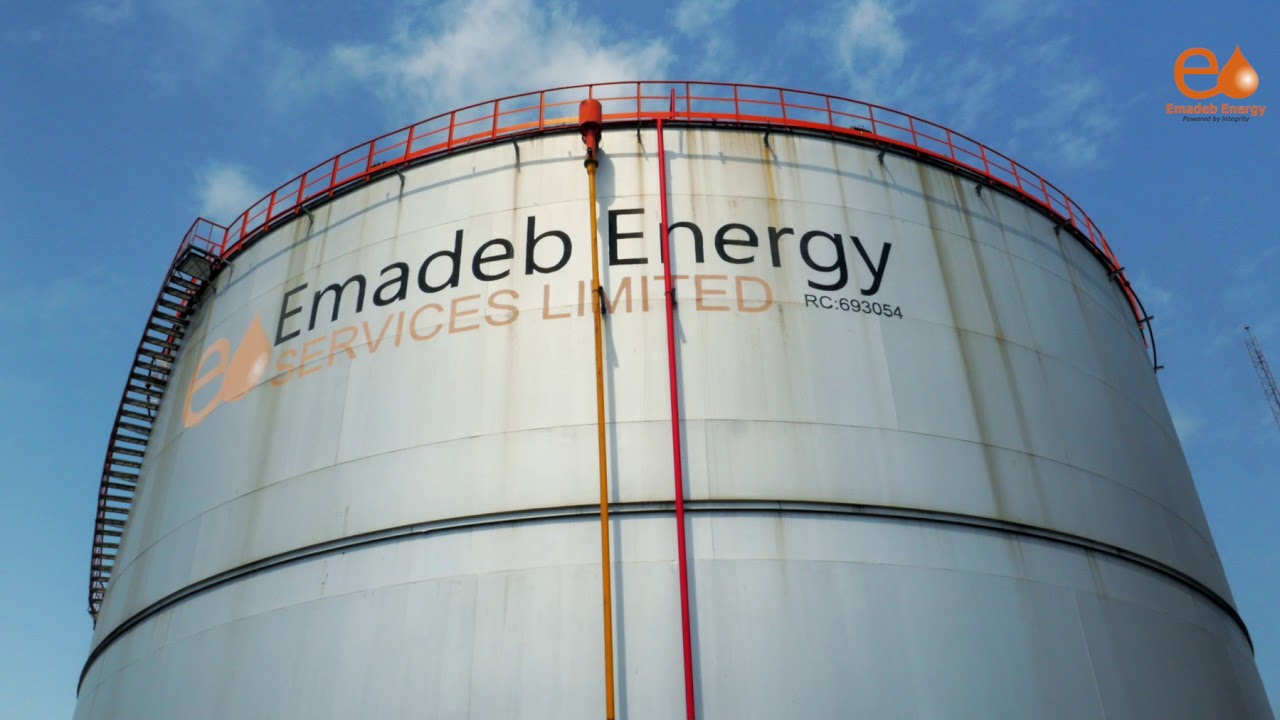
Emadeb Energy Breaks NNPC’s Monopoly, Imports 27 Million Litres of Petrol into Nigeria.

Akpan Edidong by Akpan Edidong
September 13, 2023
in Economy
Reading Time: 2 mins read
A A
0
Emadeb Energy Breaks NNPC’s Monopoly, Imports 27 Million Litres of Petrol into Nigeria.
Share on FacebookShare on TwitterShare on WhatsappShare on Telegram

In a significant development for Nigeria’s fuel supply chain, Emadeb Energy Services Limited has shattered the long-standing monopoly held by the Nigerian National Petroleum Company Limited (NNPC) as the sole importer of petroleum products into the country. On Wednesday, July 19, 2023, Emadeb Energy received its much-awaited shipment of 27 million litres of petrol, marking a turning point in the nation’s energy landscape.

The imported petrol, which had been on the sea for some time, is expected to alleviate the country’s fuel scarcity to a considerable extent. However, there is a downside to the breakthrough, as the substantial cost of importing the product means that Nigerian consumers will continue to pay a higher price, exceeding N600 per litre.

AlsoRead

NGX Market Capitalisation Drops N1.35 Trillion as Profit-Taking Triggers 0.86% Decline

Nigeria’s Passport Rises to 89th on Henley Index but Visa-Free Access Falls to 44 Destinations

Subnational External Debt Surges as 32 States, FCT Borrow Nearly $1 Billion in 2025

The timing of the shipment coincides with the sale of a barrel of crude oil at $80, coupled with the significant depreciation of the Nigerian Naira against the US dollar. Adebowale Olujimi, the Chief Executive Officer of Emadeb Energy, along with five bank partners, undertook a staggering cost to facilitate the importation process. They paid over $17 million (approximately N13 billion) to hire the vessel, ST Nnene, responsible for transporting the petrol from Togo, where the shipment had initially landed, to Nigeria.

The five banks involved in this ambitious endeavor are Polaris First Bank, Union Bank, Access Bank, Fidelity Bank, and Emadeb Energy. The successful delivery of the shipment was commemorated at the Emadeb Jetty in Ijegun-Egba, where Adebowale Olujimi expressed his concerns about the sustainability of petrol importation. He stressed the urgency for the Nigerian government to revive the nation’s refineries as the way forward.

During the recent importation, the price of Premium Motor Spirit (PMS), commonly known as petrol, surged to over N600 per litre, indicating the challenging dynamics of the petroleum business. Olujimi underscored the necessity of finding more sustainable solutions to tackle this issue, citing the heavy reliance on vast amounts of US dollars to facilitate imports. Revitalizing local refineries is a strategic move that would bolster Nigeria’s self-sufficiency and stability in the fuel sector.

Meanwhile, the Nigerian Midstream and Downstream Petroleum Regulatory Authority (NMDPRA) revealed that several oil marketers have commenced the importation of petrol into Nigeria. Historically, the Nigerian National Petroleum Corporation (NNPC) had been responsible for the majority of petrol imports. However, with the emergence of private players like Emadeb Energy and other oil marketing firms, the monopoly is gradually being dismantled.

Faroul Ahmed, the Chief Executive Officer of NMDPRA, disclosed that out of the 56 oil marketing firms that applied for licenses, 10 had demonstrated a strong commitment to importing fuel. As a result, three firms have already begun importing petrol into Nigeria, signaling a potential shift in the dynamics of the nation’s fuel supply chain.

As Nigeria takes steps towards diversifying its energy market and fostering healthy competition, the hope is that these developments will ultimately lead to more affordable petrol prices for consumers. The government’s emphasis on reviving local refineries may prove to be the key to achieving sustainable and cost-effective fuel supply in the long run.
Tags: Emadeb Energy Services Limitedfuel pricesfuel scarcityfuel supply chainlocal refineriesnaira depreciation.Nigeria's energy market.Nigerian refineriesNMDPRANNPCOil MarketersPetrol Importationpetroleum products
Previous Post

Widening Gap After Exchange Rate Unification: I&E Window vs. Parallel Market Rate.

Next Post

China’s State Banks Engage in Offshore Dollar Sales to Curb Yuan Declines.

Related News

Nigeria’s Stock Market Records N1.81 Trillion Gain in July.

NGX Market Capitalisation Drops N1.35 Trillion as Profit-Taking Triggers 0.86% Decline

by Jide Omodele
May 6, 2026
0

The Nigerian Exchange (NGX) came under significant selling pressure on Tuesday, May 6, 2026, as investors booked profits on major...

Nigerian Students Spend $340.84 Million on Foreign University Applications in the H1 of 2023

Nigeria’s Passport Rises to 89th on Henley Index but Visa-Free Access Falls to 44 Destinations

by Victoria Attah
May 6, 2026
0

Nigeria’s passport has recorded a modest improvement in global ranking, climbing to 89th position in the latest Henley Passport Index...

FG Allocates N5.1 Billion for Presidential Yacht and N5.5 Billion For Student Loans

Subnational External Debt Surges as 32 States, FCT Borrow Nearly $1 Billion in 2025

by Victoria Attah
May 4, 2026
0

Nigerian states and the Federal Capital Territory (FCT) significantly ramped up their foreign borrowing in 2025, with 32 states and...

Nigeria Plans New FX Rules, Targeting 750 Naira Exchange Rate

Naira Posts First April Appreciation as it hits ₦1,374/$ Since NAFEX Era

by Jide Omodele
May 4, 2026
0

The Nigerian naira recorded a month-on-month gain in April 2026, marking its first positive April performance since the introduction of...

Next Post
China’s State Banks Engage in Offshore Dollar Sales to Curb Yuan Declines.

China's State Banks Engage in Offshore Dollar Sales to Curb Yuan Declines.

Leave a Reply Cancel reply

Your email address will not be published. Required fields are marked *

Recommended

Nigeria’s Stock Market Records N1.81 Trillion Gain in July.

NGX Market Capitalisation Drops N1.35 Trillion as Profit-Taking Triggers 0.86% Decline

May 6, 2026
Nigeria Plans New FX Rules, Targeting 750 Naira Exchange Rate

Naira Weakens as CBN Slashes FX Intervention by 83% in April

May 6, 2026

Popular Story

  • Nigeria’s Stock Market Records N1.81 Trillion Gain in July.

    NGX Market Capitalisation Drops N1.35 Trillion as Profit-Taking Triggers 0.86% Decline

    0 shares
    Share 0 Tweet 0
  • Nigeria’s External Reserves Drop by $731 Million in Early April

    0 shares
    Share 0 Tweet 0
  • Nigeria’s Average Petrol Price Rises to N1,288.54 in March 2026, Anambra Pays Highest

    0 shares
    Share 0 Tweet 0
  • MainOne to extend submarine cable in Cote d’Ivoire by October, plans data centre

    0 shares
    Share 0 Tweet 0
  • Shocking: “Undress” An AI Tool That Unveils Digital Representations of Individuals Without Clothing

    0 shares
    Share 0 Tweet 0

RateCaptain

We bring you the most accurate in new and market data. Check our landing page for details.

  • Home
  • About Us
  • Privacy Policy
  • Terms & Conditions
  • Disclaimer
  • Cookie Policy
  • Contact Us

Copyright © 2022 RateCaptain - All rights reserved by RateCaptain.

No Result
View All Result
  • Home
    • About Us
    • Contact Us
  • FX Rates
  • Money Market
  • Cryptocurrency
  • Commodities
  • Corporates

Copyright © 2022 RateCaptain - All rights reserved by RateCaptain.

RateCaptain
Manage Cookie Consent
To provide the best experiences, we use technologies like cookies to store and/or access device information. Consenting to these technologies will allow us to process data such as browsing behavior or unique IDs on this site. Not consenting or withdrawing consent, may adversely affect certain features and functions.
Functional Always active
The technical storage or access is strictly necessary for the legitimate purpose of enabling the use of a specific service explicitly requested by the subscriber or user, or for the sole purpose of carrying out the transmission of a communication over an electronic communications network.
Preferences
The technical storage or access is necessary for the legitimate purpose of storing preferences that are not requested by the subscriber or user.
Statistics
The technical storage or access that is used exclusively for statistical purposes. The technical storage or access that is used exclusively for anonymous statistical purposes. Without a subpoena, voluntary compliance on the part of your Internet Service Provider, or additional records from a third party, information stored or retrieved for this purpose alone cannot usually be used to identify you.
Marketing
The technical storage or access is required to create user profiles to send advertising, or to track the user on a website or across several websites for similar marketing purposes.
  • Manage options
  • Manage services
  • Manage {vendor_count} vendors
  • Read more about these purposes
View preferences
  • {title}
  • {title}
  • {title}
?>