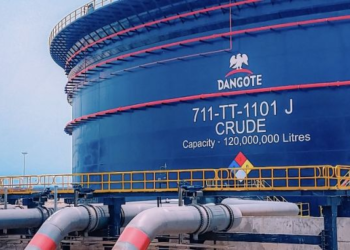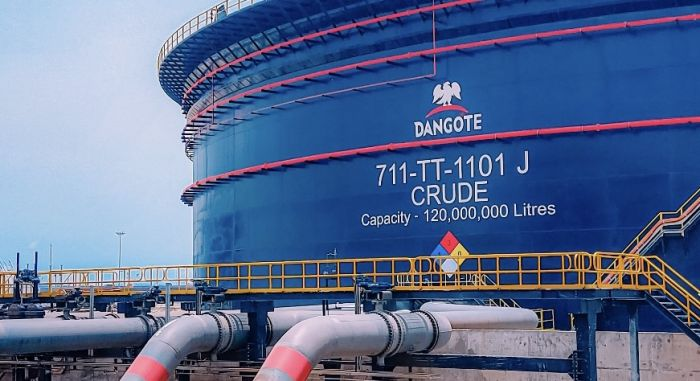
The Dangote Petroleum Refinery has reignited a fierce battle in Nigeria’s fuel sector by restarting full-scale production and hiking its wholesale petrol rates by 7%, setting the new benchmark at 877 naira per liter—still undercutting the going rates at rival depots and threatening to squeeze out smaller players.
The move, effective immediately, applies to bulk buyers snapping up two million liters or more, offering them a competitive edge in a market long plagued by high costs and import reliance. Industry watchers say this pricing strategy not only bolsters the refinery’s dominance but could soon ripple through to lower pump prices for everyday drivers across the country.
According to fresh market snapshots from Petroleumprice.ng, several major depots are already lagging behind. Pinnacle Communications Depot is listing petrol at 890 naira per liter, while Rainoil sits at 885 naira. Close contenders like Optima and Matrix are pricing at 880 naira and 890 naira, respectively, exposing a clear gap that Dangote’s 650,000-barrels-per-day behemoth is exploiting to its advantage.
“This is classic market dynamics at play,” remarked Olatide Jeremiah, head of Petroleumprice.ng. “Dangote’s sheer scale lets it call the shots in the downstream oil game. Smaller depots will have little choice but to slash their rates soon to stay in the race. The real win for consumers? If these savings trickle down to retail outlets, we could see nationwide relief at the pumps in the weeks ahead.”
On-the-ground observations confirm the disparity: Numerous independent fuel stations are still hawking petrol above 900 naira per liter, leaving motorists grumbling amid ongoing economic strains. The refinery’s return to uninterrupted output marks a pivotal shift, especially after months of ramp-up phases that teased its potential to wean Nigeria off costly fuel imports.
The development has drawn applause from industry stakeholders. Mazi Obasi, president of the Oil and Gas Service Providers Association of Nigeria (OGSPAN), hailed the refinery’s team for navigating a gauntlet of hurdles, including alleged interference from entrenched interests in the oil supply chain. “This isn’t just a business triumph—it’s a game-changer for our nation’s energy security,” Obasi declared. He pointed to the facility’s role in curbing foreign currency outflows, spurring local employment, and stabilizing the broader economy.
OGSPAN pledged ongoing collaboration with Dangote, including campaigns to spotlight how domestic refining could slash Nigeria’s ballooning import bill and foster self-reliance. As the price skirmish unfolds, analysts predict it could force a broader realignment, compelling depots to innovate or consolidate to survive. For now, the message to fuel buyers is clear: Bulk deals at Dangote could be the bargain hunters’ best bet, but widespread affordability hinges on how quickly the competition adapts.