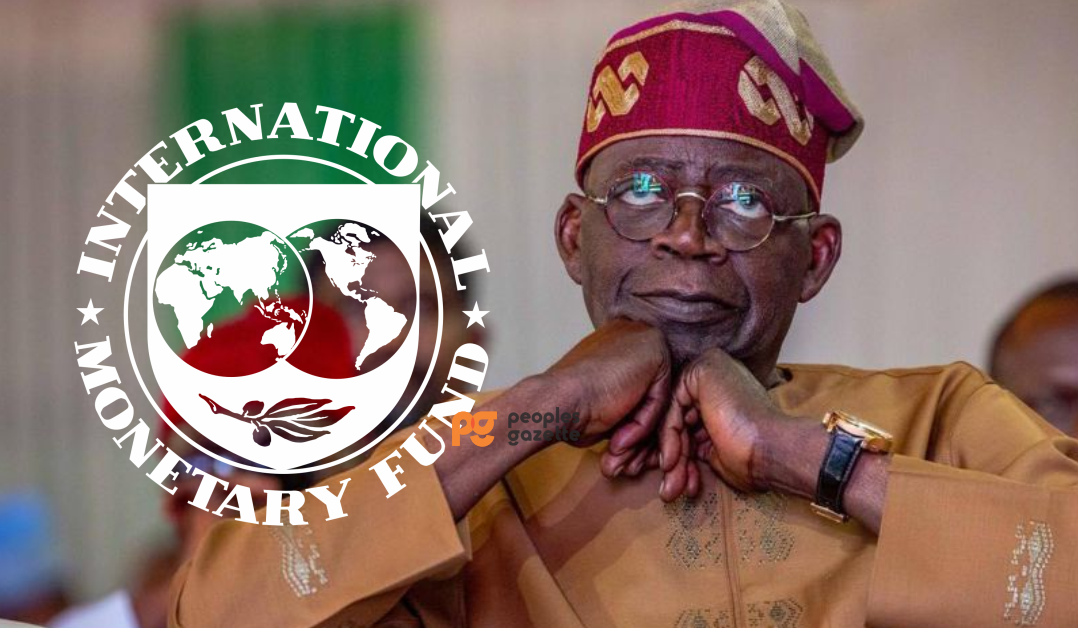
In a stark reminder of the uneven economic recovery across the continent, the International Monetary Fund (IMF) has highlighted Benin Republic, Côte d’Ivoire, Ethiopia, Rwanda, and Uganda as Africa’s standout performers in global growth rankings. Notably absent from this elite group is Nigeria, Africa’s largest economy, despite recent positive adjustments to its own expansion forecasts.
The announcement came during the unveiling of the IMF’s latest Regional Economic Outlook for Sub-Saharan Africa, delivered virtually by Abebe Selassie, Director of the IMF’s African Department. Selassie praised the rapid ascent of these five nations, attributing their momentum to robust policy overhauls, tighter fiscal controls, and targeted boosts in infrastructure and industrial sectors. “These countries exemplify how strategic reforms can propel economies onto the world stage,” Selassie stated, emphasizing their roles among the planet’s top expanders amid broader global slowdowns.
Sub-Saharan Africa’s aggregate growth is forecasted to level off at 4.1% for 2025, with a slight uptick anticipated in 2026, according to the report. This projection underscores the region’s determination in the face of persistent headwinds, including subdued international demand, fluctuating commodity values, and constrained credit environments. Selassie reflected on progress since the last assessment: “While external pressures have intensified, macroeconomic fine-tuning and reform initiatives in pivotal markets are anchoring stability.”
Nigeria’s exclusion raises eyebrows, even as the IMF recently nudged up its 2025 growth estimate for the West African giant to 3.9%—a 0.5 percentage point bump from earlier predictions. This optimism stems from ramped-up petroleum production, bolstered business sentiment, and more accommodating budgetary measures. Earlier revisions in July had lifted the outlook to 3.4%, up 0.4 points from April’s baseline.
Domestic data echoes this cautious positivity. Nigeria’s National Bureau of Statistics announced a 4.23% year-on-year GDP rise for the second quarter of 2025, outpacing the prior year’s 3.48% mark. Gains were fueled by stronger energy sector output, rebounds in non-petroleum industries, and a gradual easing of price surges.
Yet, the IMF views Nigeria’s trajectory as falling short of its full capabilities. Experts recommend accelerating foundational changes, such as enhancing power reliability, taming persistent inflation, and broadening revenue streams beyond oil via manufacturing diversification and streamlined taxation. Selassie elaborated on broader continental strains: “Resource-dependent and conflict-plagued states are grappling with limited per-person income advances. Oil values are dipping, even as metals like copper, coffee, and gold hold firm amid diverging market signals.”
A deepening worry for Nigeria and peers is the surge in financial fragilities, particularly the heavy reliance on local banks for government funding. As overseas loans dwindle, public borrowing from domestic institutions now accounts for roughly half of total debt in many cases, forging a risky “sovereign-bank nexus.” Selassie described this as a “double-edged sword”: It offers short-term endurance but threatens lender solvency, especially where debt loads and borrowing rates are sky-high.
“This linkage has evolved as a buffer against global funding squeezes, allowing sustained public outlays,” Selassie explained. “However, it amplifies spillover dangers to financial systems. We’re collaborating with authorities to fortify oversight, bolster bank reserves, and prioritize sound fiscal paths as the primary safeguard.”
Inflation, though softening regionally, lingers in double digits across several nations, while reserve stockpiles demand urgent rebuilding. External shocks—ranging from U.S. tariff hikes and the phasing out of the African Growth and Opportunity Act (AGOA) to shrinking aid flows—further crimp prospects for vulnerable low-income economies.
To fortify against these threats, the IMF advocates two core strategies: ramping up internal revenue generation and sharpening debt stewardship. On the revenue front, priorities include digitizing tax frameworks, eliminating wasteful deductions, and honing enforcement tactics. Selassie stressed the human element: “Reforms must foster taxpayer confidence, amplify administrative prowess, and weigh equity impacts to ensure fairness alongside efficiency.”
For debt, the push is toward greater openness, fortified budgeting, and full debt reporting to lower costs and tap novel funding avenues. Nigeria-specific commentary highlighted easing price pressures from tighter monetary policies and a freer currency float, but cautioned against complacency: “A structural price elevation persists, demanding unwavering resolve to meet goals.”
The IMF reaffirmed its solidarity, having channeled nearly $69 billion to the region since 2020, with $4 billion approved in 2025 alone. Technical aid programs, disproportionately benefiting Sub-Saharan Africa, continue apace.
As African leaders navigate this intricate landscape, the report serves as both scorecard and roadmap—celebrating bright spots while pressing for bolder action to harness untapped promise. For Nigeria, the message is clear: Incremental wins are welcome, but transformative steps are essential to reclaim a leading role.