RateCaptain
  • Home
    • About Us
    • Contact Us
  • FX Rates
  • Money Market
  • Cryptocurrency
  • Commodities
  • Corporates
No Result
View All Result
Subscribe
  • Home
    • About Us
    • Contact Us
  • FX Rates
  • Money Market
  • Cryptocurrency
  • Commodities
  • Corporates
No Result
View All Result
RateCaptain
No Result
View All Result
Home Currencies

Naira Plummets to Record Low of N1,700 Per Dollar in Parallel Market

Stephen Akudike by Stephen Akudike
October 15, 2024
in Currencies, Economy
Reading Time: 2 mins read
A A
0
Dollar Index Loses Steam as Treasury Yields Drift Back to 4.8%
Share on FacebookShare on TwitterShare on WhatsappShare on Telegram

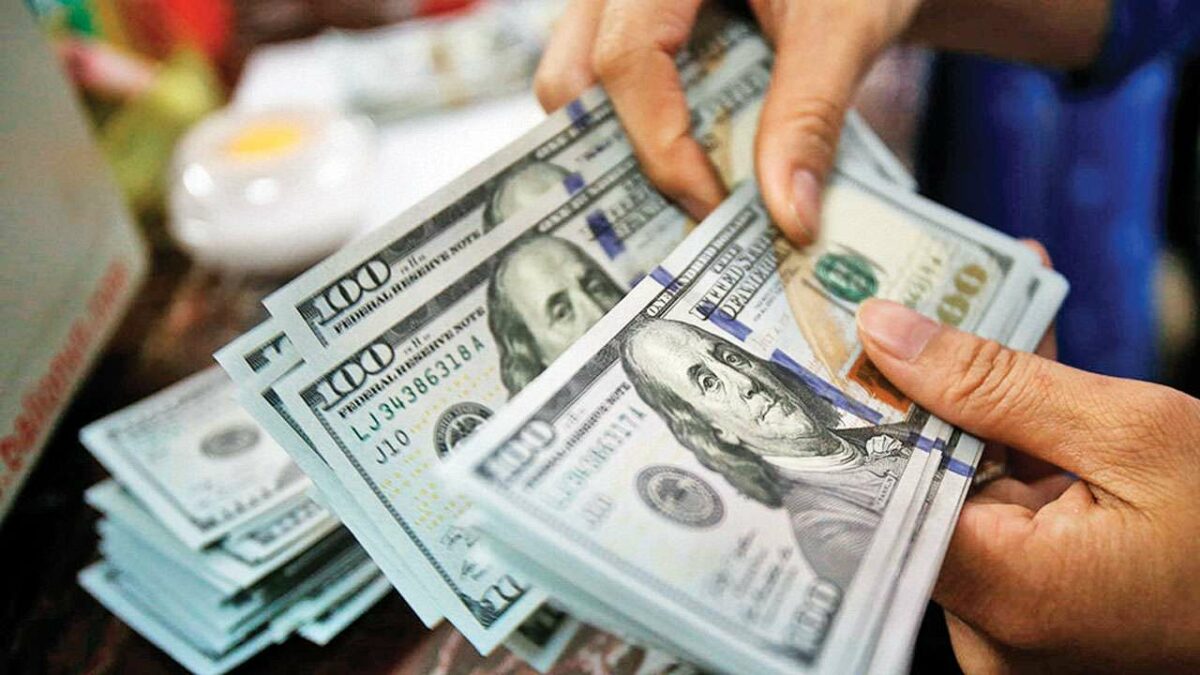
The Nigerian naira hit a historic low in the parallel market, closing at N1,700 per U.S. dollar on October 14, 2024, marking a significant depreciation from its previous rate of N1,695/$1 just three days earlier. Data from Bureau de Change (BDC) operators revealed this drop despite rising crude oil prices, which have surged past $80 per barrel.

In contrast, the naira showed relative stability in the official Investors and Exporters (I&E) window, where it closed at N1,641.27/$1 on the same day. However, this still represents a 1.14% decline from the previous day’s rate of N1,622.57/$1.

AlsoRead

CBN Auctions N1.15 Trillion in Treasury Bills as Investors Eye Higher Yields

Five MPC Members Pushed for 50bps Rate Cut in November 2025, CBN Minutes Reveal

Naira Edges Higher to N1,419.35 as External Reserves Climb to $45.95 Billion

Widening Gap Between Official and Parallel Market Rates

The gap between the parallel market and the official I&E window rates continues to widen, reflecting the growing pressure on Nigeria’s foreign exchange system. While the parallel market rate hit N1,700/$1, the official I&E rate has not yet reached those levels, though it has been on a consistent downward trend.

Ongoing Currency Depreciation

The naira has faced relentless depreciation throughout 2024. It has lost more than half of its value since the beginning of the year, when it was trading at N907.11/$1. After hitting a record low of N1,616.53/$1 in February, the naira briefly rallied in March, strengthening to N1,303/$1. However, by April, the currency had once again fallen below N1,100/$1 and continued its slide, reaching N1,668.97/$1 by the end of September.

Key Data Points

– On October 14, the naira opened at N1,695/$1 in the parallel market before slipping to N1,700/$1.
– In the I&E window, the currency closed at N1,641.27/$1 on October 11, a 1.15% depreciation from the previous day’s rate of N1,622.57/$1.
– During the same trading period, the naira exhibited significant volatility, fluctuating between a high of N1,675.00/$1 and a low of N1,591.00/$1 before settling at N1,641.27/$1.
– Market turnover in the I&E window surged to $616.73 million, up from $145.56 million the day before, indicating heightened trading activity and demand for the dollar.

Factors Contributing to the Naira’s Decline

Several macroeconomic factors continue to weigh on the naira. Despite higher crude oil prices, which typically boost foreign exchange inflows for oil-dependent economies like Nigeria, the naira’s decline is being driven by a persistent shortage of dollars, inflationary pressures, and the growing reliance on the parallel market for foreign exchange transactions.

While Nigerian crude remains above $80 per barrel, global demand concerns, particularly from China, are contributing to market uncertainties. Meanwhile, local developments, such as the federal government’s decision to allow fuel marketers to purchase directly from the Dangote refinery and other suppliers, could reduce dependency on fuel imports and potentially lower fuel prices.

Outlook: Can the Naira Recover?

Though the naira has breached the N1,700/$1 mark in the parallel market, there are signs that a short-term recovery could be on the horizon. Rising oil prices, now above $81 per barrel, may help alleviate some of the inflationary pressures and restore confidence in the currency. Additionally, economic policies aimed at curbing demand for foreign exchange could provide support, potentially bringing the naira back into the N1,600/$1 range.

However, the naira’s future remains uncertain, with its trajectory closely tied to broader economic factors, including inflation, foreign currency supply, and the effectiveness of government policy measures.

Tags: Exchange RateforexNairaNigerian NairaParallel Market
Previous Post

ECB Poised for Further Rate Cuts as Inflation Declines

Next Post

World Bank Praises CBN Governor Cardoso’s Reforms, Says Nigeria on the Right Path

Related News

$26 Billion for unidentified source passed through Binance-Cardoso

CBN Auctions N1.15 Trillion in Treasury Bills as Investors Eye Higher Yields

by Stephen Akudike
January 22, 2026
0

The Central Bank of Nigeria (CBN) is set to conduct its second Treasury bills auction of 2026 today, offering instruments...

CBN Allows Oil Companies to Resume Dollar Sales to Banks in Effort to Boost Supply.

Five MPC Members Pushed for 50bps Rate Cut in November 2025, CBN Minutes Reveal

by Jide Omodele
January 22, 2026
0

Five members of the Central Bank of Nigeria’s Monetary Policy Committee (MPC) voted in favour of reducing the Monetary Policy...

The Redenomination Rumor: Analyzing Nigeria’s Naira Stability

Naira Edges Higher to N1,419.35 as External Reserves Climb to $45.95 Billion

by Stephen Akudike
January 22, 2026
0

The naira staged a modest recovery on Tuesday, strengthening slightly against the US dollar in the official foreign exchange market...

Telecom Sector’s Contribution to Nigeria’s GDP Surges to 16% in Q2 2023, NCC Reports

NCC Launches Full-Scale Review of Telecom Sector Amid Rising Tariffs 

by Victoria Attah
January 22, 2026
0

The Nigerian Communications Commission (NCC) has initiated a comprehensive competition review of the telecommunications industry, focusing on voice and data...

Next Post
CBN’s Recapitalization Budget of $1 Trillion Sparks Debate Among Industry Stakeholders

World Bank Praises CBN Governor Cardoso’s Reforms, Says Nigeria on the Right Path

Leave a Reply Cancel reply

Your email address will not be published. Required fields are marked *

Recommended

$26 Billion for unidentified source passed through Binance-Cardoso

CBN Auctions N1.15 Trillion in Treasury Bills as Investors Eye Higher Yields

January 22, 2026
CBN Allows Oil Companies to Resume Dollar Sales to Banks in Effort to Boost Supply.

Five MPC Members Pushed for 50bps Rate Cut in November 2025, CBN Minutes Reveal

January 22, 2026

Popular Story

  • Telecom Sector’s Contribution to Nigeria’s GDP Surges to 16% in Q2 2023, NCC Reports

    NCC Launches Full-Scale Review of Telecom Sector Amid Rising Tariffs 

    0 shares
    Share 0 Tweet 0
  • CBN Confirms 20 Banks Meet New Recapitalisation Requirements as March Deadline Looms

    0 shares
    Share 0 Tweet 0
  • NGX Rebounds with N93 Billion Gain as Investors Return to Select Stocks

    0 shares
    Share 0 Tweet 0
  • CBN Auctions N1.15 Trillion in Treasury Bills as Investors Eye Higher Yields

    0 shares
    Share 0 Tweet 0
  • Commercial and Merchant Banks’ Loans Fall to N52.66 Trillion in June 2025, Lowest in 14 Months

    0 shares
    Share 0 Tweet 0
RateCaptain

RateCaptain

We bring you the most accurate in new and market data. Check our landing page for details.

  • Home
  • About Us
  • Privacy Policy
  • Terms & Conditions
  • Disclaimer
  • Cookie Policy
  • Contact Us

Copyright © 2022 RateCaptain - All rights reserved by RateCaptain.

No Result
View All Result
  • Home
    • About Us
    • Contact Us
  • FX Rates
  • Money Market
  • Cryptocurrency
  • Commodities
  • Corporates

Copyright © 2022 RateCaptain - All rights reserved by RateCaptain.

RateCaptain
Manage Cookie Consent
To provide the best experiences, we use technologies like cookies to store and/or access device information. Consenting to these technologies will allow us to process data such as browsing behavior or unique IDs on this site. Not consenting or withdrawing consent, may adversely affect certain features and functions.
Functional Always active
The technical storage or access is strictly necessary for the legitimate purpose of enabling the use of a specific service explicitly requested by the subscriber or user, or for the sole purpose of carrying out the transmission of a communication over an electronic communications network.
Preferences
The technical storage or access is necessary for the legitimate purpose of storing preferences that are not requested by the subscriber or user.
Statistics
The technical storage or access that is used exclusively for statistical purposes. The technical storage or access that is used exclusively for anonymous statistical purposes. Without a subpoena, voluntary compliance on the part of your Internet Service Provider, or additional records from a third party, information stored or retrieved for this purpose alone cannot usually be used to identify you.
Marketing
The technical storage or access is required to create user profiles to send advertising, or to track the user on a website or across several websites for similar marketing purposes.
  • Manage options
  • Manage services
  • Manage {vendor_count} vendors
  • Read more about these purposes
View preferences
  • {title}
  • {title}
  • {title}
?>