RateCaptain
  • Home
    • About Us
    • Contact Us
  • FX Rates
  • Money Market
  • Cryptocurrency
  • Commodities
  • Corporates
No Result
View All Result
Subscribe
  • Home
    • About Us
    • Contact Us
  • FX Rates
  • Money Market
  • Cryptocurrency
  • Commodities
  • Corporates
No Result
View All Result
RateCaptain
No Result
View All Result
Home Currencies

Naira Shows Stability in Official Market, Meeting Fitch Ratings Projections

Stephen Akudike by Stephen Akudike
June 24, 2024
in Currencies, Economy
Reading Time: 2 mins read
A A
0
Nigeria’s Gross Foreign Reserve Records the Fourth Decline this Month, Stands at $38.95 Billion
Share on FacebookShare on TwitterShare on WhatsappShare on Telegram

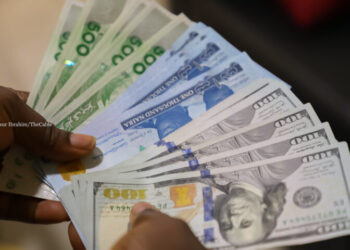
The Nigerian naira demonstrated remarkable stability in the official market, maintaining alignment with Fitch Ratings’ projections despite fluctuating within the N1500 range against the U.S. dollar in the parallel market. This stability comes at a time when the U.S. dollar index reached an eight-week high in broader markets.

Amid a surge in demand for the U.S. dollar, the naira momentarily dipped below the N1,500 support level in the black market. However, the expectation of enhanced oil receipts and multilateral donor financing for the third quarter of this year is anticipated to bolster the naira’s position at the N1,500 level.

AlsoRead

Nigerian Issuers Pay Up to 20% to Raise Debt in First Half of 2026

Nigeria’s FX Market Hits Record $4.4 Billion Weekly Turnover 

US Imposes 12.5% Tariff on Nigerian Exports Over Forced Labour Concerns

Fitch Ratings, an international credit rating agency, has projected the naira to conclude the year at approximately N1,450 per dollar.

Naira’s Fundamentals Brighten

Throughout June, the naira exhibited relative stability against the U.S. dollar. According to data from the Financial Market Dealers Quote (FMDQ), the naira traded within the N1,473 to N1,485 range against the U.S. dollar this month. The currency’s 100-day price swings are at their lowest since November, and its 10-day rolling volatility is at its lowest point in a year, thanks to the hawkish stance of the Central Bank of Nigeria (CBN).

The CBN has aggressively managed the foreign exchange market to enhance liquidity, a critical component of its strategy. The bank has also adopted monetary tightening measures to maintain the value of the local currency. In a bid to improve transparency, the central bank abandoned exchange rate ceilings and implemented market-based limitations.

To attract dollar inflows, reduce volatility, and curb inflation—which soared to a 28-year high of 33.95% in May—the CBN raised its benchmark interest rate to a record 26.25%. The regulator combined a total rise of 750 basis points this year with significant naira liquidity mop-ups through monthly bond sales and dollar inflows from external lenders.

In a recent development, the African Export-Import Bank (Afreximbank) provided Nigeria with $925 million, the third tranche of a $3.3 billion crude oil-backed prepayment facility, aimed at boosting hard currency availability in the local foreign exchange market. Additionally, the World Bank approved $2.25 billion in aid this month to support Nigeria’s economic reforms, which should further enhance foreign exchange liquidity.

U.S. Dollar Index Outlook

The U.S. Dollar Index (DXY) is on an upward trend, poised for potential gains for the third consecutive week. Despite some challenges, data indicate that the greenback has not performed well this week. Traders are advised to be cautious of the 105.9 index points, which triggered a rejection in early May and now serves as resistance.

The most significant hurdle lies at 106.51 index points, the peak from April 16 this year. On the downside, the trio of Simple Moving Averages (SMA) acts as support, with the 105.52 level as the initial support. The 55-day SMA at 105.14 comes first, protecting the 105.00 value. The 100-day and 200-day SMAs create a double layer of support around 104.61-104.48 index points.

The naira’s stability in the official market reflects positive strides in Nigeria’s monetary policy, supported by strategic financial interventions. The CBN’s measures, coupled with international financial support, underscore a concerted effort to stabilize the currency amidst a challenging economic landscape.
Tags: CBNFitch RatingsNaira
Previous Post

FG Spends $15 Billion on Debt Servicing Over Five Years, CBN Reports

Next Post

Inflation in Nigeria: Beans and Tomato Prices Skyrocket Amid Economic Challenges

Related News

FG Secures $1.95 Billion in World Bank Loans Amidst Debt Concerns

Nigerian Issuers Pay Up to 20% to Raise Debt in First Half of 2026

by Victoria Attah
July 28, 2026
0

Corporate borrowers and state-backed entities paid coupon rates as high as 20% to access Nigeria’s debt capital market in the...

Nigeria Plans New FX Rules, Targeting 750 Naira Exchange Rate

Nigeria’s FX Market Hits Record $4.4 Billion Weekly Turnover 

by Jide Omodele
July 28, 2026
0

Nigeria’s foreign exchange market recorded its highest weekly turnover of 2026, with total transactions in the FX Spot and Derivatives...

US Imposes 12.5% Tariff on Nigerian Exports Over Forced Labour Concerns

by Victoria Attah
July 27, 2026
0

The United States has imposed a 12.5% tariff on most Nigerian exports following a Section 301 investigation that concluded Nigeria...

Fuel Subsidy Removal: Should Nigeria Continue With a Regressive Petrol Subsidy?

Petrol Climbs to N1,400 per Litre as Transport Fares Rise Across Nigeria

by Akpan Edidong
July 27, 2026
0

Petrol prices have surged to as high as N1,400 per litre in parts of Nigeria, prompting a fresh wave of...

Next Post
Nigeria’s Inflation Climbs to 19.6% in July 2022

Inflation in Nigeria: Beans and Tomato Prices Skyrocket Amid Economic Challenges

Leave a Reply Cancel reply

Your email address will not be published. Required fields are marked *

Recommended

CBN Allows Oil Companies to Resume Dollar Sales to Banks in Effort to Boost Supply.

Cash Outside Banks Falls by N486 Billion to Seven-Month Low

July 28, 2026
FG Secures $1.95 Billion in World Bank Loans Amidst Debt Concerns

Nigerian Issuers Pay Up to 20% to Raise Debt in First Half of 2026

July 28, 2026

Popular Story

  • CBN Allows Oil Companies to Resume Dollar Sales to Banks in Effort to Boost Supply.

    Cash Outside Banks Falls by N486 Billion to Seven-Month Low

    0 shares
    Share 0 Tweet 0
  • Nigeria’s FX Market Hits Record $4.4 Billion Weekly Turnover 

    0 shares
    Share 0 Tweet 0
  • Nigerian Issuers Pay Up to 20% to Raise Debt in First Half of 2026

    0 shares
    Share 0 Tweet 0
  • 31 Nigerian States Grapple with N2.57 Trillion Domestic Debt Amid No Foreign Inflows

    0 shares
    Share 0 Tweet 0
  • First HoldCo Assures Shareholders of Dividend Resumption by End of 2026

    0 shares
    Share 0 Tweet 0

RateCaptain

We bring you the most accurate in new and market data. Check our landing page for details.

  • Home
  • About Us
  • Privacy Policy
  • Terms & Conditions
  • Disclaimer
  • Cookie Policy
  • Contact Us

Copyright © 2022 RateCaptain - All rights reserved by RateCaptain.

No Result
View All Result
  • Home
    • About Us
    • Contact Us
  • FX Rates
  • Money Market
  • Cryptocurrency
  • Commodities
  • Corporates

Copyright © 2022 RateCaptain - All rights reserved by RateCaptain.

RateCaptain
Manage Cookie Consent
To provide the best experiences, we use technologies like cookies to store and/or access device information. Consenting to these technologies will allow us to process data such as browsing behavior or unique IDs on this site. Not consenting or withdrawing consent, may adversely affect certain features and functions.
Functional Always active
The technical storage or access is strictly necessary for the legitimate purpose of enabling the use of a specific service explicitly requested by the subscriber or user, or for the sole purpose of carrying out the transmission of a communication over an electronic communications network.
Preferences
The technical storage or access is necessary for the legitimate purpose of storing preferences that are not requested by the subscriber or user.
Statistics
The technical storage or access that is used exclusively for statistical purposes. The technical storage or access that is used exclusively for anonymous statistical purposes. Without a subpoena, voluntary compliance on the part of your Internet Service Provider, or additional records from a third party, information stored or retrieved for this purpose alone cannot usually be used to identify you.
Marketing
The technical storage or access is required to create user profiles to send advertising, or to track the user on a website or across several websites for similar marketing purposes.
  • Manage options
  • Manage services
  • Manage {vendor_count} vendors
  • Read more about these purposes
View preferences
  • {title}
  • {title}
  • {title}
?>