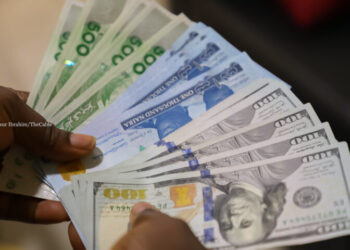
The Nigerian naira extended its decline against the US dollar for the third consecutive day, settling at N1,473.29/$ at the official Nigerian Foreign Exchange Market on Wednesday, according to data from the Central Bank of Nigeria (CBN).
The naira’s downward trend began at the start of the week, opening at N1,457.51/$ on Monday and slipping to N1,463.23/$ on Tuesday. By Wednesday, it fell further by N10.06, reflecting a 0.69% depreciation. In contrast, the parallel market showed a slight recovery, with the naira appreciating from N1,500.00/$ on Tuesday to N1,488.00/$ on Wednesday, as reported by CardinalStone.
Analysts at Cowry Assets Management Limited attributed the naira’s weakening to a reduced demand for the currency. This marks a reversal from last week when the naira hit a 10-month high of N1,455.17/$, its strongest level since December 2024.
The recent slide has defied earlier projections by market observers who expected the naira to hold steady, supported by CBN interventions and foreign exchange inflows. A report from Cowry Assets Management noted potential headwinds, stating, “Surging import demand or declining dollar inflows could hinder further gains. While global oil market volatility may temper investor confidence, a recovery in demand could bolster Nigeria’s export earnings and stabilize the forex market.”
Despite the naira’s struggles, Nigeria’s external reserves have shown resilience, rising to $42.63 billion on Monday from $42.59 billion the previous Friday. This uptick provides a buffer against external pressures.
Speaking at a G24 media briefing during the IMF/World Bank Annual Meetings in Washington, CBN Governor Olayemi Cardoso expressed confidence in the naira’s trajectory. He highlighted recent reforms, stating, “The naira is now more competitive, and our efforts have built resilience against potential shocks. Those tracking Nigeria’s economy are increasingly optimistic.” Cardoso emphasized that a focus on domestic production is key to sustaining the currency’s strength, noting, “A competitive naira is driving Nigeria’s economic restructuring.”
The naira’s performance comes amid broader economic discussions, including concerns over schools charging fees in foreign currencies and the impact of recent policy easing. Additionally, a separate report noted that Nigeria’s inflation rate fell to 18.02% in September, marking a six-month decline, which could influence future monetary policy decisions.
As the naira navigates these challenges, analysts remain cautious, pointing to global oil price fluctuations and import pressures as factors that could shape its path in the coming weeks.