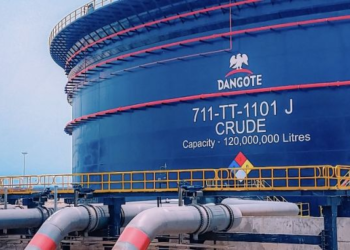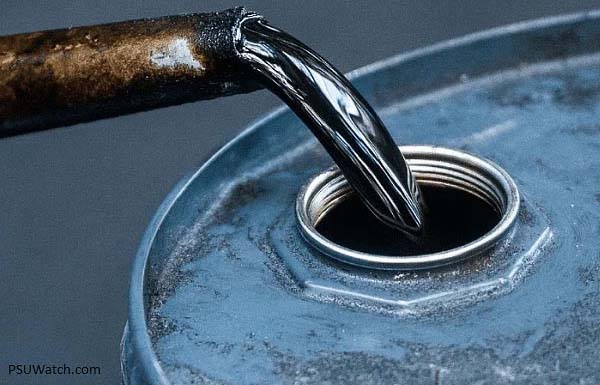
Nigeria has suffered a staggering N8.41 trillion ($5.61 billion) loss in crude oil due to theft and metering inaccuracies from 2021 to July 2025, according to data from the Nigerian Upstream Petroleum Regulatory Commission (NUPRC). This monumental economic drain, equivalent to funding 56,074 primary health centers or 10,191 kilometers of roads, underscores persistent governance issues in the oil sector, despite recent progress in curbing daily losses.
The NUPRC reported that Nigeria lost 37.6 million barrels in 2021, 20.9 million in 2022, 4.3 million in 2023, 4.1 million in 2024, and 2.04 million barrels from January to July 2025. Based on average Brent crude prices, these translate to $2.66 billion in 2021, $2.11 billion in 2022, $355.7 million in 2023, $330.3 million in 2024, and $146.5 million in 2025 so far. At an exchange rate of approximately N1,500/$, the total loss amounts to N8.41 trillion, dwarfing the 2025 federal budgets for health (N2.48 trillion) and education (N3.52 trillion).
Progress Amid Persistent Challenges
The NUPRC highlighted a significant reduction in oil losses, with July 2025 recording a daily loss of 9,600 barrels—the lowest since 2009’s 8,500 barrels per day. This improvement, down from a peak of 102,900 barrels daily in 2021, is attributed to reforms under the 2021 Petroleum Industry Act, enhanced metering technologies, military operations, unmanned surveillance, and community engagement. However, the cumulative impact remains severe, undermining Nigeria’s ability to meet its 2 million barrels per day production target by December 2025, which still requires an additional 400,000 barrels daily.
Energy expert Chukwuma Atuanya, a US-based oil and gas consultant, acknowledged the progress but cautioned that losses of 9,600 barrels per day continue to strain foreign exchange earnings, weaken the naira, and deter investors. “Oil theft fuels economic instability, budget shortfalls, and uncertainty in export volumes, which discourages investment,” Atuanya said. He also pointed to environmental devastation from pipeline vandalism and illegal refining, which exacerbates poverty and insecurity in the Niger Delta.
Systemic Issues and Calls for Reform
Energy law scholar Professor Dayo Ayoade from the University of Lagos questioned the reliability of NUPRC’s data, citing deficiencies in metering and reporting systems, particularly in onshore and shallow-water assets. “The reported 2.04 million barrels lost in 2025 could be an underestimate,” Ayoade warned. He criticized the lack of accountability, noting that while security forces destroy illegal refineries, masterminds evade prosecution. “Without jailing complicit officials and enforcing stricter penalties, this cycle of theft will persist,” he asserted, pointing to systemic governance failures.
Both experts emphasized that while zero theft may be unattainable, losses could be minimized through transparent metering, community involvement in protecting infrastructure, and robust legal action against offenders, including influential figures profiting from the crime.
Economic and Social Implications
Oil accounts for over 90% of Nigeria’s foreign exchange earnings, making these losses a critical barrier to economic stability. The N8.41 trillion lost could have transformed public infrastructure, far exceeding the N1 trillion allocated for 468 road projects in the 2025 budget. Beyond financial impacts, oil theft contributes to environmental degradation, community displacement, and heightened insecurity, further complicating Nigeria’s development challenges.
Path Forward
As Nigeria strives to sustain its recent progress in reducing oil theft, the government faces pressure to address underlying issues. The NUPRC’s advancements in monitoring and technology are promising, but experts stress the need for systemic reforms, including transparent reporting, community partnerships, and decisive action against perpetrators. With investor confidence and economic stability at stake, tackling oil theft remains a critical priority for Nigeria’s future.