RateCaptain
  • Home
    • About Us
    • Contact Us
  • FX Rates
  • Money Market
  • Cryptocurrency
  • Commodities
  • Corporates
No Result
View All Result
Subscribe
  • Home
    • About Us
    • Contact Us
  • FX Rates
  • Money Market
  • Cryptocurrency
  • Commodities
  • Corporates
No Result
View All Result
RateCaptain
No Result
View All Result
Home Economy

Nigeria Grapples with N8.41tn Oil Theft Loss, Raising Economic and Investor Concerns

Akpan Edidong by Akpan Edidong
September 24, 2025
in Economy
Reading Time: 2 mins read
A A
0
Crude Oil Prices Soar as Global Supply Shortage Intensifies.
Share on FacebookShare on TwitterShare on WhatsappShare on Telegram

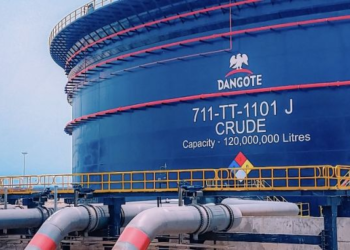
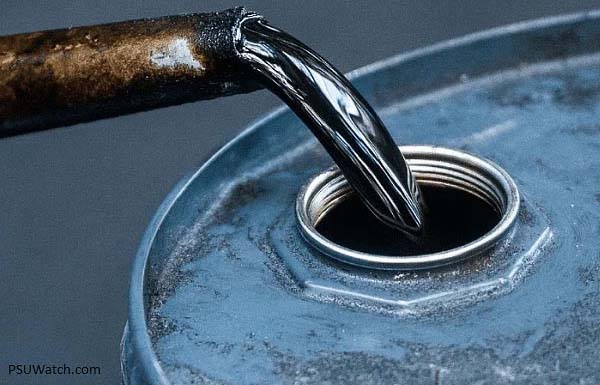
Nigeria has suffered a staggering N8.41 trillion ($5.61 billion) loss in crude oil due to theft and metering inaccuracies from 2021 to July 2025, according to data from the Nigerian Upstream Petroleum Regulatory Commission (NUPRC). This monumental economic drain, equivalent to funding 56,074 primary health centers or 10,191 kilometers of roads, underscores persistent governance issues in the oil sector, despite recent progress in curbing daily losses.

The NUPRC reported that Nigeria lost 37.6 million barrels in 2021, 20.9 million in 2022, 4.3 million in 2023, 4.1 million in 2024, and 2.04 million barrels from January to July 2025. Based on average Brent crude prices, these translate to $2.66 billion in 2021, $2.11 billion in 2022, $355.7 million in 2023, $330.3 million in 2024, and $146.5 million in 2025 so far. At an exchange rate of approximately N1,500/$, the total loss amounts to N8.41 trillion, dwarfing the 2025 federal budgets for health (N2.48 trillion) and education (N3.52 trillion).

AlsoRead

Naira Breaks Below N1,400 as Oil Rally and CBN Reforms Fuel Fresh Stability

Larger Disparities Boom Between Black Market and Official Rates

Emefiele’s Naira Redesign Memo Takes Centre Stage in EFCC Trial

Progress Amid Persistent Challenges

The NUPRC highlighted a significant reduction in oil losses, with July 2025 recording a daily loss of 9,600 barrels—the lowest since 2009’s 8,500 barrels per day. This improvement, down from a peak of 102,900 barrels daily in 2021, is attributed to reforms under the 2021 Petroleum Industry Act, enhanced metering technologies, military operations, unmanned surveillance, and community engagement. However, the cumulative impact remains severe, undermining Nigeria’s ability to meet its 2 million barrels per day production target by December 2025, which still requires an additional 400,000 barrels daily.

Energy expert Chukwuma Atuanya, a US-based oil and gas consultant, acknowledged the progress but cautioned that losses of 9,600 barrels per day continue to strain foreign exchange earnings, weaken the naira, and deter investors. “Oil theft fuels economic instability, budget shortfalls, and uncertainty in export volumes, which discourages investment,” Atuanya said. He also pointed to environmental devastation from pipeline vandalism and illegal refining, which exacerbates poverty and insecurity in the Niger Delta.

Systemic Issues and Calls for Reform

Energy law scholar Professor Dayo Ayoade from the University of Lagos questioned the reliability of NUPRC’s data, citing deficiencies in metering and reporting systems, particularly in onshore and shallow-water assets. “The reported 2.04 million barrels lost in 2025 could be an underestimate,” Ayoade warned. He criticized the lack of accountability, noting that while security forces destroy illegal refineries, masterminds evade prosecution. “Without jailing complicit officials and enforcing stricter penalties, this cycle of theft will persist,” he asserted, pointing to systemic governance failures.

Both experts emphasized that while zero theft may be unattainable, losses could be minimized through transparent metering, community involvement in protecting infrastructure, and robust legal action against offenders, including influential figures profiting from the crime.

Economic and Social Implications

Oil accounts for over 90% of Nigeria’s foreign exchange earnings, making these losses a critical barrier to economic stability. The N8.41 trillion lost could have transformed public infrastructure, far exceeding the N1 trillion allocated for 468 road projects in the 2025 budget. Beyond financial impacts, oil theft contributes to environmental degradation, community displacement, and heightened insecurity, further complicating Nigeria’s development challenges.

Path Forward

As Nigeria strives to sustain its recent progress in reducing oil theft, the government faces pressure to address underlying issues. The NUPRC’s advancements in monitoring and technology are promising, but experts stress the need for systemic reforms, including transparent reporting, community partnerships, and decisive action against perpetrators. With investor confidence and economic stability at stake, tackling oil theft remains a critical priority for Nigeria’s future.
Tags: NURC
Previous Post

 African Exporters Urge US Lawmakers for AGOA Lifeline Amid Expiration Looming

Next Post

NNPCL Secures Over N318 Billion for Frontier Oil Exploration in 2025

Related News

Angola Surpasses Nigeria, Becomes Africa’s Largest Oil Producer in August

Naira Breaks Below N1,400 as Oil Rally and CBN Reforms Fuel Fresh Stability

by Akpan Edidong
February 5, 2026
0

Nigeria’s naira has strengthened markedly in the official foreign exchange market, closing January at N1,386.55 per US dollar  its firmest...

Naira Surges Against US Dollar, Falls Below N1,000 Mark

Larger Disparities Boom Between Black Market and Official Rates

by Stephen Akudike
February 5, 2026
0

The gap between Nigeria’s official and parallel (black market) exchange rates has widened to over 6%, reviving fears of renewed...

U.S. Steps In on Emefiele Trial, Alleges Human Rights Violations

Emefiele’s Naira Redesign Memo Takes Centre Stage in EFCC Trial

by Victoria Attah
February 5, 2026
0

A 2022 memo from former Central Bank of Nigeria (CBN) Governor Godwin Emefiele seeking presidential approval for the controversial naira...

FG Allocates N5.1 Billion for Presidential Yacht and N5.5 Billion For Student Loans

Government Securities Now 11% of Nigerian Banks’ Assets as Credit Growth Lags

by Stephen Akudike
February 4, 2026
0

Nigerian banks’ exposure to government securities has risen sharply in recent years, now accounting for approximately 11% of their total...

Next Post
NNPC Announces Plans to offer their Shares to the Public.

NNPCL Secures Over N318 Billion for Frontier Oil Exploration in 2025

Leave a Reply Cancel reply

Your email address will not be published. Required fields are marked *

Recommended

Angola Surpasses Nigeria, Becomes Africa’s Largest Oil Producer in August

Naira Breaks Below N1,400 as Oil Rally and CBN Reforms Fuel Fresh Stability

February 5, 2026
Naira Surges Against US Dollar, Falls Below N1,000 Mark

Larger Disparities Boom Between Black Market and Official Rates

February 5, 2026

Popular Story

  • Nigeria’s Opportunity: Navigating Global Oil Surge Amid Libya’s Top Oilfield Disruption

    Oil Prices Surge Above Nigeria’s Budget Benchmark, Lifting Naira and Reserves

    0 shares
    Share 0 Tweet 0
  • Emefiele’s Naira Redesign Memo Takes Centre Stage in EFCC Trial

    0 shares
    Share 0 Tweet 0
  • Larger Disparities Boom Between Black Market and Official Rates

    0 shares
    Share 0 Tweet 0
  • Manufacturers and Employers Warn N400 Billion Investments at Risk from Sachet Alcohol Ban

    0 shares
    Share 0 Tweet 0
  • Naira Closes January at N1,386.55/$ in Official Market, Strongest Level in Nearly Two Years

    0 shares
    Share 0 Tweet 0
RateCaptain

RateCaptain

We bring you the most accurate in new and market data. Check our landing page for details.

  • Home
  • About Us
  • Privacy Policy
  • Terms & Conditions
  • Disclaimer
  • Cookie Policy
  • Contact Us

Copyright © 2022 RateCaptain - All rights reserved by RateCaptain.

No Result
View All Result
  • Home
    • About Us
    • Contact Us
  • FX Rates
  • Money Market
  • Cryptocurrency
  • Commodities
  • Corporates

Copyright © 2022 RateCaptain - All rights reserved by RateCaptain.

RateCaptain
Manage Cookie Consent
To provide the best experiences, we use technologies like cookies to store and/or access device information. Consenting to these technologies will allow us to process data such as browsing behavior or unique IDs on this site. Not consenting or withdrawing consent, may adversely affect certain features and functions.
Functional Always active
The technical storage or access is strictly necessary for the legitimate purpose of enabling the use of a specific service explicitly requested by the subscriber or user, or for the sole purpose of carrying out the transmission of a communication over an electronic communications network.
Preferences
The technical storage or access is necessary for the legitimate purpose of storing preferences that are not requested by the subscriber or user.
Statistics
The technical storage or access that is used exclusively for statistical purposes. The technical storage or access that is used exclusively for anonymous statistical purposes. Without a subpoena, voluntary compliance on the part of your Internet Service Provider, or additional records from a third party, information stored or retrieved for this purpose alone cannot usually be used to identify you.
Marketing
The technical storage or access is required to create user profiles to send advertising, or to track the user on a website or across several websites for similar marketing purposes.
  • Manage options
  • Manage services
  • Manage {vendor_count} vendors
  • Read more about these purposes
View preferences
  • {title}
  • {title}
  • {title}
?>