RateCaptain
  • Home
    • About Us
    • Contact Us
  • FX Rates
  • Money Market
  • Cryptocurrency
  • Commodities
  • Corporates
No Result
View All Result
Subscribe
  • Home
    • About Us
    • Contact Us
  • FX Rates
  • Money Market
  • Cryptocurrency
  • Commodities
  • Corporates
No Result
View All Result
RateCaptain
No Result
View All Result
Home Cryptocurrency

Nigerian crypto adoption rises despite govt crackdown

Rate Captain by Rate Captain
August 4, 2021
in Cryptocurrency
Reading Time: 3 mins read
A A
0
Share on FacebookShare on TwitterShare on WhatsappShare on Telegram

Nigerian cryptocurrency adoption continues to rise in spite of government crackdown, with peer-to-peer (P2P) trade volume for Bitcoin posting its second strongest week on record last month.

According to data from Google Trends, Nigeria still ranks number by search interest for the keyword “Bitcoin” as of this writing. P2P Bitcoin trading denominated in the Nigerian Naira has also steadily increased in 2021, with Nigeria ranking behind only the United States as the second-largest market for peer-to-peer BTC trading, according to Useful Tulips.

AlsoRead

IMF Warns Rising Stablecoin Use Could Weaken Naira Demand and Monetary Policy

Nigeria Maintains Lead in Africa’s Stablecoin Adoption as USDT Interest Surges

Bitcoin Tests $80,000 Resistance as It Remains Range-Bound Ahead of FOMC Decision

Nigerian cryptocurrency adoption continues to rise in spite of government crackdown, with peer-to-peer (P2P) trade volume for Bitcoin posting its second strongest week on record last month.

According to data from Google Trends, Nigeria still ranks number by search interest for the keyword “Bitcoin” as of this writing. P2P Bitcoin trading denominated in the Nigerian Naira has also steadily increased in 2021, with Nigeria ranking behind only the United States as the second-largest market for peer-to-peer BTC trading, according to Useful Tulips.


A confluence of political and economic crises has spurred local crypto adoption, including social repression, currency controls, and rampant inflation.

Tensions in Nigeria have escalated since October, after massive public protests opposing police brutality and the infamous “Sars” police unit swept the nation.

The EndSars protests saw protestors attacked with tear gas and water cannons, with more than 50 civilians killed in total, including one dozen who were shot dead by police armed with live ammunition on October 20.

The government crackdown saw economic repression too, with social organizations supporting the protestors with food and medical aid quickly finding their bank accounts frozen. Amid the violence, protestors increasingly turned to cryptocurrency in order to place their economic activity outside of the government’s reach.

Adewunmi Emoruwa, the founder of Gatefield — a public policy organization whose accounts were suspended for providing grants to journalists covering the protests attributed Nigeria’s recent hostility regarding crypto assets to October’s protests, telling The Guardian:

“I think that EndSars is like the key catalyst for some of these decisions the government is making. It caused fear. They saw, for example, that people could decide to bypass government structures and institutions to mobilize.”

An anonymous source claiming to represent a social organization whose bank accounts were targeted during the turmoil, also told the publication that their group has been able to pay members’ salaries with crypto despite the financial embargo.

“We keep some securities in crypto – not too much but enough, sort of as an insurance policy,” they said. “When the ban happened we were, thankfully, able to pay salaries.”

In February, the government banned licensed banks from processing cryptocurrency transactions in an attempt to crack down on digital asset adoption.

However, Nigeria’s steadily rising P2P Bitcoin volumes suggest the country’s growing crypto user base has largely been driven underground in a bid to access crypto assets from outside of the government’s purview.

Marius Reitz, the Africa general manager of crypto trading platform Luno, told The Guardian that Nigeria’s ban has only made cryptocurrency trading harder to monitor, stating:

“A lot of trading activity has now been pushed underground, which means many Nigerians are now depending on less secure, less transparent over-the-counter channels, as well as Telegram and WhatsApp groups, where people trade directly with each other.”

The government’s moves to repress crypto have also received internal criticism, with Vice-President Yemi Osinbajo publicly rebuking the ban in February.

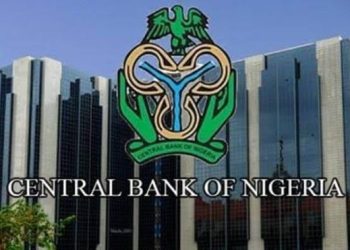
Despite the country’s hostility toward decentralized crypto assets, Nigeria is currently exploring the development of a central bank digital currency (CBDC).

In late July, Nigeria’s central bank revealed plans to begin trialing its CBDC from October 1 of this year.

Previous Post

Can The Euro Hold Above Support Confluence? Three US events hold the key

Next Post

MTN Nigeria Sees Slowdown in Bank Recharges Over Pricing

Related News

IMF Warns Rising Stablecoin Use Could Weaken Naira Demand and Monetary Policy

by Bolarinwa Mathew
June 16, 2026
0

The International Monetary Fund (IMF) has raised concerns over the rapid adoption of U.S. dollar-denominated stablecoins in Nigeria, warning that...

Currency Shifts and Crypto Concerns: The Rising Naira and Falling Stable coins.

Nigeria Maintains Lead in Africa’s Stablecoin Adoption as USDT Interest Surges

by Bolarinwa Mathew
June 2, 2026
0

Nigeria continues to dominate Africa’s stablecoin market in 2026, with growing interest in USDT (Tether) and other dollar-pegged digital assets...

IMF Cautions Central African Republic against Adopting Bitcoin

Bitcoin Tests $80,000 Resistance as It Remains Range-Bound Ahead of FOMC Decision

by Bolarinwa Mathew
April 29, 2026
0

Bitcoin is struggling to break through the key $80,000 psychological level, remaining stuck in a tight trading range as investors...

Bitcoin to end year at $25,473

Bitcoin Volatility Turns into $12 Million Windfall for Yield Basis in Q1 2026

by Bolarinwa Mathew
April 16, 2026
0

Yield Basis, a liquidity protocol built on Curve Finance infrastructure, has turned Bitcoin’s wild price swings into a lucrative revenue...

Next Post

MTN Nigeria Sees Slowdown in Bank Recharges Over Pricing

Leave a Reply Cancel reply

Your email address will not be published. Required fields are marked *

Recommended

FG Records N13.33bn Revenue Shortfall from Gas Flaring Penalties

FG, States and LGs Share N2.3 Trillion from May 2026 Revenue

June 18, 2026
2024 Budget Outline: Oil Price Set at $77.96, Naira Stands at 750 Against the Dollar

FG Dismisses Plans for New Taxes on Fuel and Telecoms

June 18, 2026

Popular Story

  • Oil Marketers Dismiss Claims of Dangote Refinery Selling Fuel in Dollars

    Dangote Refinery Lowers Petrol Price to N1,252 per Litre in Response to Depot Competition

    0 shares
    Share 0 Tweet 0
  • FG, States and LGs Share N2.3 Trillion from May 2026 Revenue

    0 shares
    Share 0 Tweet 0
  • Nigeria’s Current Account Surplus Jumps 256% to $4.98 Billion in Q1 2026

    0 shares
    Share 0 Tweet 0
  • Naira Weakens to N1,361.5/$ as FX Market Turnover Drops Sharply

    0 shares
    Share 0 Tweet 0
  • FG Dismisses Plans for New Taxes on Fuel and Telecoms

    0 shares
    Share 0 Tweet 0

RateCaptain

We bring you the most accurate in new and market data. Check our landing page for details.

  • Home
  • About Us
  • Privacy Policy
  • Terms & Conditions
  • Disclaimer
  • Cookie Policy
  • Contact Us

Copyright © 2022 RateCaptain - All rights reserved by RateCaptain.

No Result
View All Result
  • Home
    • About Us
    • Contact Us
  • FX Rates
  • Money Market
  • Cryptocurrency
  • Commodities
  • Corporates

Copyright © 2022 RateCaptain - All rights reserved by RateCaptain.

RateCaptain
Manage Cookie Consent
To provide the best experiences, we use technologies like cookies to store and/or access device information. Consenting to these technologies will allow us to process data such as browsing behavior or unique IDs on this site. Not consenting or withdrawing consent, may adversely affect certain features and functions.
Functional Always active
The technical storage or access is strictly necessary for the legitimate purpose of enabling the use of a specific service explicitly requested by the subscriber or user, or for the sole purpose of carrying out the transmission of a communication over an electronic communications network.
Preferences
The technical storage or access is necessary for the legitimate purpose of storing preferences that are not requested by the subscriber or user.
Statistics
The technical storage or access that is used exclusively for statistical purposes. The technical storage or access that is used exclusively for anonymous statistical purposes. Without a subpoena, voluntary compliance on the part of your Internet Service Provider, or additional records from a third party, information stored or retrieved for this purpose alone cannot usually be used to identify you.
Marketing
The technical storage or access is required to create user profiles to send advertising, or to track the user on a website or across several websites for similar marketing purposes.
  • Manage options
  • Manage services
  • Manage {vendor_count} vendors
  • Read more about these purposes
View preferences
  • {title}
  • {title}
  • {title}
?>