Nigeria’s economy grew by 3.98% year-on-year in the third quarter of 2025, the National Bureau of Statistics (NBS) reported on Monday, confirming the country’s continued shift away from oil dependence.
The non-oil economy, which now accounts for 96.56% of total output, expanded by a solid 3.91%—led by strong performances in agriculture, information and communication technology (ICT), trade, and financial services.
Year-on-year, the latest figure marks an improvement from the 3.86% recorded in the same July–September period of 2024, but it represents a slowdown from the 4.23% posted in Q2 2025, highlighting the persistent quarter-on-quarter volatility that has characterised Nigeria’s post-pandemic recovery.
Agriculture rebounded sharply, growing 3.79% compared with just 2.55% a year earlier, buoyed by favourable weather, increased planting under various federal intervention programmes, and rising output of staple crops.
The industrial sector also gained momentum, expanding 3.77% against 2.78% in Q3 2024, driven largely by a recovery in manufacturing and electricity generation.
The dominant services sector, which contributed 53.02% of GDP (slightly higher than the 52.93% share a year ago), grew at 4.15%, though it cooled from the 4.97% pace seen in Q3 2024.
Oil sector recovers annually but contracts sequentially
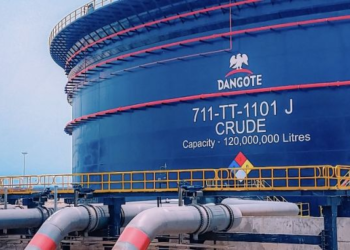
Daily crude oil production averaged 1.64 million barrels per day in Q3 up 170,000 barrels from the same quarter last year and the highest quarterly average in 2025. This lifted the oil sector’s year-on-year growth to 5.84%.
However, output slipped from 1.68 million bpd in Q2 2025, resulting in a sharp -5.53% quarter-on-quarter contraction in the oil sector and a reduced contribution to real GDP of 3.44% (down from 4.05% in the previous quarter).
Economists welcomed the continued diversification trend, noting that Nigeria has now recorded five consecutive quarters in which non-oil activities have contributed more than 95% of overall growth.
“The numbers tell a clear story: Nigeria is gradually breaking the oil curse,” said Dr. Ayo Teriba, CEO of Economic Associates. “Agriculture and digital services are becoming the new backbone of growth, even as we still need to resolve pipeline vandalism and theft to fully unlock the hydrocarbon upside.”
The Q3 result keeps Nigeria on course to achieve full-year growth of around 3.5–3.8% in 2025, in line with projections by the IMF and the Federal Ministry of Budget and Economic Planning.
Analysts say sustained momentum will depend on maintaining security in farming communities, scaling digital infrastructure, and implementing the pending Petroleum Industry Act regulations to attract fresh investment into both oil and non-oil sectors.