RateCaptain
  • Home
    • About Us
    • Contact Us
  • FX Rates
  • Money Market
  • Cryptocurrency
  • Commodities
  • Corporates
No Result
View All Result
Subscribe
  • Home
    • About Us
    • Contact Us
  • FX Rates
  • Money Market
  • Cryptocurrency
  • Commodities
  • Corporates
No Result
View All Result
RateCaptain
No Result
View All Result
Home Economy

Niger’s Coup and Regional Implications: Economic Cross-Border Insights

Stephen Akudike by Stephen Akudike
September 12, 2023
in Economy, Markets
Reading Time: 3 mins read
A A
0
Niger’s Coup and Regional Implications: Economic Cross-Border Insights
Share on FacebookShare on TwitterShare on WhatsappShare on Telegram

In the wake of the July 26 coup in Niger, a former rebel leader and politician, Rhissa Ag Boula, has emerged as a significant figure opposing the junta’s rule. His movement, the Council of Resistance for the Republic (CRR), aims to restore ousted President Mohamed Bazoum to power. This development not only indicates internal resistance to military rule in Niger but also holds economic implications that transcend national borders.

Niger’s Economic Significance:

AlsoRead

NRS Chairman: Ending Fuel Subsidy Averted N53 Trillion Bill and Naira Crash to N3,500

NRS Chairman: Fuel Subsidy Could Have Cost N53 Trillion

Tinubu Approves Deep Offshore Reform Aimed at Attracting $50 Billion Investment

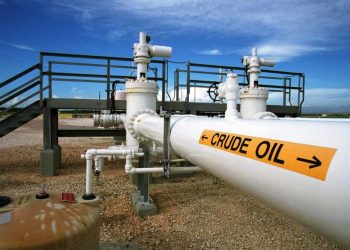
Niger is a strategically important Sahel country, boasting vast reserves of uranium a crucial fuel for nuclear energy, and a burgeoning oil sector. It’s the world’s seventh-largest producer of uranium, a resource that is vital for both energy production and geopolitical power plays. The nation also extracts oil, largely from Chinese-run projects, and is on the cusp of expanding production via a new export pipeline to Benin. As such, any political upheaval has far-reaching economic implications, impacting global energy markets and trade relations.

Regional Complexities:

Ag Boula’s movement adds complexity to an already intricate diplomatic landscape. The coup not only disrupts Niger’s domestic stability but also sends ripples across neighboring countries like Mali and Burkina Faso, both of which have experienced their own coups in recent years. These neighboring states have expressed solidarity with Niger’s junta, fearing that military interventions could lead to unforeseen consequences, including humanitarian disasters and security deterioration. Their stance stems from a desire to maintain regional stability, crucial for economic development and attracting foreign investment. The coup in Niger unveils a multifaceted tapestry of regional intricacies that extend far beyond political maneuvering. These complexities interweave economic stability, humanitarian concerns, and geopolitical power dynamics. As the situation unfolds, the Sahel region’s future hinges on the delicate balance between fostering stability, safeguarding democratic principles, and nurturing economic growth. The outcome will not only shape Niger’s trajectory but also have ramifications for the entire Sahel region and its interactions with the global stage.

ECOWAS and International Response:

The Economic Community of West African States (ECOWAS) plays a pivotal role in shaping the response to the coup. ECOWAS member states, particularly Nigeria, have imposed sanctions on Niger in an attempt to pressure the junta to reinstate a civilian government. The threat of military intervention remains on the table, yet ECOWAS emphasizes it as a last resort, as it could disrupt the region’s fragile economic ecosystem.

Tuareg Influence and Local Dynamics:

Ag Boula’s involvement introduces the Tuareg factor. Tuareg communities exert significant influence over commerce and politics in Niger’s desert north. Given Ag Boula’s history of leadership among Tuareg uprisings, his support could sway the direction of the coup’s aftermath. The Tuareg’s economic role in trade and resource management could determine the junta’s ability to hold power beyond the capital, Niamey.

Global Players and Power Shifts:

The international community, including Western powers and the United Nations, seeks the restoration of a civilian government in Niger to ensure stability against Islamist insurgents. This situation has geopolitical dimensions, with Russia’s growing influence in the Sahel region complicating matters. The potential for Russia to expand its presence, as seen in Mali, raises concerns among Western allies who have interests in Niger’s resources and security.

Economic Ripple Effects:

The coup has already led to border and airspace closures, disrupting supply chains and hampering humanitarian aid. The resulting scarcity of essential goods and medicine could exacerbate Niger’s status as one of the world’s poorest countries. Additionally, the uncertainty surrounding political transitions could deter foreign investment, affecting economic growth and development prospects.

Bottom Line:

The coup in Niger and the emergence of the CRR under Rhissa Ag Boula represent more than a struggle for political power; they signify a tug-of-war over the nation’s vast economic resources. The economic cross-border implications extend from energy markets to regional stability and global power dynamics. The outcome of this turmoil will shape not only Niger’s future but also that of neighboring countries and international actors with vested interests in the region’s economic and security landscape.


Tags: coupeconomic implicationsgeopolitical dynamicshumanitarian challengesinternal resistanceneighboring solidarityNigerregional complexitiesSahel regiontrade relations.
Previous Post

Tinubu Orders Financial Sanctions on Niger Republic Coup Plotters.

Next Post

Gold Wrestles for Momentum as Traders Anticipate U.S. Inflation Report

Related News

FG Saves N1.45 Trillion as Petrol Subsidy Removal Benefits Emerge

NRS Chairman: Ending Fuel Subsidy Averted N53 Trillion Bill and Naira Crash to N3,500

by Stephen Akudike
August 17, 2026
0

The petrol subsidy could have drained as much as N53 trillion from government coffers under present market conditions and driven...

Petrol Prices Surge in West Africa as Nigeria Removes Subsidies.

NRS Chairman: Fuel Subsidy Could Have Cost N53 Trillion

by Akpan Edidong
August 12, 2026
0

The Chairman of the Nigeria Revenue Service, Zacch Adedeji, has said that Nigeria’s fuel subsidy bill could have ballooned to...

2024 Budget Outline: Oil Price Set at $77.96, Naira Stands at 750 Against the Dollar

Tinubu Approves Deep Offshore Reform Aimed at Attracting $50 Billion Investment

by Victoria Attah
August 12, 2026
0

President Bola Tinubu has approved a major reform of Nigeria’s deep offshore oil and gas investment framework, designed to unlock...

Oil Sector FX Demand Surges 115% in 2025 Despite Expanded Local Refining

by Akpan Edidong
August 10, 2026
0

Nigeria’s foreign exchange demand for oil-sector imports rose sharply by 114.91 per cent in 2025, underscoring the country’s continued reliance...

Next Post
Gold Prices Dip as Dollar Strengthens and Economic Optimism Grows.

Gold Wrestles for Momentum as Traders Anticipate U.S. Inflation Report

Leave a Reply Cancel reply

Your email address will not be published. Required fields are marked *

Recommended

EFCC Launches Task Force to Combat Naira Mutilation and Dollarization

EFCC Facilitates $60 Million Nestoil Debt Payment to Creditor Consortium

August 17, 2026
Nigerian Equity Market Sees Impressive N1.08tn Wealth Gain Amidst Bullish Trading.

NGX Delays New Equity Pricing Rules as Investors Await Fresh Launch Date

August 17, 2026

Popular Story

  • Shocking: “Undress” An AI Tool That Unveils Digital Representations of Individuals Without Clothing

    Shocking: “Undress” An AI Tool That Unveils Digital Representations of Individuals Without Clothing

    0 shares
    Share 0 Tweet 0
  • Air Peace and United Nigeria Claim Over N2 Billion Losses After Union Disruptions

    0 shares
    Share 0 Tweet 0
  • NGX Delays New Equity Pricing Rules as Investors Await Fresh Launch Date

    0 shares
    Share 0 Tweet 0
  • NRS Chairman: Ending Fuel Subsidy Averted N53 Trillion Bill and Naira Crash to N3,500

    0 shares
    Share 0 Tweet 0
  • EFCC Facilitates $60 Million Nestoil Debt Payment to Creditor Consortium

    0 shares
    Share 0 Tweet 0

RateCaptain

We bring you the most accurate in new and market data. Check our landing page for details.

  • Home
  • About Us
  • Privacy Policy
  • Terms & Conditions
  • Disclaimer
  • Cookie Policy
  • Contact Us

Copyright © 2022 RateCaptain - All rights reserved by RateCaptain.

No Result
View All Result
  • Home
    • About Us
    • Contact Us
  • FX Rates
  • Money Market
  • Cryptocurrency
  • Commodities
  • Corporates

Copyright © 2022 RateCaptain - All rights reserved by RateCaptain.

RateCaptain
Manage Cookie Consent
To provide the best experiences, we use technologies like cookies to store and/or access device information. Consenting to these technologies will allow us to process data such as browsing behavior or unique IDs on this site. Not consenting or withdrawing consent, may adversely affect certain features and functions.
Functional Always active
The technical storage or access is strictly necessary for the legitimate purpose of enabling the use of a specific service explicitly requested by the subscriber or user, or for the sole purpose of carrying out the transmission of a communication over an electronic communications network.
Preferences
The technical storage or access is necessary for the legitimate purpose of storing preferences that are not requested by the subscriber or user.
Statistics
The technical storage or access that is used exclusively for statistical purposes. The technical storage or access that is used exclusively for anonymous statistical purposes. Without a subpoena, voluntary compliance on the part of your Internet Service Provider, or additional records from a third party, information stored or retrieved for this purpose alone cannot usually be used to identify you.
Marketing
The technical storage or access is required to create user profiles to send advertising, or to track the user on a website or across several websites for similar marketing purposes.
  • Manage options
  • Manage services
  • Manage {vendor_count} vendors
  • Read more about these purposes
View preferences
  • {title}
  • {title}
  • {title}
?>