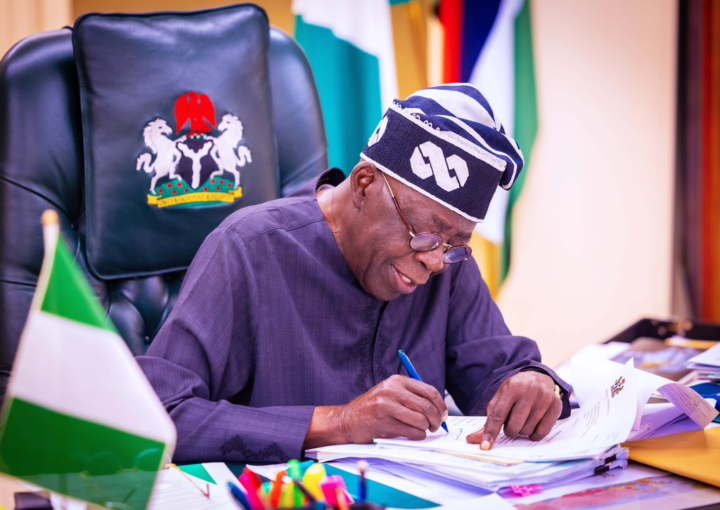
President Bola Tinubu has approved a major reform of Nigeria’s deep offshore oil and gas investment framework, designed to unlock up to $50 billion in new capital and revive large-scale projects that have remained stalled for decades.
The decision was announced on Tuesday in a statement by Bayo Onanuga, Special Adviser to the President on Information and Strategy. The reform replaces the previous system of project-by-project negotiations with a transparent, rules-based structure intended to give investors greater certainty while protecting long-term national interests.
New Investment Framework
The framework is being implemented through the Deep Offshore Oil and Gas Projects Incentives (Tax Remission) Order, 2026. It introduces clear eligibility criteria, defined implementation processes and a durable architecture for qualifying offshore developments.
Officials said the new rules will support the next generation of deep offshore projects, starting with the approximately $10 billion Bonga South West development.
Olu Arowolo-Verheijen, the President’s Special Adviser on Oil and Gas, said projects that qualify under the framework will prioritise execution within Nigeria wherever it is commercially and technically feasible. This approach is expected to strengthen domestic engineering, fabrication, marine logistics, technical services and project management capacity.
“The objective is not only to increase investment and production, but also to create skilled jobs, deepen local supply chains and position Nigeria as Africa’s regional hub for deep offshore project execution,” he said.
President Tinubu described the reform as part of the administration’s effort to build an investment climate based on clear rules, strong institutions and lasting partnerships. “We are creating the conditions for capital to flow, for Nigerian businesses to grow, for our people to prosper and for our natural resources to deliver lasting national value,” he said.
Background and Recent Momentum
The latest approval builds on earlier steps by the Tinubu administration to revive deep offshore investment. In January 2026, the President approved the gazetting of targeted, investment-linked incentives for Shell’s proposed Bonga South-West project, aimed at accelerating capital inflows and supporting a Final Investment Decision.
Nigeria’s deep offshore sector has faced difficulty attracting fresh capital in recent years as existing fields mature, contributing to lower production and weaker foreign exchange earnings. Although the Petroleum Industry Act was introduced to overhaul the fiscal and regulatory regime, many major international oil companies have remained cautious about committing large sums to new offshore developments.
The reform comes weeks after ExxonMobil and its partners committed $1 billion to the Usan Infill Project, an offshore development expected to raise Nigeria’s crude oil output by about 40,000 barrels per day. That commitment has been viewed as a sign of renewed interest in offshore activity.
If successful, the new framework is expected to boost crude production, create skilled jobs and support foreign exchange earnings. The ultimate test will be whether clearer rules translate into final investment decisions and actual capital flows into Nigeria’s deep offshore sector.