RateCaptain
  • Home
    • About Us
    • Contact Us
  • FX Rates
  • Money Market
  • Cryptocurrency
  • Commodities
  • Corporates
No Result
View All Result
Subscribe
  • Home
    • About Us
    • Contact Us
  • FX Rates
  • Money Market
  • Cryptocurrency
  • Commodities
  • Corporates
No Result
View All Result
RateCaptain
No Result
View All Result
Home Economy

NRS Chairman: Fuel Subsidy Could Have Cost N53 Trillion

Akpan Edidong by Akpan Edidong
August 12, 2026
in Economy, Energy
Reading Time: 3 mins read
A A
0
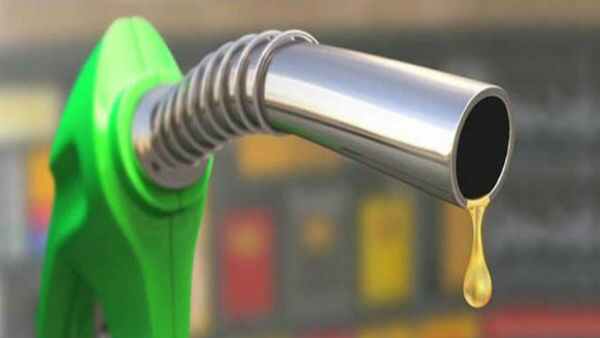
Petrol Prices Surge in West Africa as Nigeria Removes Subsidies.
Share on FacebookShare on TwitterShare on WhatsappShare on Telegram

The Chairman of the Nigeria Revenue Service, Zacch Adedeji, has said that Nigeria’s fuel subsidy bill could have ballooned to about N53 trillion and the naira could have weakened to around N3,500 to the dollar if President Bola Tinubu had not removed the subsidy in 2023.

Adedeji made the remarks during an interview on Channels Television on Sunday night while defending the decision to scrap the petrol subsidy. He rejected suggestions that the government should first have built fiscal buffers before taking the step. His appearance followed a trending video in which he assured the President that the economy has performed better and that critics of the administration could not have managed the situation more effectively.

AlsoRead

Tinubu Approves Deep Offshore Reform Aimed at Attracting $50 Billion Investment

Oil Sector FX Demand Surges 115% in 2025 Despite Expanded Local Refining

Tax Revenue More Than Doubles to N27.1 Trillion After 113% Surge

Why the Subsidy Was Unsustainable

According to Adedeji, the subsidy was not a form of government income but an arrangement in which the country borrowed money to buy petrol at a higher price and sell it to consumers at a lower one. “Subsidy is not an income. It is like you are using your borrowing money to buy a product and that product is 10 naira, and you are selling it at 3 naira,” he said.

He argued that creating a buffer before removing the subsidy would not have solved the underlying fiscal problem, because the government was already financing the scheme with borrowed resources. Developments in global oil markets and geopolitical tensions, including those involving Iran, would have made the burden even heavier.

“The subsidy today would have been N53 trillion if Mr President has not removed it, given what is happening in Iran, given what is happening globally,” Adedeji said. “With the ripple effects of that, the exchange rate today would have been around N3,500 if that had not been done.”

He compared the potential cost with Nigeria’s current budget, noting that it would have absorbed a substantial share of government spending and left little room for other priorities.

Defence of the Decision and Its Timing

Adedeji described the removal of the subsidy as a necessary intervention rather than a policy error. “It is not a mistake. It is the best thing that has happened to the economy,” he said.

He defended the timing of the move, saying the President prioritised the long-term sustainability of the economy over short-term political considerations. “We should commend Mr President for not being a politician or being preoccupied and forgetting whether I want to have an election or not, but focusing on having a solid foundation for this economy,” he added.

Background and Official Claims

Tinubu removed the fuel subsidy on May 29, 2023, shortly after his inauguration, ending a long-standing system under which the government absorbed part of the cost of petrol to keep pump prices below market levels. The decision triggered sharp increases in petrol prices and contributed to higher transportation and living costs. The administration has consistently maintained that the reform was essential to ease fiscal pressures and free resources for productive sectors.

Earlier this year, President Tinubu said the removal had saved Nigeria from imminent bankruptcy and helped lay the foundation for economic recovery. Senator Solomon Adeola of the ruling party previously stated that the country was saving more than N10 trillion every year as a result of the policy.

Counterview on Fiscal Gains

However, advisory firm CFG Advisory has cautioned that the fiscal gains from subsidy removal have been fully absorbed by debt servicing. According to the firm, this has left the Federal Government with limited capacity to fund development projects or deliver meaningful social interventions, weakening the reform narrative and raising questions about the sustainability of the current fiscal strategy.

Tags: FuelNRS
Previous Post

Tinubu Approves Deep Offshore Reform Aimed at Attracting $50 Billion Investment

Related News

2024 Budget Outline: Oil Price Set at $77.96, Naira Stands at 750 Against the Dollar

Tinubu Approves Deep Offshore Reform Aimed at Attracting $50 Billion Investment

by Victoria Attah
August 12, 2026
0

President Bola Tinubu has approved a major reform of Nigeria’s deep offshore oil and gas investment framework, designed to unlock...

Oil Sector FX Demand Surges 115% in 2025 Despite Expanded Local Refining

by Akpan Edidong
August 10, 2026
0

Nigeria’s foreign exchange demand for oil-sector imports rose sharply by 114.91 per cent in 2025, underscoring the country’s continued reliance...

Senate Committee Frowns at N17 Trillion Loss from Tax Waivers, Urges FIRS Reform

Tax Revenue More Than Doubles to N27.1 Trillion After 113% Surge

by Victoria Attah
August 10, 2026
0

Nigeria’s tax collections have risen by 113 per cent in less than three years, climbing from N12.3 trillion in 2023...

NNPCL to Supply Dangote Oil Refinery With Crude Oil For Testing

NNPC Reduces Petrol Price to N1,299 as Competition Intensifies with MRS and Depots

by Akpan Edidong
August 5, 2026
0

The Nigerian National Petroleum Company Limited has cut the pump price of petrol from N1,335 to N1,299 per litre, a...

Leave a Reply Cancel reply

Your email address will not be published. Required fields are marked *

Recommended

Petrol Prices Surge in West Africa as Nigeria Removes Subsidies.

NRS Chairman: Fuel Subsidy Could Have Cost N53 Trillion

August 12, 2026
2024 Budget Outline: Oil Price Set at $77.96, Naira Stands at 750 Against the Dollar

Tinubu Approves Deep Offshore Reform Aimed at Attracting $50 Billion Investment

August 12, 2026

Popular Story

  • Nigeria’s Debt to China Surges by $800 Million in One Year

    31 Nigerian States Grapple with N2.57 Trillion Domestic Debt Amid No Foreign Inflows

    0 shares
    Share 0 Tweet 0
  • Kenya’s Equity Group Sacks 1,200 Employees in $15.4 Million Fraud Crackdown

    0 shares
    Share 0 Tweet 0
  • Oil Sector FX Demand Surges 115% in 2025 Despite Expanded Local Refining

    0 shares
    Share 0 Tweet 0
  • FG Launches Probes into Meta, DHL, and OPay for Alleged Data Breaches

    0 shares
    Share 0 Tweet 0
  • Beta Glass Plc annual profit drops by 16.5% in 2022

    0 shares
    Share 0 Tweet 0

RateCaptain

We bring you the most accurate in new and market data. Check our landing page for details.

  • Home
  • About Us
  • Privacy Policy
  • Terms & Conditions
  • Disclaimer
  • Cookie Policy
  • Contact Us

Copyright © 2022 RateCaptain - All rights reserved by RateCaptain.

No Result
View All Result
  • Home
    • About Us
    • Contact Us
  • FX Rates
  • Money Market
  • Cryptocurrency
  • Commodities
  • Corporates

Copyright © 2022 RateCaptain - All rights reserved by RateCaptain.

RateCaptain
Manage Cookie Consent
To provide the best experiences, we use technologies like cookies to store and/or access device information. Consenting to these technologies will allow us to process data such as browsing behavior or unique IDs on this site. Not consenting or withdrawing consent, may adversely affect certain features and functions.
Functional Always active
The technical storage or access is strictly necessary for the legitimate purpose of enabling the use of a specific service explicitly requested by the subscriber or user, or for the sole purpose of carrying out the transmission of a communication over an electronic communications network.
Preferences
The technical storage or access is necessary for the legitimate purpose of storing preferences that are not requested by the subscriber or user.
Statistics
The technical storage or access that is used exclusively for statistical purposes. The technical storage or access that is used exclusively for anonymous statistical purposes. Without a subpoena, voluntary compliance on the part of your Internet Service Provider, or additional records from a third party, information stored or retrieved for this purpose alone cannot usually be used to identify you.
Marketing
The technical storage or access is required to create user profiles to send advertising, or to track the user on a website or across several websites for similar marketing purposes.
  • Manage options
  • Manage services
  • Manage {vendor_count} vendors
  • Read more about these purposes
View preferences
  • {title}
  • {title}
  • {title}
?>