RateCaptain
  • Home
    • About Us
    • Contact Us
  • FX Rates
  • Money Market
  • Cryptocurrency
  • Commodities
  • Corporates
No Result
View All Result
Subscribe
  • Home
    • About Us
    • Contact Us
  • FX Rates
  • Money Market
  • Cryptocurrency
  • Commodities
  • Corporates
No Result
View All Result
RateCaptain
No Result
View All Result
Home Economy

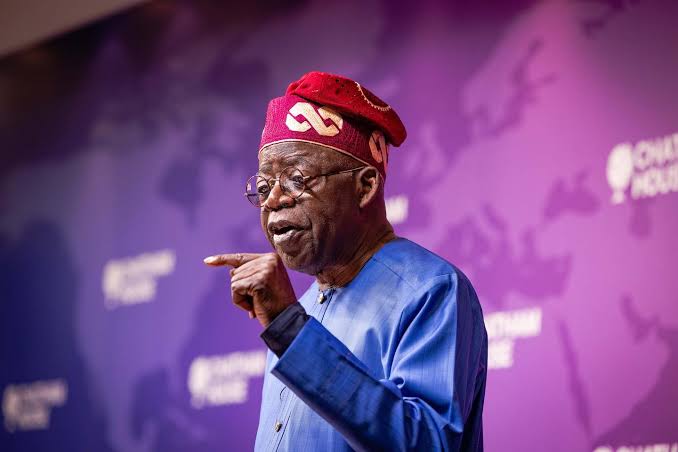
See How Tinubu Plans to Save Nigeria from economic misery  

Rate Captain by Rate Captain
May 29, 2023
in Economy
Reading Time: 3 mins read
A A
0
Potential Protests and Economic Challenges Loom as Nigeria Prepares for Tinubu-Report.
Share on FacebookShare on TwitterShare on WhatsappShare on Telegram

As a new government assumes power, the economic landscape of the nation is poised for significant changes. With a range of key economic policies being introduced, there is hope for a transformative journey toward prosperity.

This blog aims to delve into the crucial policies unveiled by the new government, discussing their potential impact on various sectors and the overall economy and save Nigeria from economic misery

AlsoRead

Federal Government Allots N6.69 Billion in September Savings Bonds

Federal Government Seeks Fresh $1.5 Billion in World Bank Financing

FG and CBN Sign Six-Point Agreement to Curb Inflation and Stabilise Fuel Prices

Fuel Subsidy Removal:
One of the notable policy changes is the removal of fuel subsidies. While this decision may initially lead to an increase in fuel prices, it is expected to address long-standing fiscal challenges and create a more sustainable energy sector. The government’s commitment to redirecting the subsidy funds towards critical sectors, such as infrastructure development, will contribute to job creation and economic growth in the long run.

Reintroduction of Commodity Boards:
The reinstatement of Commodity Boards signifies a renewed focus on agricultural development and boosting the nation’s export potential. These boards will play a crucial role in providing strategic guidance, market regulation, and quality control, ultimately enhancing productivity and competitiveness in key agricultural sectors. The move is expected to revitalize the agricultural industry, attracting investment and promoting sustainable growth.

Achieving a Unified Exchange Rate:
The government has mandated the Central Bank of Nigeria (CBN) to work towards achieving a unified exchange rate promptly. This move aims to create stability in the foreign exchange market, enhance investor confidence, and streamline business operations. A unified exchange rate will provide clarity and predictability for businesses, ultimately fostering a conducive environment for both domestic and foreign investments.

Restructuring at the CBN:
To strengthen the effectiveness and transparency of the nation’s monetary policies, a thorough house-cleaning process is expected at the CBN. This initiative aims to enhance governance, accountability, and operational efficiency within the central bank. By implementing necessary reforms and addressing any existing challenges, the government intends to bolster the stability and credibility of the financial sector.

Lowering Interest Rates and Encouraging Business Growth:
Recognizing the adverse impact of high-interest rates on business activities, the government intends to address this issue. Lowering interest rates will make credit more affordable and accessible, encouraging entrepreneurial ventures, job creation, and overall economic expansion. By creating a favorable business environment, the government aims to attract both local and foreign investments, stimulating economic growth.

Infrastructure Development as a Catalyst for Job Creation:
The new government places significant emphasis on infrastructure development as a catalyst for job creation. By investing in vital sectors such as transportation, energy, and telecommunications, the government seeks to improve connectivity, enhance productivity, and create employment opportunities. Infrastructure development will not only address existing deficiencies but also attract private investments and pave the way for sustained economic growth.

Facilitating Investment Repatriation and Reviewing Anti-Investment Policies:
Recognizing the importance of attracting foreign direct investment, the government is committed to facilitating the repatriation of investment and profits. This initiative aims to provide confidence to investors, improve liquidity, and foster a conducive business environment. Additionally, the government plans to review and eliminate anti-investment policies and multiple taxation practices, further encouraging both local and foreign investments.

Bottom line :
With the unveiling of key economic policies, the new government demonstrates a strong commitment to driving economic transformation and sustainable development. By addressing critical issues such as fuel subsidy removal, exchange rate unification, interest rate reduction, infrastructure development, and investment facilitation, the government aims to create a favorable business environment, attract investments, and generate employment opportunities. While awaiting positive developments in the days ahead, it is imperative to acknowledge the potential impact these policies may have on the nation’s economic trajectory.

Tags: #agriculture#Nigeriaaccountabilityanti-investment policiesbusiness growthCentral Bank of Nigeriacommodity boardsconnectivityeconomic policieseconomic transformationentrepreneurshipExchange Ratefinancial sectorfiscal challengesforeign direct investmentfuel subsidy removalinfrastructure developmentinterest ratesinvestment repatriationjob creationprivate investmentssustainable developmentTelecommunicationstransparency
Previous Post

South African Rand Plunges to New Low as Interest Rates Rise

Next Post

Multichoice to Launch Integrated Payments Platform

Related News

DMO’s campaign boosting investment in securities – stockbroker

Federal Government Allots N6.69 Billion in September Savings Bonds

by Stephen Akudike
September 28, 2026
0

The Federal Government, through the Debt Management Office, has allotted a total of N6.69 billion to domestic investors under the...

World Bank Emphasizes Cash Transfers to Break Poverty Cycle in Nigeria

Federal Government Seeks Fresh $1.5 Billion in World Bank Financing

by Akpan Edidong
September 28, 2026
0

The Federal Government has begun talks with the World Bank for three new loans amounting to $1.5 billion, even as...

South Africa Poised to Surpass Nigeria as Africa’s Largest Economy

FG and CBN Sign Six-Point Agreement to Curb Inflation and Stabilise Fuel Prices

by Jide Omodele
September 24, 2026
0

The Federal Ministry of Finance and the Central Bank of Nigeria have formalised a Memorandum of Understanding that sets out...

Naira depreciates to N755/$ in the parallel market.

Foreign Exchange Supply Rises 20.5% to $8.94 Billion in 2025, CBN Data Show

by Stephen Akudike
September 22, 2026
0

Nigeria’s foreign exchange supply increased by 20.5 per cent to $8.94 billion in 2025 from $7.43 billion in 2024, according...

Next Post
Multichoice to Launch Integrated Payments Platform

Multichoice to Launch Integrated Payments Platform

Leave a Reply Cancel reply

Your email address will not be published. Required fields are marked *

Recommended

DMO’s campaign boosting investment in securities – stockbroker

Federal Government Allots N6.69 Billion in September Savings Bonds

September 28, 2026
World Bank Emphasizes Cash Transfers to Break Poverty Cycle in Nigeria

Federal Government Seeks Fresh $1.5 Billion in World Bank Financing

September 28, 2026

Popular Story

  • DMO Announces Subscription Offering for Federal Government Savings Bonds.

    CBN Prepares for N8.57 Trillion Liquidity Influx as OMO and Bond Maturities Hit Banks

    0 shares
    Share 0 Tweet 0
  • NFEM Turnover Drops 17.7% to $2.25 Billion as CBN Lowers Benchmark Rate to 23%

    0 shares
    Share 0 Tweet 0
  • Federal Government Allots N6.69 Billion in September Savings Bonds

    0 shares
    Share 0 Tweet 0
  • Federal Government Seeks Fresh $1.5 Billion in World Bank Financing

    0 shares
    Share 0 Tweet 0
  • Nigeria Loses $16 Trillion to Natural Gas Flaring in a Decade – FG

    0 shares
    Share 0 Tweet 0

RateCaptain

We bring you the most accurate in new and market data. Check our landing page for details.

  • Home
  • About Us
  • Privacy Policy
  • Terms & Conditions
  • Disclaimer
  • Cookie Policy
  • Contact Us

Copyright © 2022 RateCaptain - All rights reserved by RateCaptain.

No Result
View All Result
  • Home
    • About Us
    • Contact Us
  • FX Rates
  • Money Market
  • Cryptocurrency
  • Commodities
  • Corporates

Copyright © 2022 RateCaptain - All rights reserved by RateCaptain.

RateCaptain
Manage Cookie Consent
To provide the best experiences, we use technologies like cookies to store and/or access device information. Consenting to these technologies will allow us to process data such as browsing behavior or unique IDs on this site. Not consenting or withdrawing consent, may adversely affect certain features and functions.
Functional Always active
The technical storage or access is strictly necessary for the legitimate purpose of enabling the use of a specific service explicitly requested by the subscriber or user, or for the sole purpose of carrying out the transmission of a communication over an electronic communications network.
Preferences
The technical storage or access is necessary for the legitimate purpose of storing preferences that are not requested by the subscriber or user.
Statistics
The technical storage or access that is used exclusively for statistical purposes. The technical storage or access that is used exclusively for anonymous statistical purposes. Without a subpoena, voluntary compliance on the part of your Internet Service Provider, or additional records from a third party, information stored or retrieved for this purpose alone cannot usually be used to identify you.
Marketing
The technical storage or access is required to create user profiles to send advertising, or to track the user on a website or across several websites for similar marketing purposes.
  • Manage options
  • Manage services
  • Manage {vendor_count} vendors
  • Read more about these purposes
View preferences
  • {title}
  • {title}
  • {title}
?>