RateCaptain
  • Home
    • About Us
    • Contact Us
  • FX Rates
  • Money Market
  • Cryptocurrency
  • Commodities
  • Corporates
No Result
View All Result
Subscribe
  • Home
    • About Us
    • Contact Us
  • FX Rates
  • Money Market
  • Cryptocurrency
  • Commodities
  • Corporates
No Result
View All Result
RateCaptain
No Result
View All Result
Home Banking

UBA Reports ₦1.14 Billion Fraud Loss Amid Record Profits

Stephen Akudike by Stephen Akudike
March 26, 2025
in Banking
Reading Time: 3 mins read
A A
0
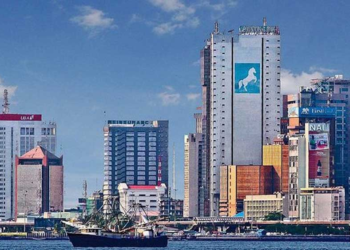
UBA annual profit hits N170 billion in 2022.
Share on FacebookShare on TwitterShare on WhatsappShare on Telegram

United Bank for Africa (UBA) recorded ₦1.14 billion ($744,200) in fraud-related losses in 2024, despite posting a profit after tax of ₦766.6 billion ($493 million) for the year, according to its latest audited financial statements. The bank attributed the losses primarily to electronic fraud and unauthorized transfers, reflecting the persistent challenge of financial crimes within Nigeria’s banking sector.

UBA disclosed that ₦4.9 billion ($3.15 million) worth of transactions were linked to fraudulent activities in 2024, with 23% of these resulting in actual financial losses. Among the fraud-related incidents, electronic fraud accounted for ₦805 million ($518,000), while fraudulent transfers led to ₦314 million ($202,000), representing 88% of the total value lost in such cases.

AlsoRead

Larger Disparities Boom Between Black Market and Official Rates

Government Securities Now 11% of Nigerian Banks’ Assets as Credit Growth Lags

Nigeria’s N20.12 Trillion 2026 Deficit Risks Crowding Out Private Sector Credit – Analysts Warn

Although these losses represent a small fraction of UBA’s overall profitability, they highlight the growing sophistication of financial fraud in Nigeria. The bank’s ₦766.6 billion profit for the year reflects a 26% increase from ₦607.7 billion ($391 million) in 2023, demonstrating strong financial performance despite the challenges posed by fraud.

Fraud in Nigerian Banks: A Growing Concern

UBA’s fraud disclosure, the first from the bank since 2012, comes amid heightened scrutiny of fraud risks in Nigeria’s banking sector. Nigerian banks lost ₦10.1 billion ($6.7 million) to fraud in Q3 2024, according to a Financial Institutions Training Centre (FITC) report. However, this figure represents a 76.4% decline from the previous quarter, suggesting increased efforts to combat financial crimes.

Despite the overall decline in fraud-related losses, external fraud cases surged by 70.4% between Q2 and Q3 2024, while staff-related fraud rose by 54%, according to the FITC. While UBA stated in its financial statements that “there is no fraud involving management or other employees who could have any significant role in the bank’s internal control,” the broader trend underscores the need for stronger fraud prevention measures.

Regulatory Efforts and Industry Response

In response to the rising threat of fraud, the Central Bank of Nigeria (CBN) directed the Nigeria Inter-Bank Settlement System (NIBSS) in January 2025 to debit the settlement accounts of banks receiving fraud proceeds. The directive aims to tighten internal controls and curb illicit financial flows, reinforcing accountability across the banking industry.

UBA’s decision to publicly disclose its fraud-related losses signals a shift toward greater transparency in Nigeria’s financial sector. Historically, many Nigerian banks have been reluctant to report fraud cases, fearing reputational damage. A NIBSS report revealed that in 2023, only 60 out of 163 financial institutions reported fraud cases, raising concerns about underreporting and lack of transparency in the sector.

Balancing Security and Customer Trust

As financial fraud grows more sophisticated, Nigerian banks and regulators face the challenge of strengthening security controls while maintaining customer trust. With cybercriminals continually devising new tactics, banks must invest in advanced fraud detection technologies, staff training, and stricter internal monitoring to safeguard customer funds.

Despite these fraud-related losses, UBA’s strong financial performance demonstrates its resilience. However, the banking sector as a whole must remain vigilant as fraudsters continue to exploit vulnerabilities in digital banking systems.

Looking Ahead

With fraud risks evolving alongside advancements in digital banking, the Nigerian financial sector must continue to adapt, innovate, and enforce stricter controls. UBA’s transparency in fraud reporting may encourage other banks to follow suit, fostering a more accountable and secure financial ecosystem in Nigeria.

Tags: UBA
Previous Post

DisCos Generate N509bn in Q4 2024 Despite Multiple Grid Collapses

Next Post

Nigeria’s Money Supply Declines for the First Time in 2025, Drops to N110.32 Trillion

Related News

Naira Surges Against US Dollar, Falls Below N1,000 Mark

Larger Disparities Boom Between Black Market and Official Rates

by Stephen Akudike
February 5, 2026
0

The gap between Nigeria’s official and parallel (black market) exchange rates has widened to over 6%, reviving fears of renewed...

FG Allocates N5.1 Billion for Presidential Yacht and N5.5 Billion For Student Loans

Government Securities Now 11% of Nigerian Banks’ Assets as Credit Growth Lags

by Stephen Akudike
February 4, 2026
0

Nigerian banks’ exposure to government securities has risen sharply in recent years, now accounting for approximately 11% of their total...

First Bank, Ecobank, 4 Others Generate N891bn from Loan to Customers in H1 of 2023

Nigeria’s N20.12 Trillion 2026 Deficit Risks Crowding Out Private Sector Credit – Analysts Warn

by Jide Omodele
January 30, 2026
0

Nigeria’s planned N20.12 trillion budget deficit for 2026 could severely limit credit availability for the private sector, as the Federal...

NEC Affirms CBN $3 Billion Loan for Naira Stability

CBN Survey Shows Improved Credit Access in Q4 2025 Amid Rising Loan Defaults

by Stephen Akudike
January 21, 2026
0

Nigeria’s banking sector expanded credit availability to households and businesses in the fourth quarter of 2025, but lenders faced mounting...

Next Post
Naira appreciated to N738/$ in the Parallel Market

Nigeria’s Money Supply Declines for the First Time in 2025, Drops to N110.32 Trillion

Leave a Reply Cancel reply

Your email address will not be published. Required fields are marked *

Recommended

Angola Surpasses Nigeria, Becomes Africa’s Largest Oil Producer in August

Naira Breaks Below N1,400 as Oil Rally and CBN Reforms Fuel Fresh Stability

February 5, 2026
Naira Surges Against US Dollar, Falls Below N1,000 Mark

Larger Disparities Boom Between Black Market and Official Rates

February 5, 2026

Popular Story

  • U.S. Steps In on Emefiele Trial, Alleges Human Rights Violations

    Emefiele’s Naira Redesign Memo Takes Centre Stage in EFCC Trial

    0 shares
    Share 0 Tweet 0
  • Naira Surges to N1,358.91/$ in Official Market, Strongest Level in Nearly Two Years

    0 shares
    Share 0 Tweet 0
  • Larger Disparities Boom Between Black Market and Official Rates

    0 shares
    Share 0 Tweet 0
  • Naira Breaks Below N1,400 as Oil Rally and CBN Reforms Fuel Fresh Stability

    0 shares
    Share 0 Tweet 0
  • Government Securities Now 11% of Nigerian Banks’ Assets as Credit Growth Lags

    0 shares
    Share 0 Tweet 0
RateCaptain

RateCaptain

We bring you the most accurate in new and market data. Check our landing page for details.

  • Home
  • About Us
  • Privacy Policy
  • Terms & Conditions
  • Disclaimer
  • Cookie Policy
  • Contact Us

Copyright © 2022 RateCaptain - All rights reserved by RateCaptain.

No Result
View All Result
  • Home
    • About Us
    • Contact Us
  • FX Rates
  • Money Market
  • Cryptocurrency
  • Commodities
  • Corporates

Copyright © 2022 RateCaptain - All rights reserved by RateCaptain.

RateCaptain
Manage Cookie Consent
To provide the best experiences, we use technologies like cookies to store and/or access device information. Consenting to these technologies will allow us to process data such as browsing behavior or unique IDs on this site. Not consenting or withdrawing consent, may adversely affect certain features and functions.
Functional Always active
The technical storage or access is strictly necessary for the legitimate purpose of enabling the use of a specific service explicitly requested by the subscriber or user, or for the sole purpose of carrying out the transmission of a communication over an electronic communications network.
Preferences
The technical storage or access is necessary for the legitimate purpose of storing preferences that are not requested by the subscriber or user.
Statistics
The technical storage or access that is used exclusively for statistical purposes. The technical storage or access that is used exclusively for anonymous statistical purposes. Without a subpoena, voluntary compliance on the part of your Internet Service Provider, or additional records from a third party, information stored or retrieved for this purpose alone cannot usually be used to identify you.
Marketing
The technical storage or access is required to create user profiles to send advertising, or to track the user on a website or across several websites for similar marketing purposes.
  • Manage options
  • Manage services
  • Manage {vendor_count} vendors
  • Read more about these purposes
View preferences
  • {title}
  • {title}
  • {title}
?>