RateCaptain
  • Home
    • About Us
    • Contact Us
  • FX Rates
  • Money Market
  • Cryptocurrency
  • Commodities
  • Corporates
No Result
View All Result
Subscribe
  • Home
    • About Us
    • Contact Us
  • FX Rates
  • Money Market
  • Cryptocurrency
  • Commodities
  • Corporates
No Result
View All Result
RateCaptain
No Result
View All Result
Home Economy

UK Inflation Holds Steady at 8.7% in May, Posing Challenges for the Economy and Consumers.

Stephen Akudike by Stephen Akudike
September 13, 2023
in Economy
Reading Time: 2 mins read
A A
0
UK Inflation Holds Steady at 8.7% in May, Posing Challenges for the Economy and Consumers.
Share on FacebookShare on TwitterShare on WhatsappShare on Telegram

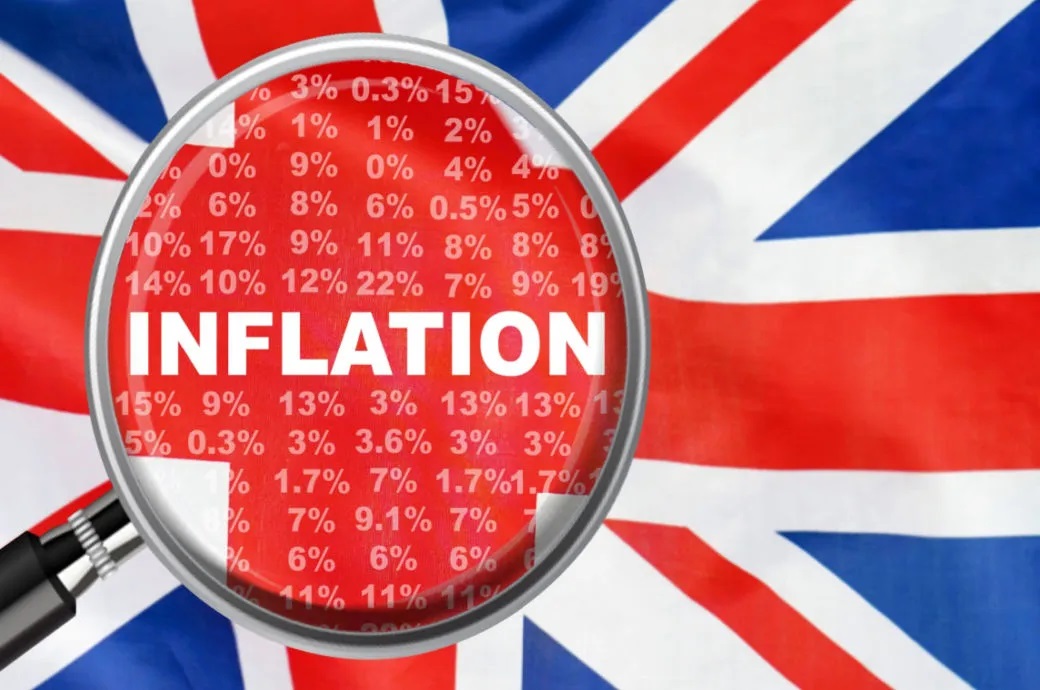
The latest figures on UK inflation have been released, revealing that consumer prices rose by an annual 8.7% in May, remaining unchanged from the previous month. The data exceeded economists’ expectations, as a Reuters poll projected a rise of 8.4%. These numbers shed light on the persistent challenge of high inflation in the country and its potential impact on the economy, consumers, and monetary policy decisions.

Sticky Inflation and Tight Labor Market:
The core inflation rate, which excludes volatile energy, food, alcohol, and tobacco prices, saw an annual increase of 7.1% in May, up from 6.8% in April. This marks the highest rate since March 1992. Rising prices in air travel, recreational and cultural goods and services, and second-hand cars contributed significantly to the monthly change in both the Consumer Prices Index (CPI) and the Consumer Prices Index including owner occupiers’ housing costs (CPIH).

AlsoRead

Is the World Underestimating Nigeria?

Dangote Refinery Reduces Aviation Fuel Price to N1,650 per Litre

CBN Denies Heavy Intervention in FX Market, Highlights Minimal Participation

Implications for Monetary Policy:
The Bank of England is set to announce its next monetary policy decision, and it is widely expected that the central bank will implement its 13th consecutive interest rate hike. Balancing the need to control inflation without triggering a mortgage crisis and recession poses a challenging task. Sticky inflation and a tight labor market have led economists to revise their forecasts for peak interest rates, suggesting that the cycle of monetary policy tightening may last longer than previously anticipated.

Cost of Living Crisis and Government Response:
The persistence of the UK’s cost of living crisis, with the country’s CPI ranking as the highest among G7 nations, presents a significant challenge for the government. Prime Minister Rishi Sunak had promised to halve inflation by the end of the year, ahead of the upcoming general election in 2024. Finance Minister Jeremy Hunt affirmed the government’s commitment to supporting the Bank of England in tackling inflation while providing targeted assistance to manage the cost of living.

Concerns for Consumers and Investors:
The high inflation rate poses concerns for consumers, investors, and the government alike. Marcus Brookes, Chief Investment Officer at Quilter Investors, described the latest inflation figures as a “bitter pill to swallow.” He emphasized the unique set of circumstances affecting the UK economy, with inflation driven more by supply issues than demand. Brookes expressed concerns about the potential mortgage crisis as interest rates rise further, impacting households’ financial stability.

Challenges Ahead and Potential Solutions:
Economists believe that the fight against inflation is far from over, especially considering the surging prices of food and non-alcoholic beverages. Suren Thiru, Economics Director at ICAEW, emphasized that although the trajectory of UK inflation over the summer is largely determined, lower gas and electricity bills from July may lead to notable declines in the headline rate. However, the squeeze on consumer spending due to escalating mortgage costs and higher taxes could still present challenges.

Bottom line:
The UK’s inflation rate remained stubbornly high at 8.7% in May, surpassing expectations and indicating ongoing challenges for the economy and consumers. The Bank of England faces the delicate task of managing inflation while avoiding potential pitfalls such as a mortgage crisis and recession. The government’s commitment to addressing the cost of living crisis and supporting the central bank’s efforts is crucial. As the summer unfolds, the impact of lower energy bills may provide some relief, but the challenges posed by core inflation and its consequences on consumer spending remain significant concerns.


Tags: #CPI#inflationBank of EnglandChallengesconsumer pricesconsumerscost of living crisisCPIHEconomic dataeconomic impactFinancial Stabilitygovernment responsehousehold financesinterest ratesinvestorsJeremy Huntlabor marketmonetary policymortgage crisispotential solutionsRishi Sunaksticky inflationsupply issuesUK
Previous Post

Nigeria’s Foreign Reserves Drop by Over $600M in First 18 Days of Tinubu’s Presidency.

Next Post

Nigeria’s Forex Market Reacts to Exchange Rate Unification.

Related News

Exploring the data on multidimensional and monetary poverty in Nigeria.

Is the World Underestimating Nigeria?

by Stephen Akudike
May 21, 2026
0

For years, conversations about the future of global power have sounded familiar. China. The United States. India. Perhaps the European...

Airlines Implement Time-Saving Strategies for More Efficient Operations

Dangote Refinery Reduces Aviation Fuel Price to N1,650 per Litre

by Akpan Edidong
May 21, 2026
0

Dangote Petroleum Refinery & Petrochemicals has announced a significant reduction in the price of Jet A1 (aviation fuel), slashing it...

NEC Affirms CBN $3 Billion Loan for Naira Stability

CBN Denies Heavy Intervention in FX Market, Highlights Minimal Participation

by Jide Omodele
May 21, 2026
0

The Central Bank of Nigeria (CBN) has refuted allegations of aggressive intervention in the foreign exchange market, insisting that its...

World Bank Emphasizes Cash Transfers to Break Poverty Cycle in Nigeria

Global Carbon Pricing Revenue Surpasses $107 Billion in 2025 – World Bank

by Victoria Attah
May 20, 2026
0

The World Bank has reported that revenues generated from carbon pricing mechanisms worldwide exceeded $107 billion in 2025, marking another...

Next Post
Nigeria’s Forex Market Reacts to Exchange Rate Unification.

Nigeria's Forex Market Reacts to Exchange Rate Unification.

Leave a Reply Cancel reply

Your email address will not be published. Required fields are marked *

Recommended

Exploring the data on multidimensional and monetary poverty in Nigeria.

Is the World Underestimating Nigeria?

May 21, 2026
Standard Chartered Bank Job Opening: Data Analyst

End Times : Standard Chartered to Cut Over 7,800 Jobs Worldwide Due to AI

May 21, 2026

Popular Story

  • Nigeria’s Debt to China Surges by $800 Million in One Year

    31 Nigerian States Grapple with N2.57 Trillion Domestic Debt Amid No Foreign Inflows

    0 shares
    Share 0 Tweet 0
  • UBA Earnings Hits N494bn, Records N106.8bn Profit

    0 shares
    Share 0 Tweet 0
  • Google adds Bitcoin, etherium and Litecoin to its finance platforms

    0 shares
    Share 0 Tweet 0
  • Food Price Rise As Income Remains The Same

    0 shares
    Share 0 Tweet 0
  • NSCDC raises concerns over circulation of fake notes.

    0 shares
    Share 0 Tweet 0

RateCaptain

We bring you the most accurate in new and market data. Check our landing page for details.

  • Home
  • About Us
  • Privacy Policy
  • Terms & Conditions
  • Disclaimer
  • Cookie Policy
  • Contact Us

Copyright © 2022 RateCaptain - All rights reserved by RateCaptain.

No Result
View All Result
  • Home
    • About Us
    • Contact Us
  • FX Rates
  • Money Market
  • Cryptocurrency
  • Commodities
  • Corporates

Copyright © 2022 RateCaptain - All rights reserved by RateCaptain.

RateCaptain
Manage Cookie Consent
To provide the best experiences, we use technologies like cookies to store and/or access device information. Consenting to these technologies will allow us to process data such as browsing behavior or unique IDs on this site. Not consenting or withdrawing consent, may adversely affect certain features and functions.
Functional Always active
The technical storage or access is strictly necessary for the legitimate purpose of enabling the use of a specific service explicitly requested by the subscriber or user, or for the sole purpose of carrying out the transmission of a communication over an electronic communications network.
Preferences
The technical storage or access is necessary for the legitimate purpose of storing preferences that are not requested by the subscriber or user.
Statistics
The technical storage or access that is used exclusively for statistical purposes. The technical storage or access that is used exclusively for anonymous statistical purposes. Without a subpoena, voluntary compliance on the part of your Internet Service Provider, or additional records from a third party, information stored or retrieved for this purpose alone cannot usually be used to identify you.
Marketing
The technical storage or access is required to create user profiles to send advertising, or to track the user on a website or across several websites for similar marketing purposes.
  • Manage options
  • Manage services
  • Manage {vendor_count} vendors
  • Read more about these purposes
View preferences
  • {title}
  • {title}
  • {title}
?>