RateCaptain
  • Home
    • About Us
    • Contact Us
  • FX Rates
  • Money Market
  • Cryptocurrency
  • Commodities
  • Corporates
No Result
View All Result
Subscribe
  • Home
    • About Us
    • Contact Us
  • FX Rates
  • Money Market
  • Cryptocurrency
  • Commodities
  • Corporates
No Result
View All Result
RateCaptain
No Result
View All Result
Home Commodities

Unpacking July’s Inflation Surge: Economic Concerns Mount as Inflation Rate Rises in 2023

Victoria Attah by Victoria Attah
September 12, 2023
in Commodities, Economy
Reading Time: 2 mins read
A A
0
Unpacking July’s Inflation Surge: Economic Concerns Mount as Inflation Rate Rises in 2023
Share on FacebookShare on TwitterShare on WhatsappShare on Telegram

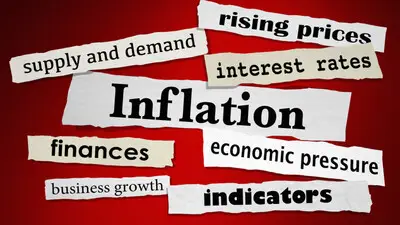
In a concerning economic development, Nigeria’s headline inflation rate surged to 24.08% in July 2023, up from 22.79% in June of the same year. The rise of 1.29% points within a single month has raised alarms among analysts and policymakers, as it indicates a significant acceleration in price increases across various sectors of the economy.

Year-on-Year Impact:

AlsoRead

IMF Refuses to Endorse External or Domestic Borrowing for Nigeria.

FG Introduces Green Tax on High-Engine Vehicles from July 1 to Promote Cleaner Transport

Naira Hits Strongest Level Since Mid-February as Global Dollar Weakens

Comparing the headline inflation rate on a year-on-year basis, July 2023 witnessed a spike of 4.44% points compared to the same month in 2022, which reported a rate of 19.64%. This suggests a substantial increase in the cost of goods and services over the past year, imposing a burden on consumers and potentially dampening economic growth prospects.

Contributing Factors:

The contributing factors to the rising inflation rate were analyzed, revealing the following divisional level contributions on a year-on-year basis:

  • Food & Non-Alcoholic Beverages: 12.47%
  • Housing Water, Electricity, Gas & Other Fuel: 4.03%
  • Clothing & Footwear: 1.84%
  • Transport: 1.57%
  • Furnishings & Household Equipment & Maintenance: 1.21%
  • Education: 0.95%
  • Health: 0.72%
  • Miscellaneous Goods & Services: 0.40%
  • Restaurant & Hotels: 0.29%
  • Alcoholic Beverages, Tobacco & Kola: 0.26%
  • Recreation & Culture: 0.17%
  • Communication: 0.16%

Month-on-Month Rise:

Further exacerbating concerns, the month-on-month headline inflation rate in July 2023 stood at 2.89%, reflecting an increase of 0.76% from June 2023’s rate of 2.13%. This indicates that prices escalated rapidly within a short span, possibly due to a combination of factors impacting supply chains and market dynamics.

Potential Outcomes and Strategies to Mitigate Inflation:

The rising inflation rate can have far-reaching consequences for the economy, including reduced purchasing power, heightened economic uncertainty, and possible distortions in investment decisions. To address this challenge, the following outcomes and strategies can be considered:

Possible Outcomes:
1. Reduced consumer purchasing power and disposable income.
2. Increased cost of living, impacting households across income levels.
3. Potentially reduced consumer spending, affecting economic growth.
4. Pressures on interest rates and monetary policy decisions.
5. Possible impacts on investment decisions and business strategies.

Strategies:

Monetary Policy Adjustments: The central bank could consider using monetary tools such as interest rate hikes to curb demand and stabilize prices.

Supply-Side Measures: Improving supply chains, increasing domestic production, and addressing bottlenecks could help mitigate the impact of supply shortages on prices.

Fiscal Measures: Implementing targeted fiscal policies to stimulate demand and investment could counterbalance inflationary pressures.

Sector-Specific Initiatives: Addressing specific sectors driving inflation, such as food and fuel, through targeted policies and incentives.

Enhancing Regulatory Frameworks: Strengthening regulations to curb speculative activities and price manipulation that contribute to inflation.

Consumer Education: Raising public awareness about managing inflation’s impact and making informed financial decisions.

As Nigeria grapples with these inflationary pressures, a comprehensive approach that combines both short-term measures and long-term structural reforms will be essential to maintain stability and foster sustainable economic growth.

Tags: Consumer EducationContributing Factorseconomic developmentEconomic Growtheconomic impactFiscal MeasuresMitigation Strategiesmonetary policyMonth-on-Month ComparisonNigeria Inflation Rateregulatory frameworksrising inflationSupply-Side MeasuresYear-on-Year Analysis
Previous Post

Breaking: Headline Inflation Hits 24.08% for July 2023

Next Post

Shocking: “Undress” An AI Tool That Unveils Digital Representations of Individuals Without Clothing

Related News

IMF Applauds Tinubu Policy Reforms While Lowering Growth Projections

IMF Refuses to Endorse External or Domestic Borrowing for Nigeria.

by Victoria Attah
April 17, 2026
0

The International Monetary Fund (IMF) has declined to recommend whether Nigeria should prioritise external or domestic borrowing, insisting instead that...

Top 6 innovative industries to watch in the Next 5 Years

FG Introduces Green Tax on High-Engine Vehicles from July 1 to Promote Cleaner Transport

by Jide Omodele
April 17, 2026
0

The Federal Government has rolled out a new environmental levy targeting vehicles with large engine capacities as part of the...

Battered Commodity Currencies Gain Attention Amid Dollar’s Decline.

Naira Hits Strongest Level Since Mid-February as Global Dollar Weakens

by Stephen Akudike
April 16, 2026
0

The Nigerian naira extended its recent rally on Wednesday, closing at N1,341.99 per US dollar in the official foreign exchange...

Nigerian Airlines Issue Ultimatum: “We May Shut Down Operations Over N3,000/Litre Jet Fuel”

by Victoria Attah
April 16, 2026
0

Nigerian airlines have issued a dramatic ultimatum, warning that they may suspend all domestic and international flight operations nationwide from...

Next Post
Shocking: “Undress” An AI Tool That Unveils Digital Representations of Individuals Without Clothing

Shocking: "Undress" An AI Tool That Unveils Digital Representations of Individuals Without Clothing

Leave a Reply Cancel reply

Your email address will not be published. Required fields are marked *

Recommended

Nigerian Breweries Reports Record N145 Billion Naira Loss in 2023

Nigerian Breweries Attributes 135% Share Price Surge to Successful Recovery Strategy

April 17, 2026
Nigeria Rules Out IMF Loans Despite Rising Debt Concerns – Wale Edun

Nigeria Rules Out IMF Loans Despite Rising Debt Concerns – Wale Edun

April 17, 2026

Popular Story

  • Top 6 innovative industries to watch in the Next 5 Years

    FG Introduces Green Tax on High-Engine Vehicles from July 1 to Promote Cleaner Transport

    0 shares
    Share 0 Tweet 0
  • FG Takes Governors to Supreme Court Over Local Government Allocations

    0 shares
    Share 0 Tweet 0
  • Dufil Prima announces N30 billion Series 3 & 4 Commercial Paper

    0 shares
    Share 0 Tweet 0
  • NNPC Aims to Increase Oil Production to 1.7 to1.8 Million Barrels per Day by 2024.

    0 shares
    Share 0 Tweet 0
  • Stock Market Maintains Bullish Run as Investors Gain N1.36 Trillion in Four Days

    0 shares
    Share 0 Tweet 0

RateCaptain

We bring you the most accurate in new and market data. Check our landing page for details.

  • Home
  • About Us
  • Privacy Policy
  • Terms & Conditions
  • Disclaimer
  • Cookie Policy
  • Contact Us

Copyright © 2022 RateCaptain - All rights reserved by RateCaptain.

No Result
View All Result
  • Home
    • About Us
    • Contact Us
  • FX Rates
  • Money Market
  • Cryptocurrency
  • Commodities
  • Corporates

Copyright © 2022 RateCaptain - All rights reserved by RateCaptain.

RateCaptain
Manage Cookie Consent
To provide the best experiences, we use technologies like cookies to store and/or access device information. Consenting to these technologies will allow us to process data such as browsing behavior or unique IDs on this site. Not consenting or withdrawing consent, may adversely affect certain features and functions.
Functional Always active
The technical storage or access is strictly necessary for the legitimate purpose of enabling the use of a specific service explicitly requested by the subscriber or user, or for the sole purpose of carrying out the transmission of a communication over an electronic communications network.
Preferences
The technical storage or access is necessary for the legitimate purpose of storing preferences that are not requested by the subscriber or user.
Statistics
The technical storage or access that is used exclusively for statistical purposes. The technical storage or access that is used exclusively for anonymous statistical purposes. Without a subpoena, voluntary compliance on the part of your Internet Service Provider, or additional records from a third party, information stored or retrieved for this purpose alone cannot usually be used to identify you.
Marketing
The technical storage or access is required to create user profiles to send advertising, or to track the user on a website or across several websites for similar marketing purposes.
  • Manage options
  • Manage services
  • Manage {vendor_count} vendors
  • Read more about these purposes
View preferences
  • {title}
  • {title}
  • {title}
?>