RateCaptain
  • Home
    • About Us
    • Contact Us
  • FX Rates
  • Money Market
  • Cryptocurrency
  • Commodities
  • Corporates
No Result
View All Result
Subscribe
  • Home
    • About Us
    • Contact Us
  • FX Rates
  • Money Market
  • Cryptocurrency
  • Commodities
  • Corporates
No Result
View All Result
RateCaptain
No Result
View All Result
Home Economy

World Bank Criticizes Lack of Transparency in NNPC’s Financial Reporting

Stephen Akudike by Stephen Akudike
December 14, 2023
in Economy
Reading Time: 2 mins read
A A
0
World Bank Emphasizes Cash Transfers to Break Poverty Cycle in Nigeria
Share on FacebookShare on TwitterShare on WhatsappShare on Telegram

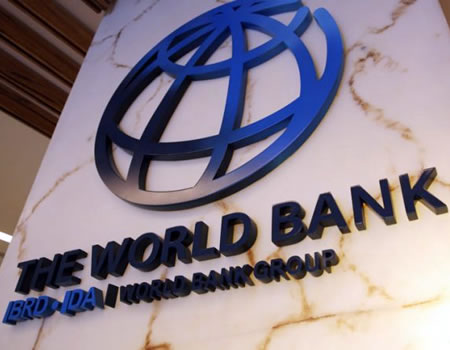
In its latest Nigeria Development Update, December 2023 edition, titled ‘Turning The Corner (from reforms and renewed hope, to results)’, the World Bank has raised concerns over the lack of transparency in the financial reporting of the Nigeria National Petroleum Corporation Limited (NNPCL) following the removal of fuel subsidies. The Washington-based institution highlighted the need for clarity on the financial gains from subsidy removal and the impact on federation revenues.

The World Bank pointed out that while nominal oil revenue gains have been visible since June, primarily attributed to exchange rate gains due to the Naira’s depreciation, transparency remains elusive, especially concerning the financial gains of the NNPCL from subsidy removal, ongoing subsidy arrears deductions, and the broader impact on federation revenues.

AlsoRead

Nigeria’s External Reserves Drop by $731 Million in Early April

FG Releases Revised Import Prohibition List, Bans Paracetamol, Tomato Paste and others.

Nigeria’s Bond Yields Rise Slightly as DMO Prepares N700 Billion Auction

The Minister of Finance and Coordinating Minister of Economy, Wale Edun, has responded to these concerns by expressing the government’s readiness to scrutinize the revenue flow from the NNPCL. The World Bank emphasized the necessity of understanding oil revenues comprehensively, including the fiscal benefits resulting from Premium Motor Spirit (PMS) subsidy reforms.

The Bretton Woods institution noted that the gains in net oil revenue of the federation were lower than anticipated, considering the removal of fuel subsidies, which were estimated to cost the federation about N380 billion monthly. The report stated that the federation account should have recorded an increase in net oil revenues following the subsidy removal, but the actual gains have been primarily attributed to exchange rate fluctuations.

The World Bank further suggested that the reform of fuel subsidies should enable the NNPCL to settle its arrears and contribute fully to the federation’s share of costs in joint venture operations, ultimately leading to a gradual increase in oil production over time.

During the presentation of the report, Coordinating Minister of the Economy, Edun, acknowledged the financial relief brought about by the subsidy removal but also highlighted challenges such as debt funding, fiscal deficits, and the need for increased scrutiny on oil revenue.

The World Bank’s Lead Economist for Nigeria, Alex Sienaert, raised concerns about the partial return of the subsidy, indicating that petrol prices in the country are not fully reflecting market conditions. He suggested that the market price of petrol should be around N750/litre, emphasizing the importance of transparency in the pricing mechanism and ensuring that revenue gains materialize.

While the removal of fuel subsidies was announced by President Bola Tinubu on May 29, concerns have been raised about the dividends not reaching the average Nigerian. Former Governor of the Central Bank of Nigeria, Sanusi Lamido Sanusi, criticized the NNPC for lack of transparency, questioning the remittance of dollars to the federation account despite subsidy removal.

The World Bank’s report also highlighted the economic challenges following the removal of fuel subsidies, including a 163% increase in retail fuel prices, a 41% depreciation of the Naira against the US dollar in the official market, and a 30% depreciation in the parallel market. The bank, however, believes that the implemented reforms will gradually reverse the increases in poverty seen in recent years from 2024 onward.

In conclusion, the World Bank’s report emphasizes the importance of transparency in NNPC’s financial reporting and the need for effective measures to ensure that the benefits of subsidy removal are realized for the overall economic growth and development of Nigeria.
Tags: Financial Transparencyfuel subsidy removalNNPCOil RevenuesWorld Bank
Previous Post

CBN Halts Submission of New Loan Requests for Intervention Programs

Next Post

NNPC Delivers N4.5 Trillion to Federation Account -Mele Kyari

Related News

CBN Supplies $29.5 Million at FX Auction as Naira Depreciates at I&E Window.

Nigeria’s External Reserves Drop by $731 Million in Early April

by Jide Omodele
April 28, 2026
0

Nigeria’s foreign exchange reserves came under renewed pressure in April 2026, declining by approximately $731 million within the first three...

The Double-Edged Sword of VAT in Nigeria: Exploitation or Economic Lifeline?

FG Releases Revised Import Prohibition List, Bans Paracetamol, Tomato Paste and others.

by Victoria Attah
April 28, 2026
0

The Federal Government has released a revised schedule of prohibited trade items as part of efforts to deepen economic reforms,...

DMO Announces Subscription Offering for Federal Government Savings Bonds.

Nigeria’s Bond Yields Rise Slightly as DMO Prepares N700 Billion Auction

by Jide Omodele
April 28, 2026
0

Nigeria’s sovereign bond market ended the week on a cautious note, with average yields edging higher as investors adopted a...

Federal Government to Generate N12bn Annually from new vehicle tax.

Nigeria Revenue Service Denies Introduction of New Vehicle Tax

by Victoria Attah
April 27, 2026
0

The Nigeria Revenue Service (NRS) has firmly debunked a viral infographic claiming that the Federal Government has introduced a new...

Next Post
Nigeria to Become a Net Exporter of Petroleum Products by 2024 – NNPC 

NNPC Delivers N4.5 Trillion to Federation Account -Mele Kyari

Leave a Reply Cancel reply

Your email address will not be published. Required fields are marked *

Recommended

IMF Cautions Central African Republic against Adopting Bitcoin

Bitcoin Tests $80,000 Resistance as It Remains Range-Bound Ahead of FOMC Decision

April 29, 2026
Naira appreciated to N738/$ in the Parallel Market

Naira Weakness Pushes Foreign Currency Taxes to N6.33 Trillion in 2025

April 29, 2026

Popular Story

  • Transcorp Nigeria Wins Afam Power Sale With $293 Million Bid

    0 shares
    Share 0 Tweet 0
  • Nigeria To Raise 3 Billion In Euro Bond Selling

    0 shares
    Share 0 Tweet 0
  • NBS to provide data to help tackle insecurity in Nigeria- Statistician-General

    0 shares
    Share 0 Tweet 0
  • Aliko Dangote’s Wealth Drops by N1.45 Trillion Following Naira’s Exchange Rate Change

    0 shares
    Share 0 Tweet 0
  • Emzor’s $23 Million Plant: A Dollar-Saving Initiative That Will Also Save Lives

    0 shares
    Share 0 Tweet 0

RateCaptain

We bring you the most accurate in new and market data. Check our landing page for details.

  • Home
  • About Us
  • Privacy Policy
  • Terms & Conditions
  • Disclaimer
  • Cookie Policy
  • Contact Us

Copyright © 2022 RateCaptain - All rights reserved by RateCaptain.

No Result
View All Result
  • Home
    • About Us
    • Contact Us
  • FX Rates
  • Money Market
  • Cryptocurrency
  • Commodities
  • Corporates

Copyright © 2022 RateCaptain - All rights reserved by RateCaptain.

RateCaptain
Manage Cookie Consent
To provide the best experiences, we use technologies like cookies to store and/or access device information. Consenting to these technologies will allow us to process data such as browsing behavior or unique IDs on this site. Not consenting or withdrawing consent, may adversely affect certain features and functions.
Functional Always active
The technical storage or access is strictly necessary for the legitimate purpose of enabling the use of a specific service explicitly requested by the subscriber or user, or for the sole purpose of carrying out the transmission of a communication over an electronic communications network.
Preferences
The technical storage or access is necessary for the legitimate purpose of storing preferences that are not requested by the subscriber or user.
Statistics
The technical storage or access that is used exclusively for statistical purposes. The technical storage or access that is used exclusively for anonymous statistical purposes. Without a subpoena, voluntary compliance on the part of your Internet Service Provider, or additional records from a third party, information stored or retrieved for this purpose alone cannot usually be used to identify you.
Marketing
The technical storage or access is required to create user profiles to send advertising, or to track the user on a website or across several websites for similar marketing purposes.
  • Manage options
  • Manage services
  • Manage {vendor_count} vendors
  • Read more about these purposes
View preferences
  • {title}
  • {title}
  • {title}
?>