RateCaptain
  • Home
    • About Us
    • Contact Us
  • FX Rates
  • Money Market
  • Cryptocurrency
  • Commodities
  • Corporates
No Result
View All Result
Subscribe
  • Home
    • About Us
    • Contact Us
  • FX Rates
  • Money Market
  • Cryptocurrency
  • Commodities
  • Corporates
No Result
View All Result
RateCaptain
No Result
View All Result
Home Economy

Central Bank of Nigeria Extends Timelines for Letters of Credit

Stephen Akudike by Stephen Akudike
December 8, 2023
in Economy
Reading Time: 2 mins read
A A
0
Investment Bankers Applaud CBN Reforms Amidst Challenges, Embrace Growth Opportunities
Share on FacebookShare on TwitterShare on WhatsappShare on Telegram

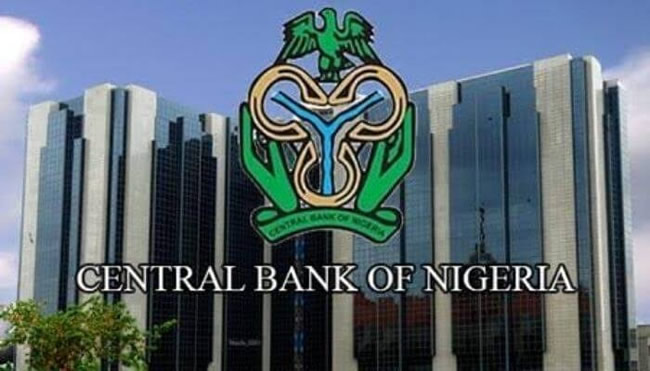
In response to ongoing challenges posed by foreign exchange scarcity, the Central Bank of Nigeria (CBN) has announced an extension of the timeline for the issuance of letters of credit from 24 hours to five working days. The move comes as part of the newly approved 2023 service charter, marking a departure from the 2020 service charter, which had set the timeline at 24 hours.

The adjustment is not limited to letters of credit, as the CBN has also extended the timeline for the registration of Form M and NXP from 24 hours to two working days, as observed by financial analysts at RateCaptain.

AlsoRead

Nigerians Borrowed Record $3.18 Billion in Airtime Credit Last Year – Report

Nigeria’s External Debt Projected to Reach $72.6 Billion by 2027 – IMF

NGX Gains 0.53% as Airtel Africa and First Holdco Lead Market Rally

Earlier in June 2023, the CBN made headlines with its announcement of the unification of all segments of the forex market, consolidating various windows into a single official platform for foreign exchange transactions. While this measure was intended to enhance liquidity and stability in Nigeria’s forex market, it appears to have triggered unintended consequences, contributing to further instability.

RateCaptain reported a significant depreciation in the value of the naira, which lost nearly a fifth of its value, trading at N951.2/$ on the official Investor and Exporter forex window on Wednesday. This depreciation has had far-reaching effects on both local and international trade, particularly impacting the import of goods and services. Reports suggest that foreign suppliers are now rejecting letters of credit from Nigerian businesses, adding strain to the already challenging economic situation.

For the importation of visible goods, a letter of credit serves as a mode of payment. It involves the bank providing a written promise to pay the exporter a specified sum within a designated timeframe, contingent on the customer furnishing the bank with the necessary documentation. Additionally, the importation of goods denominated in foreign currency into Nigeria requires the completion of Form M by importers and the Nigeria Export Proceed Form (NXP) by exporters.

The decision to extend the timelines for letters of credit, Forms M, and NXP in the newly approved service charter is believed to be a response to the current forex crisis in the country. Analysts speculate that the move is an effort by the CBN, under the leadership of Governor Yemi Cardoso, to manage cash flow and instill confidence in the transaction process, thereby preventing disruptions.

In a statement, the CBN emphasized that the service charter is a requirement of the Business Facilitation Act 2022, designed to improve the ease of doing business in Nigeria. The charter aims to align the CBN with SERVICOM’s directives on enhancing customer service delivery, reaffirming the bank’s commitment to providing effective and timely services to stakeholders and consumers.

Yemi Cardoso, in the foreword of the revised document, highlighted the CBN’s dedication to fostering responsive and citizen-friendly governance through excellent, efficient, responsible, and transparent service delivery. In response to questions about the extended timelines, Mr. Muda Yusuf, the Chief Executive Officer of the Centre for the Promotion of Private Enterprise, suggested that the CBN’s move may be a strategic effort to manage cash flow and bolster confidence in the transaction process to prevent disruptions.

Tags: Business Facilitation ActCBNcustomer serviceeconomic stabilityForex Marketforex scarcityForm MLetters of CreditNXPService CharterTrade ImpactYemi Cardoso
Previous Post

P&G Exit from Nigeria Leads to 5000 Job Losses and Foreign Investment Decline

Next Post

Unveiling the ‘Best of Buffett’ Investing Strategy

Related News

Nigeria’s MTN and Airtel Record N403.2 Billion Data Revenue In Q3, 2023

Nigerians Borrowed Record $3.18 Billion in Airtime Credit Last Year – Report

by Victoria Attah
June 15, 2026
0

Mobile subscribers across Nigeria and other parts of Africa took a total of $3.18 billion worth of airtime on credit...

IMF Applauds Tinubu Policy Reforms While Lowering Growth Projections

Nigeria’s External Debt Projected to Reach $72.6 Billion by 2027 – IMF

by Jide Omodele
June 10, 2026
0

The International Monetary Fund (IMF) has projected that Nigeria’s public external debt will rise sharply to $72.6 billion by 2027,...

Liquidity Crunch: Banking Sector’s Borrowing from CBN Surges to N12 Trillion.

NGX Gains 0.53% as Airtel Africa and First Holdco Lead Market Rally

by Jide Omodele
June 10, 2026
0

The Nigerian equities market extended its positive performance on Tuesday, closing higher by 0.53% amid renewed buying interest in major...

Oil Prices Reach $90 Following Supply Reduction by Saudi Arabia and Russia.

Nigeria’s Crude Oil Exports Climb to N11.2 Trillion in First Quarter of 2026

by Akpan Edidong
June 9, 2026
0

Nigeria recorded crude oil exports worth N11.20 trillion in the first quarter of 2026, reinforcing oil’s position as the country’s...

Next Post
Unveiling the ‘Best of Buffett’ Investing Strategy

Unveiling the 'Best of Buffett' Investing Strategy

Leave a Reply Cancel reply

Your email address will not be published. Required fields are marked *

Recommended

Liquidity Crunch: Banking Sector’s Borrowing from CBN Surges to N12 Trillion.

 Banks Generate N224.69 Billion from E-Banking and ATM Charges in Q1 2026

June 15, 2026

Elon Musk’s Wealth Crosses $1 Trillion Mark, Overtaking Nigeria’s Entire Economy

June 15, 2026

Popular Story

  • Liquidity Crunch: Banking Sector’s Borrowing from CBN Surges to N12 Trillion.

     Banks Generate N224.69 Billion from E-Banking and ATM Charges in Q1 2026

    0 shares
    Share 0 Tweet 0
  • Nigerians Borrowed Record $3.18 Billion in Airtime Credit Last Year – Report

    0 shares
    Share 0 Tweet 0
  • Elon Musk’s Wealth Crosses $1 Trillion Mark, Overtaking Nigeria’s Entire Economy

    0 shares
    Share 0 Tweet 0
  • UK Inflation Eases Slightly in June 2023 Amid Falling Fuel Prices and Moderate Food Costs

    0 shares
    Share 0 Tweet 0
  • Naira Depreciates by N5.08 Week-on-Week as Dollar Liquidity Tightens

    0 shares
    Share 0 Tweet 0

RateCaptain

We bring you the most accurate in new and market data. Check our landing page for details.

  • Home
  • About Us
  • Privacy Policy
  • Terms & Conditions
  • Disclaimer
  • Cookie Policy
  • Contact Us

Copyright © 2022 RateCaptain - All rights reserved by RateCaptain.

No Result
View All Result
  • Home
    • About Us
    • Contact Us
  • FX Rates
  • Money Market
  • Cryptocurrency
  • Commodities
  • Corporates

Copyright © 2022 RateCaptain - All rights reserved by RateCaptain.

RateCaptain
Manage Cookie Consent
To provide the best experiences, we use technologies like cookies to store and/or access device information. Consenting to these technologies will allow us to process data such as browsing behavior or unique IDs on this site. Not consenting or withdrawing consent, may adversely affect certain features and functions.
Functional Always active
The technical storage or access is strictly necessary for the legitimate purpose of enabling the use of a specific service explicitly requested by the subscriber or user, or for the sole purpose of carrying out the transmission of a communication over an electronic communications network.
Preferences
The technical storage or access is necessary for the legitimate purpose of storing preferences that are not requested by the subscriber or user.
Statistics
The technical storage or access that is used exclusively for statistical purposes. The technical storage or access that is used exclusively for anonymous statistical purposes. Without a subpoena, voluntary compliance on the part of your Internet Service Provider, or additional records from a third party, information stored or retrieved for this purpose alone cannot usually be used to identify you.
Marketing
The technical storage or access is required to create user profiles to send advertising, or to track the user on a website or across several websites for similar marketing purposes.
  • Manage options
  • Manage services
  • Manage {vendor_count} vendors
  • Read more about these purposes
View preferences
  • {title}
  • {title}
  • {title}
?>